
Reviewed · MUSEUMS
Tour Museum of Anthropology a trip to the past-Small groups
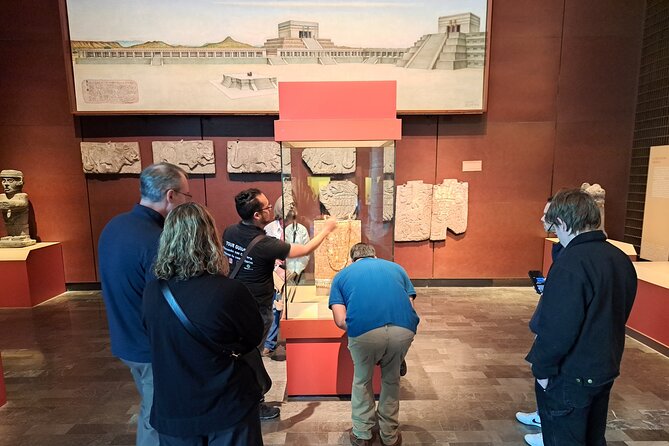
Three hours here changes how you see Mexico. This small-group tour at the National Museum of Anthropology uses VIP access and an expert guide to turn a huge building into a focused story you can actually follow. Instead of getting lost in galleries and Spanish labels, you get a route with meaning and context.
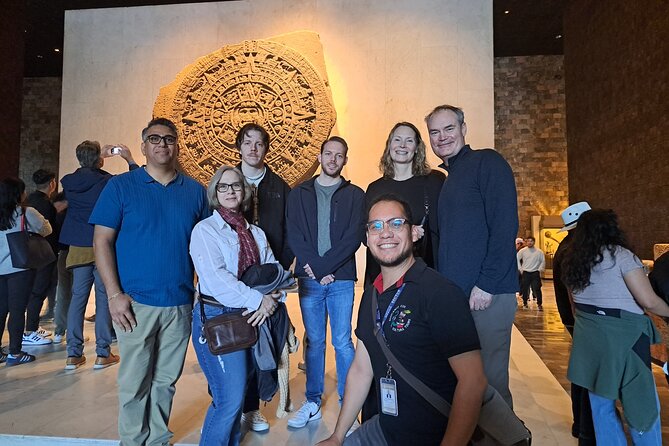
I especially love two things. First, you get guided time with museum stars like the Sun Stone and the Pakal Sarcophagus. Second, guides such as Jorge or Delta explain what you are looking at through clear storytelling, questions, and context that makes the artifacts click.
One possible drawback: you only cover highlights in about three hours. The museum is enormous, and a lot of the signage is in Spanish, so this works best if you like learning with a guide rather than drifting through solo.
In This Review
- Key Things That Make This Tour Worth Your Time
- Museo Nacional de Antropología With a VIP-Style Game Plan
- Jorge or Delta: Why the Guide Style Changes Everything
- The 3-Hour Route: Sun Stone, Pakal, and the Meaning Behind Symbols
- Interactive Rituals, Multimedia, and Restoration Work
- Small Group Size Up to 15: The Pace You Actually Need
- English in a Mostly Spanish Museum: How This Tour Bridges the Gap
- Price and Value: What You Get for $98.57
- Who This Tour Fits Best (And Who Might Skip It)
- Should You Book This Small-Group Anthropology Tour?
- FAQ
- How long is the tour?
- What is included in the price?
- Is the tour offered in English?
- How big is the group?
- Where does the tour start?
- Is there free cancellation?
Key Things That Make This Tour Worth Your Time
VIP timing to skip the worst crowd pressure and see more comfortably.
Big-name artifacts explained for real understanding, not just pictures.
A guide-led, question-based style that helps you decode symbols and timelines.
English offered in a museum where many labels are not in English.
Small group size (max 15), so you can hear, ask, and keep up with the pace.
Tickets and guided entry included, so you are not juggling extra paperwork.
Museo Nacional de Antropología With a VIP-Style Game Plan
The National Museum of Anthropology is one of those places that can swallow an entire day. Go in alone and you can easily end up doing the museum version of speed-walking, reading a few captions, then moving on before anything really sticks.
This tour’s big advantage is timing. You are led in at special times with VIP access, which means you get a calmer start and more breathing room around the most important pieces. That matters because this museum is not only big, it is visual and symbolic. If you are fighting a crowd, it is hard to pause, notice details, and listen to a guide explain what the symbols are saying.
The other smart part is that you are given a route. Instead of wandering and hoping you pick up the right threads, your guide helps you connect regions, cultures, and eras. That is how you leave with a mental map. Not just memories of objects, but a sense of how the puzzle pieces fit.
Backup plans for Mexico City
- Chapultepec Castle & Anthropology Museum Tour
★ 4.5 · 1,348 reviews - Frida Kahlo VIP [Museum Tickets Included] Bike, Markets & Churros
★ 5.0 · 1,072 reviews - Anthropology Museum Guided Tour
★ 4.5 · 1,035 reviews
Jorge or Delta: Why the Guide Style Changes Everything
In a museum like this, the guide is not a luxury. It is the difference between seeing objects and understanding them.
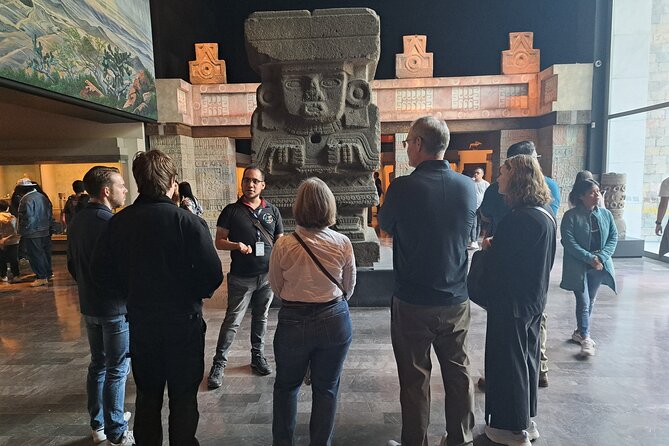
From the experience described, guides such as Jorge and Delta are strong storytellers who tie artifacts to a larger timeline. One guide approach stands out: guiding you through an anchor moment early, then coming back to it later so you can recognize the meaning by the end. It is a clever method, because you get the symbols first, then you get the explanation, then everything turns from confusing into satisfying.
They also use practical teaching tools. Maps and charts come into play to show how different regions and periods connect. And the tone stays interactive. You are not just listening while you stand still. You are asked to notice, name what you see, and think about what you might already assume without realizing it.
A key benefit for English speakers is simply translation quality. A lot of the museum signage is not in English, and that can slow you down or leave gaps. With a guide, you do not have to guess what matters most.
The 3-Hour Route: Sun Stone, Pakal, and the Meaning Behind Symbols
This tour centers on one main stop at the Museo Nacional de Antropología, but the focus is what you see inside. You are not trying to cover the entire museum. Instead, you hit the high-value sections and the objects most people remember because they feel like turning points.
Two standout pieces included in the experience description are:
- The Sun Stone, one of the most famous works linked to Aztec calendar symbolism.
- The Pakal Sarcophagus, associated with the Maya world, and often treated as a masterpiece of carving and storytelling.
Here is why those matter beyond fame. The museum’s job is to show cultures through material evidence. When your guide explains the symbolism of major objects, you start to see patterns across time: how belief systems are expressed, how power is portrayed, and how artistry carries meaning.
Jorge’s style is especially memorable in the way he ties a sequence of artifacts together. The goal is to connect one item to the next, so you understand the arc instead of treating each piece like a standalone trophy. Even if you arrive with only basic familiarity, the tour helps you build a timeline in your head.
You also get interactive elements. One example is a symbol-spotting exercise around a prominent pillar, where you are encouraged to look first, then learn what the symbols represent, and then revisit the pillar at the end once the meaning has landed. That loop is what helps this tour feel like progress, not just a walk-through.
Interactive Rituals, Multimedia, and Restoration Work
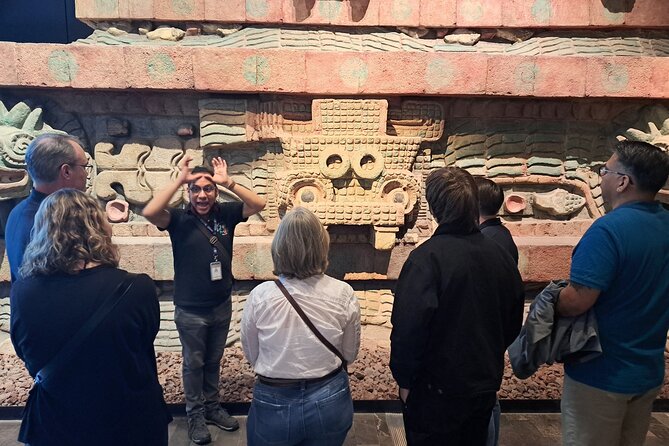
This is not only a museum tour of objects behind glass. The experience also includes guided references to how artifacts are studied, conserved, and brought back to life for viewing.
In the description, interactive experiences are part of the plan, including multimedia resources related to ancient rituals. That matters because a lot of pre-Hispanic culture is hard to grasp from still images. Rituals have motion, repetition, and context, and multimedia tools can help you make sense of what you are seeing.
You also get time spent on restoration work. That is practical museum literacy. You learn that what you see in the galleries often went through conservation, and that interpretation is shaped by careful research. When a guide points out the work behind preservation, the museum feels less like a vault and more like an active science and craft.
Even if you are not an archaeology person, this kind of context helps you appreciate why the museum tells stories the way it does. It also makes your photos more meaningful, because you are photographing in response to something you understand.
Close by, worth a second look:
- Teotihuacan, Guadalupe Shrine & Tlatelolco Day Tour with Lunch
★ 5.0 · 11,603 reviews - Xochimilco, Coyoacan and Frida Kahlo with Optional Lunch
★ 4.5 · 7,320 reviews - Balloon flight + Breakfast in cave + Pyramids + Pick up CDMX.
★ 5.0 · 6,335 reviews - Teotihuacan pyramids morning or afternoon without tourist traps
★ 5.0 · 6,186 reviews
Small Group Size Up to 15: The Pace You Actually Need
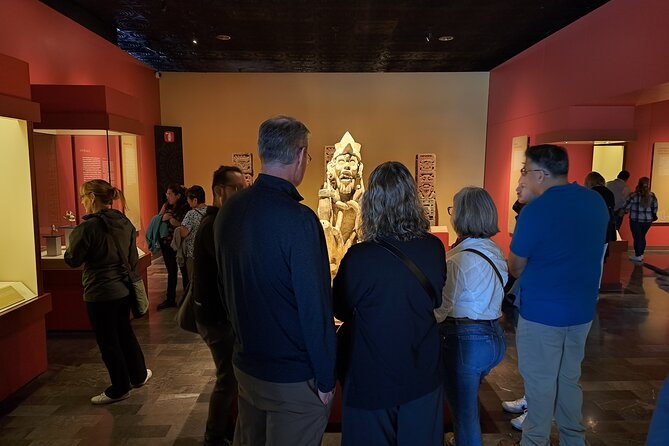
A museum this size can turn a tour into a blur. Here, the group is capped at 15 travelers, which keeps the experience human-sized.
That smaller number makes a real difference at three moments:
- When the guide stops and asks you to look closely, you can actually see what they are pointing at.
- When the guide explains symbolism, you are not listening from the back of a crowd.
- When you want clarification, you have a better shot at getting it.
The reviews also highlight that the pace works for families and solo travelers alike. If you are traveling with teens, you know what happens in big museums: everyone breaks into separate attention spans. A small group tour, led with questions and clear structure, is more likely to keep that shared thread going.
There is also a comfort factor. One review specifically mentioned having an earpiece so you can hear the guide clearly, which is a smart touch in a big building where sound can carry awkwardly.
English in a Mostly Spanish Museum: How This Tour Bridges the Gap
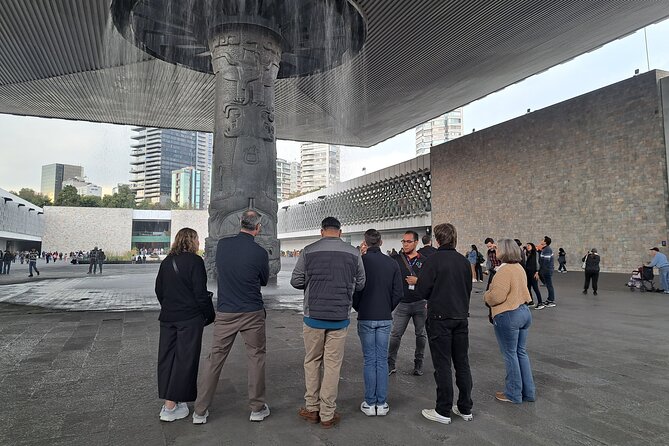
The museum is impressive, but language can be a bottleneck. Many labels and explanations are in Spanish, and if you do not read Spanish well, you can end up admiring the aesthetics while missing the point.
This tour is offered in English, and the guide interpretation does the heavy lifting. Instead of relying only on captions, you get spoken context while you stand in front of the artifact. That keeps you from bouncing between reading and wondering.
It also means you can focus on the big ideas:
- what the object represents,
- which culture or period it belongs to,
- why it is significant,
- and how it connects to neighboring themes.
One of the most practical takeaways from the experience described is this: you are not only learning facts, you are learning how to look. You start noticing symbols and design choices that you would likely miss if you were relying on signage alone.
If you already read Spanish comfortably, you might still appreciate the guide because you are not just translating. You are getting interpretation and a guided logic for what to prioritize.
Price and Value: What You Get for $98.57
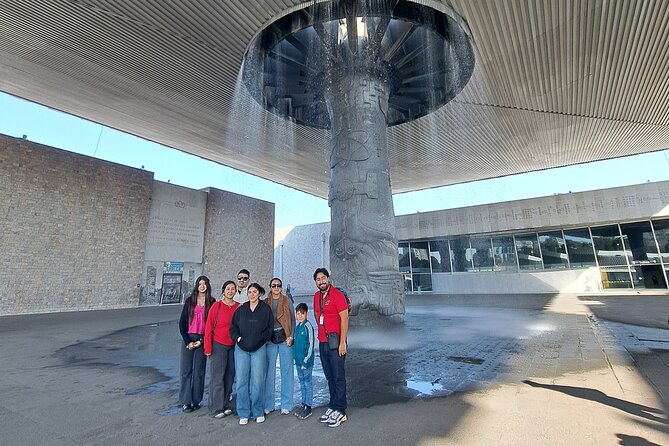
At $98.57 per person for about 3 hours, this tour sits in the mid-range for a major museum guided experience in Mexico City. The key question is value: what does your money buy besides a ticket?
Here you are paying for:
- guided entry with tickets included
- an expert-led route that highlights the most important parts
- time-saving VIP timing
- English interpretation in a museum where you might otherwise struggle
If you tried to do this solo, the cost would be only admission and your time would be your biggest expense. And time in a museum like this can be wasted on getting oriented, reading captions that take longer than expected, and then realizing you missed the points you actually wanted.
Three hours is also the right length for most people who have other plans in Mexico City. You can learn a lot, without turning your day into a full museum marathon.
For me, the price makes sense if you care about understanding symbolism and cultural context. If you just want to stroll and take photos with minimal learning, you might find better value going in without a guide. But if you want meaning, this is the kind of purchase that pays you back quickly.
Who This Tour Fits Best (And Who Might Skip It)
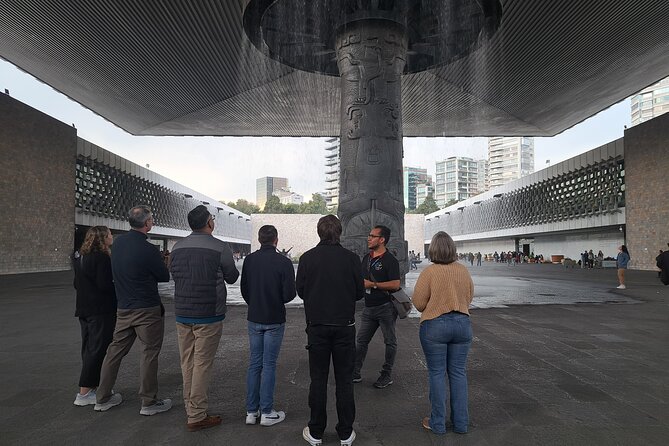
This tour fits best if you fall into one of these groups:
You want to understand pre-Hispanic cultures beyond surface facts. The guides connect artifacts to timelines and beliefs, which helps you build a mental framework fast.
You do not read Spanish fluently. The museum’s English support is limited, so spoken interpretation becomes the smart shortcut.
You like small group pacing. If big tours feel chaotic to you, the max 15 group size is a comfort.
You want the museum, but not the exhaustion. Three hours gives you the core highlights, then you can decide what else to see on your own.
It may not be your best match if:
- you love totally unstructured wandering, and you already know exactly what you want to focus on,
- you are happy reading Spanish captions for long stretches,
- or you plan to stay past the tour time to see deeper sections without needing a guide.
In other words, if you want a guided story, book this. If you want a free-form walk, you may prefer going solo or choosing a longer private option.
Should You Book This Small-Group Anthropology Tour?
My short decision rule: book it if your goal is understanding, not just attendance.
This experience is strong on the things that matter in a big museum, VIP timing, an English guide who helps you connect artifacts, and a small group size that keeps the tour from turning into a rushed shuffle. If you have limited time in Mexico City, it is a smart way to prioritize the museum’s most important objects and leave with a clearer sense of how the cultures connect.
If you have all day and you love translating labels on your own, you might not need a tour. But if you want to see the National Museum of Anthropology and actually come away feeling oriented, this is one of the easier calls you will make.
FAQ
How long is the tour?
It runs for about 3 hours.
What is included in the price?
You get tickets and a guide. Admission is included.
Is the tour offered in English?
Yes. The tour is offered in English.
How big is the group?
The maximum group size is 15 travelers.
Where does the tour start?
It starts at Museo Nacional de Antropología, Av. Paseo de la Reforma s/n, Polanco, Bosque de Chapultepec I Secc, Miguel Hidalgo, 11560 Ciudad de México, CDMX, Mexico.
Is there free cancellation?
Yes. You can cancel for a full refund up to 24 hours in advance.
Just added around Mexico City
- Museum of Anthropology: a look at Mexico’s past★ 5.0 · 52 reviews
- Bike Tour in Mexico City★ 5.0 · 45 reviews
- Xochimilco BOAT LIGHT PARTY WITH 1 DRINK AND 4 TAQUITOES + 18★ 4.5 · 26 reviews
- Small Groups: Xochimilco and Coyoacan★ 4.0 · 37 reviews
- Riding Boats +Warm Mex Food+ Frida Kahlo’s neighborhood (private)★ 4.5 · 29 reviews
- Xochimilco, Coyoacan, Aztec Stadium & UNAM★ 4.0 · 232 reviews
- Xochimilco & Coyoacán Private Tour: Canals, Markets & Local Food★ 5.0 · 58 reviews
- Xochimilco Magic: Culture, Canals & Mezcal, 3hr boat adventure!★ 5.0 · 43 reviews
Museums, compared.
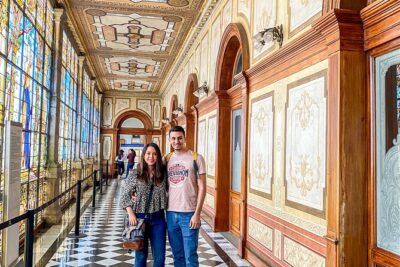
Chapultepec Castle & Anthropology Museum Tour
Read our review →
Frida Kahlo VIP [Museum Tickets Included] Bike, Markets & Churros
Read our review →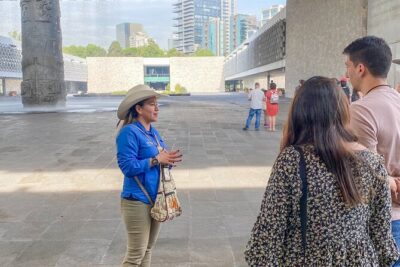
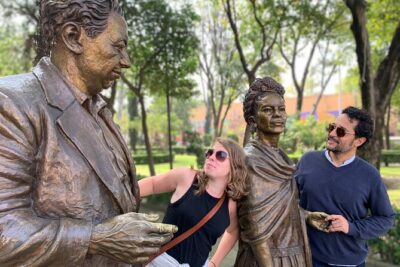
Frida Kahlo VIP [Museum Tickets Included] Walk, Markets & Churros
Read our review →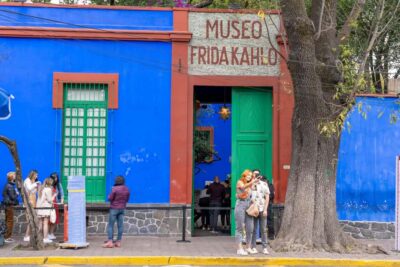
EXCLUSIVE TOUR Frida Kahlo Museum – SMALL GROUPS
Read our review →
Coba Multun-Ha Cenote Tulum and Mayan Museum Small Group
Read our review →
Browse the lists this tour appears in