
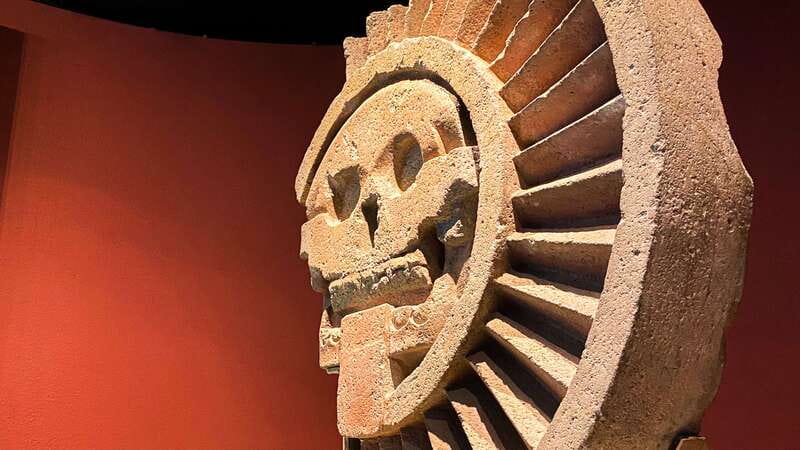
Reviewed · CITY TOURS
Mexico City: Anthropology Museum Guided Visit
The National Museum of Anthropology can feel like a maze. I love this guided visit because it turns a huge building into a clear story, from early hunters to civilizations like the Maya and Aztec, with flagship highlights you will actually understand.
What I like most is how the guide brings out meaning, not just facts, plus the museum’s English-guided explanations help when many labels are in Spanish. One possible drawback: the museum is enormous, so 2.5 hours means you will see the best route, not everything.
Key highlights you will notice fast
- Spear points and tiny artifacts that connect you to daily life over 10,000 years ago
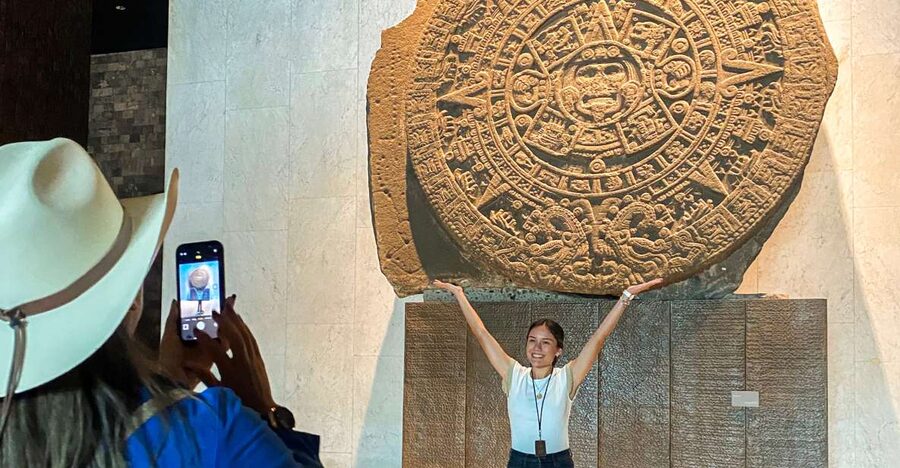
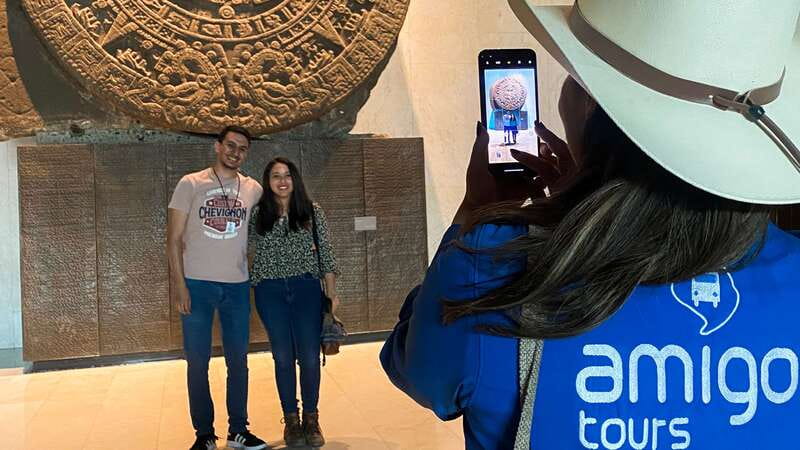
- The museum’s most famous stop, including the Stone of the Sun (Aztec calendar stone)
- A guide helps you connect cultures across Mexico, including Maya, Aztec, and Zapotec
- You get planned time to rest your brain with self-guided exploring after the tour
- Guides often point out originals vs replicas, which helps you read exhibits correctly
In This Review
- Walking into the Museo Nacional de Antropología’s biggest problem
- Meeting at 8:50, then getting a smart museum route
- The tiny-object rooms: when “small” artifacts hit hardest
- Clay pieces, daily life, and religious symbolism in the same room
- The Stone of the Sun and the big questions behind Mesoamerica
- Using the free time well, not aimlessly
- Price and value: what $67 buys you in real terms
- What you should know about guides and group feel
- Who this Anthropology Museum guided visit is best for
- Should you book this guided visit?
- FAQ
- Where is the meeting point?
- What time do we meet?
- How long is the experience?
- What’s included in the price?
- Do I need to buy museum tickets in advance?
- What languages are available for the guided tour?
- Is there free time after the guided portion?
- Is cancellation possible after booking?
Walking into the Museo Nacional de Antropología’s biggest problem
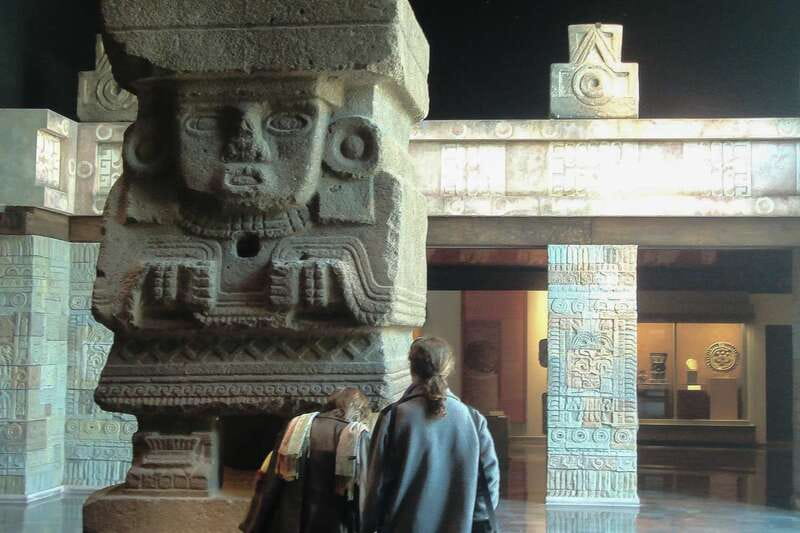
The National Museum of Anthropology in Mexico City is one of those places where your first thought is, Uh oh, this is huge. It was established decades ago and still pulls in around 2 million visitors a year, so the energy is real. But size can be a trap. If you go in alone, you can end up speed-walking past the points that give the collections their meaning.
This guided visit fixes that problem. You start at the museum itself, then follow a route designed to hit major galleries without losing your place. You’re not trying to “finish” the museum. You’re trying to leave with a working map of Mexican indigenous history, from the earliest evidence of hunting to the societies that shaped Mesoamerica.
Another reason I like this approach: it treats objects like objects with context. You are not just looking at things behind glass. You are learning what those materials were, what they were used for, and how people understood the world around them.
Meeting at 8:50, then getting a smart museum route
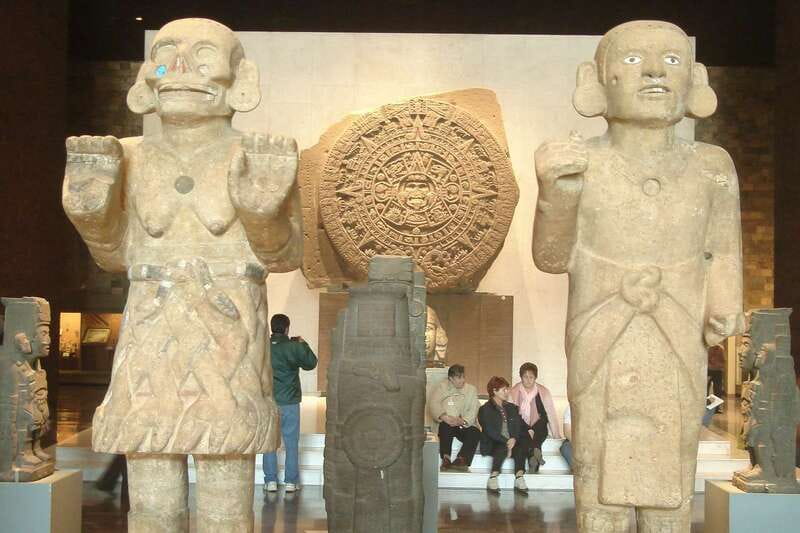
You meet your guide at the flagpole next to the main entrance at 8:50 am. That early start matters. The museum is popular, and beating the biggest rush helps you actually hear explanations instead of fighting for position.
The tour runs about 2.5 hours, including time to move between rooms. You will still get a chunk of free time afterward to explore on your own. That mix is practical. The guide does the heavy lifting, and then you can spend your own energy on what you want to linger over.
Also, this tour is built for people who want clarity in English or Spanish. Your guide can be Spanish or English, and the group can be private if you want a quieter pace or more questions.
One thing to know about pacing: it stays tight, but the museum’s scale means your route can feel intense if you like slow looking. That said, multiple guides have a reputation for keeping people moving at a pace that still leaves room to ask questions.
Backup plans for Mexico City
- Chapultepec Castle & Anthropology Museum Tour
★ 4.5 · 1,348 reviews - Frida Kahlo VIP [Museum Tickets Included] Bike, Markets & Churros
★ 5.0 · 1,072 reviews - Anthropology Museum Guided Tour
★ 4.5 · 1,035 reviews
The tiny-object rooms: when “small” artifacts hit hardest
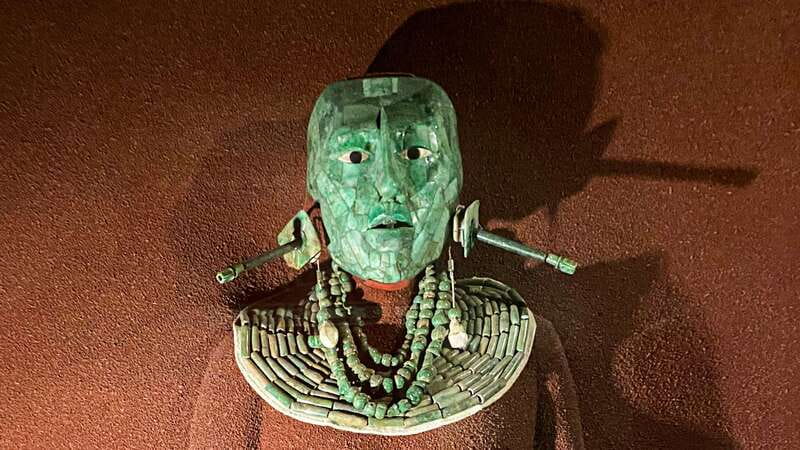
A highlight of the museum is that it does not only worship grand statues and big stones. This tour specifically pulls you toward rooms with small objects, and I think that is the smart move. Small items are often the most human. A spear point, a carved piece, or a bit of clay can make history feel close.
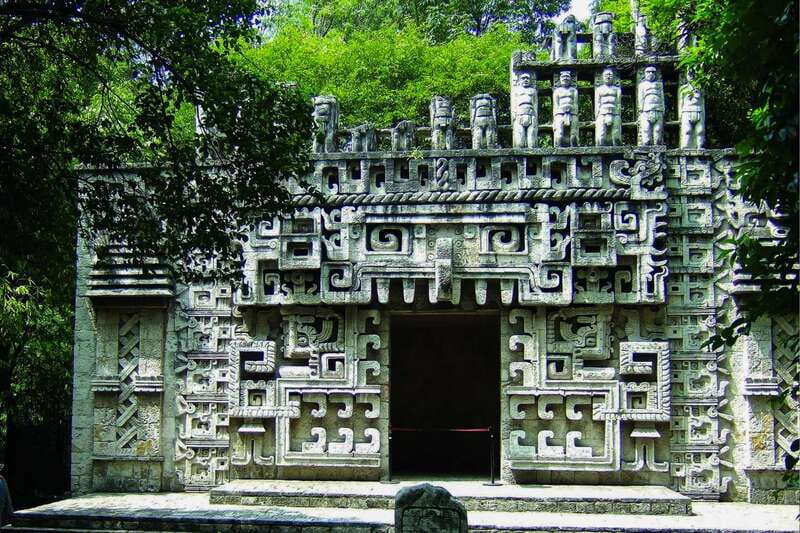
You spend time seeing objects excavated from archaeological sites across what is now modern Mexico. The point is to feel how wide the map is. Different cultures created these pieces across different times, and the guide helps you notice patterns instead of just collecting random sights.
One of the most memorable topics in this tour is early hunting technology, including spear points used more than 10,000 years ago. Even without knowing a single museum term, you can understand why those tools mattered. They were the difference between survival and not surviving, and that puts later societies into perspective. When the guide connects early subsistence tools to later ritual objects, it becomes easier to see continuity, not just change.
Clay pieces, daily life, and religious symbolism in the same room
Another big payoff here is the way the tour links everyday items with sacred meaning. You do not just see “art.” You see how people made objects for daily life and also how they used materials symbolically in religious ceremonies.
In the smaller display areas, the guide often points out how similar materials can shift in meaning. For example, you might see simple clay pieces that fit routine tasks, then learn how clay could also show up as symbolic objects in ceremonies. It’s a powerful reminder that belief systems are not separate from daily life. In many cultures, they are part of the same system.
This is also where the museum’s layout starts to work for you. You begin to read rooms like chapters. Instead of thinking, What am I looking at? you start asking, What was this for, and what did it mean to the people who made it?
The Stone of the Sun and the big questions behind Mesoamerica
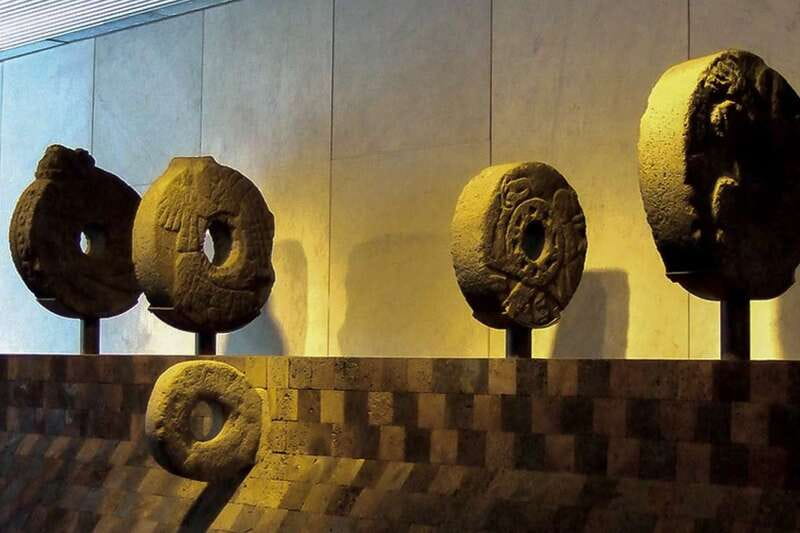
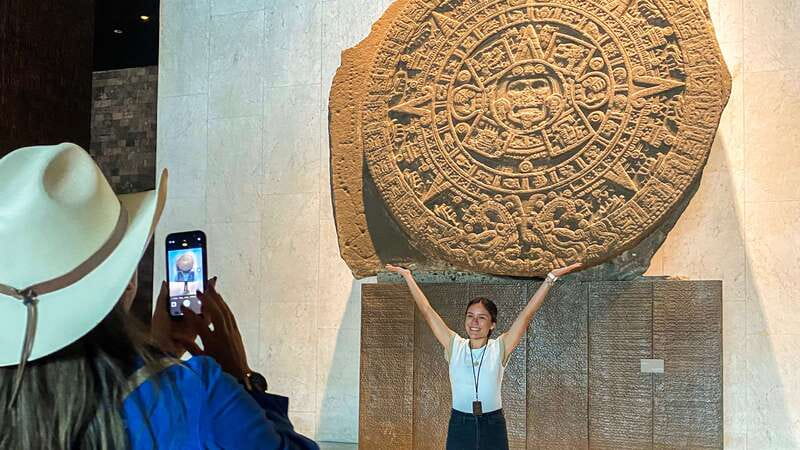
Yes, you’ll see the Stone of the Sun, the Aztec calendar stone. It’s one of those objects that stops conversations in the room, because it looks both monumental and oddly specific at the same time. A guide helps you make sense of why it matters and what meanings historians have debated and re-evaluated.
This tour also covers the larger story of how people have learned to rethink Mesoamerican development over time. You are not just touring. You are building context for how major civilizations are connected, including Maya, Aztec, and Zapotec traditions.
If you’ve ever felt confused about timelines in the region, you’ll understand why you came. The guide explains the logic behind the sequence, and you get a framework to understand what you will see elsewhere in Mexico City. One practical benefit: people often feel prepared for other sites after this museum visit, including planning for Teotihuacan the next day.
Close by, worth a second look:
- Teotihuacan, Guadalupe Shrine & Tlatelolco Day Tour with Lunch
★ 5.0 · 11,603 reviews - Xochimilco, Coyoacan and Frida Kahlo with Optional Lunch
★ 4.5 · 7,320 reviews - Balloon flight + Breakfast in cave + Pyramids + Pick up CDMX.
★ 5.0 · 6,335 reviews - Teotihuacan pyramids morning or afternoon without tourist traps
★ 5.0 · 6,186 reviews
Using the free time well, not aimlessly
After the guided portion, you get time to explore on your own. This is where you can turn the tour into a personal experience. Instead of wandering with zero plan, you’ll already know what you care about, so your free time becomes targeted.
Here’s how I’d use that extra time:
- Go back to the exhibit that felt most clear during the tour and look slower.
- If you remember a point you didn’t fully absorb, look for related items close by.
- Take photos if you like, but also spend a few minutes reading the nearby labels to catch what the guide hinted at.
One practical lesson from guide styles you may encounter: some guides are very careful about pointing out originals vs replicas. That matters because it changes how you interpret what you see. Replicas can still teach a lot, but knowing which is which keeps your understanding grounded.
Also, don’t underestimate how much there is to see. Even with a guided route, the museum is huge. If your schedule allows, I’d plan extra time in CDMX and consider a second visit another day. This place rewards repeat attention.
Price and value: what $67 buys you in real terms
At $67 per person for about 2.5 hours, the price can feel steep if you compare it only to the museum entrance. One visitor pointed out that general admission is roughly 200 pesos, so the guide fee is doing the heavy lifting.
So is it worth it? For the right traveler, yes, because the guide is not just describing objects. The guide is:
- helping you choose which rooms to prioritize in a massive building
- translating the collection into a timeline you can remember
- adding context for how tools, everyday materials, and symbols fit together
The biggest value isn’t that you get to skip the ticket line. It’s that you save time that you would otherwise lose trying to figure out what matters most. When the museum labels are mostly in Spanish, an English-speaking guide becomes even more important. Even if you can read some Spanish, you’ll still miss the connections if you don’t have someone explaining the story out loud.
If you are the type of traveler who loves to read every label and go slow, you might prefer a self-guided visit and spend longer in the building. But if you want an efficient route with meaning and you’re short on time, a guided tour is one of the best ways to get value here.
What you should know about guides and group feel
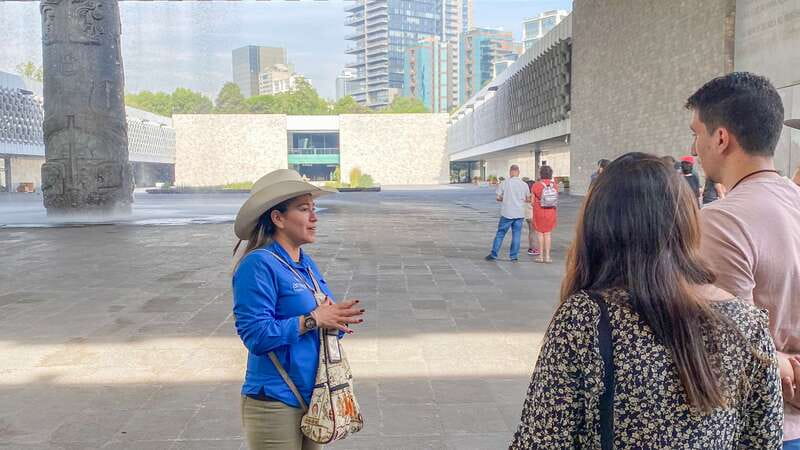
A major reason people rate this tour highly is the guide effect. Names you may see include Leonardo, Giovanna, Alan, Ligia, and Hector, and multiple guides are praised for moving through the museum with structure and good pacing.
What I take from that, for your expectations:
- Great guides help you retain information. You’re not just collecting facts, you’re building a mental model.
- Good guides keep the group from getting lost, which is crucial in a museum this big.
- Many guides make the experience interactive, with room to ask questions and get explanations in plain language.
Your experience will still depend on your guide’s style. If you want extra Q and A, look for a private group option. If you prefer a lively, story-based approach, a highly engaged guide will suit you.
Who this Anthropology Museum guided visit is best for
This tour is ideal if you:
- have limited time in Mexico City
- want a clear starting point before moving on to other sites
- enjoy archaeology and culture, but don’t want to spend hours researching first
- prefer explanations in English or Spanish rather than relying only on museum plaques
It’s also a smart choice if you’re traveling with someone who wants direction. Museum overwhelm is real, even when the exhibits are fantastic.
If you are already an archaeology nerd who knows the basics, you might still enjoy the tour because it helps you focus on the most important objects and learn why those objects are interpreted the way they are.
Should you book this guided visit?
If you’re on the fence, I’d book it when your goal is understanding, not checking boxes. For $67 and 2.5 hours, the guide gives you a map and a story, and that is what turns the National Museum of Anthropology from overwhelming to memorable.
Skip the guide only if you have plenty of time, strong Spanish reading skills, and the stamina to explore without structure. Otherwise, do yourself a favor and get the route first. Then use the free time afterward to linger where you feel the most curiosity.
In short: if you want to walk out with context for Mexico’s deep past, this guided visit is a good bet.
FAQ
Where is the meeting point?
Meet your guide at the flagpole next to the main entrance of the National Museum of Anthropology.
What time do we meet?
You meet at 8:50 am.
How long is the experience?
It lasts about 2.5 hours, including guided time and time to explore afterward.
What’s included in the price?
The tour includes a live guide and entrance to the National Museum of Anthropology.
Do I need to buy museum tickets in advance?
You will skip the ticket line as part of the tour experience.
What languages are available for the guided tour?
Guides are available in Spanish and English.
Is there free time after the guided portion?
Yes, you’ll have free time to explore the museum on your own after the tour.
Is cancellation possible after booking?
Free cancellation is available up to 24 hours in advance for a full refund.
Just added around Mexico City
- The Real Mexico City: Under the skin of CDMX★ 5.0 · 21 reviews
- Teotihuacan Pyramids: Guided Tour with Entry Ticket Included★ 4.1 · 45 reviews
- Teotihuacan: Private Tour with Archeologist & Hotel Pick-up★ 4.2 · 164 reviews
- Teotihuacan, Guadalupe, Xochimilco Coyoacan & Frida Kahlo★ 4.0 · 27 reviews
- Soumaya: the greatness of Mexican & western art.★ 4.9 · 26 reviews
- From Mexico City: Puebla and Cholula Day Tour★ 4.2 · 194 reviews
- National Museum of Anthropology: a journey into Mexico’s past – English lang.★ 4.8 · 26 reviews
- Nevado De Toluca: Reach the Summit with Professionals★ 4.8 · 250 reviews
City Tours, compared.
Teotihuacan & Guadalupe Shrine Tour with Lunch
Read our review →
Teotihuacan Hot Air Balloon Flight from Mexico City / Volare
Read our review →
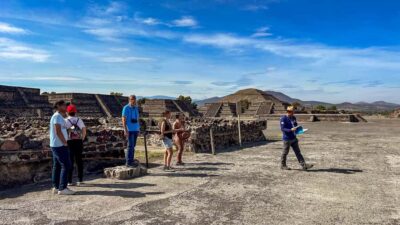
Teotihuacan Early Access Tour & Optional Lunch
Read our review →

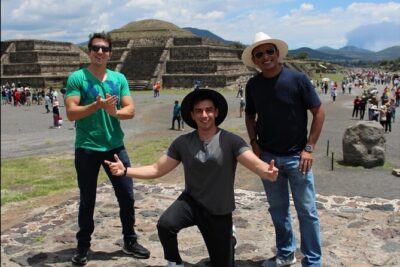
The best tour to Teotihuacán from Mexico City
Read our review →
Browse the lists this tour appears in