
Reviewed · SCUBA DIVING IN CANCUN
Two Tanks Scuba Diving for Beginners in Cancun
First-timer scuba can be scary, then it clicks. This Cancun program mixes pool training with two unforgettable underwater sites, including the MUSA underwater museum. I especially like the small group size and the fact that your instruction carries right into your time in the water. One consideration: you must be able to swim and perform the required skills, and certain health conditions mean you cannot participate.
You’ll start early, do a medical questionnaire, then get basic theory plus hands-on pool practice before you head to the water. The day runs about 5 hours total, and you’re back at the meeting point the same day. For many first timers, the payoff is huge because you get real coaching, not just a quick outfitting.
In This Review
- Key Highlights at a Glance
- Two-tank beginner scuba in Cancun, built for first timers
- Your morning schedule: from medical check to pool skills
- What you learn before you ever step off the boat
- Boat day logistics: gear, timing, and motion sickness prep
- MUSA Underwater Museum: art and structure under the sea
- Manchones Reef: wildlife takes over the second session
- The equipment details that matter more than you think
- Photos and videos: worth it if you want memories you did not work to capture
- Price and value: what you get for $169 per person
- Who should book this, and who should skip
- Should you book this Cancun scuba experience?
- FAQ
- Do I need scuba certification to take part?
- How long is the whole experience?
- Is transportation from my hotel included?
- What gear is provided?
- Do I need to know how to swim?
- Are there medical conditions that prevent participation?
- Can I use sunscreen before going in the water?
- What should I do if I get motion sickness on boats?
Key Highlights at a Glance
- Small group size (up to 8 people) for more individual attention
- Beginner-friendly format with basic theory, pool skills, then two-tank underwater sessions
- Two very different underwater locations: MUSA and Manchones Reef
- Equipment and wetsuit included (BCD, regulator, mask, fins, plus wetsuit)
- Safety-first coaching with instructors who check in often in the water
Two-tank beginner scuba in Cancun, built for first timers
This experience is designed for people who want to try scuba without waiting for certification. You do the learning in a controlled way first, then you apply it in open water with support close by. The goal is simple: feel comfortable with the basics, understand how your body behaves underwater, and leave with a real sense of what scuba life is like.
I like that the program doesn’t pretend everyone will feel calm at the start. Many people get nervous when the gear goes on or when they step toward the water. The instruction is paced, and the guides are known for being patient, especially with first timers who need reassurance.
The other reason this works well in Cancun is that the underwater locations match the teaching vibe. You get a first site that’s fascinating and structured, and then a second spot where wildlife steals the show. That mix keeps the day exciting while you’re still building confidence.
More Scuba Diving in Cancun
- Diving in the Mexican Caribbean for Beginners | 2 Tanks 2 Dives | All Inclusive
★ 5.0 · 431 reviews - Scuba Diving Under Water Museum and Reef for beginners
★ 5.0 · 189 reviews - Cancun: Scuba Diving for Beginners, 2 Dives
★ 5.0 · 184 reviews
Your morning schedule: from medical check to pool skills
The day starts with check-in at 8:00 a.m. and a boat departure around 9:30 a.m. You return to the same meeting point around 1:00 p.m. That means it’s not a full-day marathon, but it still gives enough time for real instruction and two tank sessions.
Before anyone goes in the water, you fill out a medical questionnaire. This matters because certain conditions mean you cannot participate. The restrictions listed include asthma, heart or brain problems, high blood pressure, lung lesions, organ transplant, diabetes, epilepsy, and any surgery within the last year. If any of these apply to you, it’s best to check early, because you will not be able to join the underwater part.
After the paperwork, you move into a basic theory lesson plus pool practice. You’ll learn core scuba skills and demonstrate them as part of the training process. And yes, there is a practical requirement: you must know how to swim. The program is built around learning skills in the water, so if you can’t complete the required tasks for safety reasons, you won’t be able to take part in the underwater sessions.
What you learn before you ever step off the boat
The pool portion is the heart of why this works for beginners. You get time to get comfortable with the gear, practice the movements, and understand how to breathe and manage buoyancy. This isn’t just watching a slideshow and hoping for the best.
From the way instructors are described, the teaching style is hands-on and calm. For example, instructors such as Lorena, Marin, and Carolina are repeatedly praised for patience and for using humor to reduce nerves. You’ll also see that the coaching is not one-size-fits-all. If you’re struggling with breathing rhythm or staying relaxed, you should expect quick feedback and gentle correction.
One more practical tip: if you’re prone to seasickness, the day is boat-based, so plan for motion. The guidance is to consider anti-nausea pills about 1 to 2 hours before boarding. That timing matters because it helps you avoid the “too late” feeling when the boat gets moving.
Boat day logistics: gear, timing, and motion sickness prep
This is a boat activity, so your comfort on the ride is part of the overall experience. You’ll head out from the meeting point at Hotel Sotavento Cancun (Km 4, Blvd. Kukulcan, Zona Hotelera). Because the schedule is tight, being on time matters.
Gear is handled for you. The program includes full scuba equipment: BCD, regulator, mask, fins, plus a wetsuit. That removes a big headache for first timers who would otherwise be hunting for rental gear.
Still, bring your own basics for comfort:
- ID (you’ll need it)
- Towel
- Swimsuit
- Anything personal you normally use
A small note that people often forget: sunscreen is not allowed for coral protection. So skip sunblock for the dive day. In practice, that means you’ll want a plan for sun protection that doesn’t involve lotion on the waterline, like light clothing that you can remove when you’re in the water.
If you’re carrying valuables, plan how to keep them dry. Some divers suggest storing items at the start of the boat trip or using a waterproof sack. Also, one advantage of a small crew is that there’s less chaos between changing tanks, fitting gear, and keeping your group moving.
Backup plans for Cancun
- Diving in Cancun for Certified Divers | 2 Dives | All Inclusive
★ 5.0 · 101 reviews - 2 Tank Reef Dive in Mexico
★ 5.0 · 84 reviews - Discover Scuba
★ 5.0 · 50 reviews - Discovery Scuba Diving !!
★ 5.0 · 46 reviews
MUSA Underwater Museum: art and structure under the sea
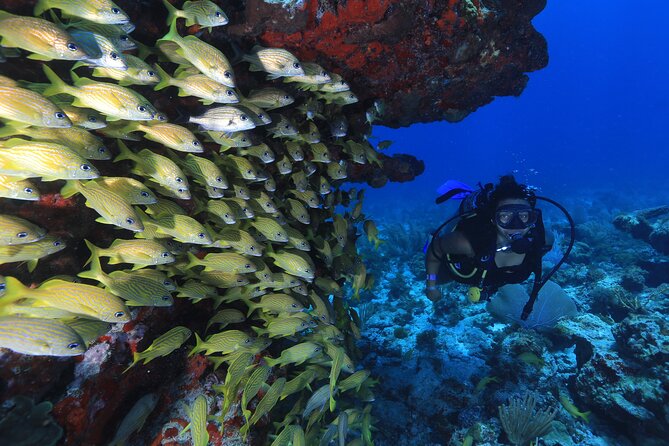
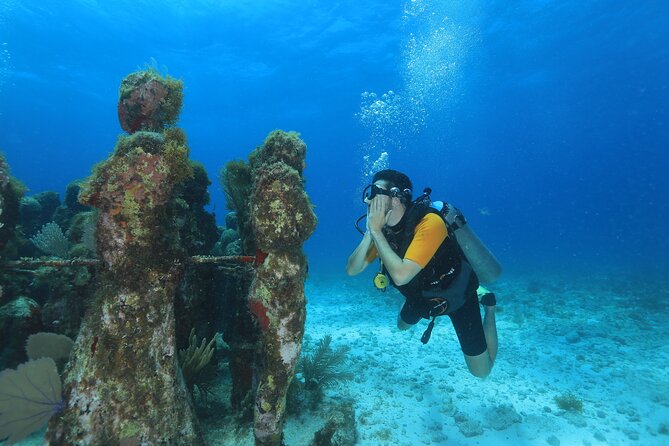
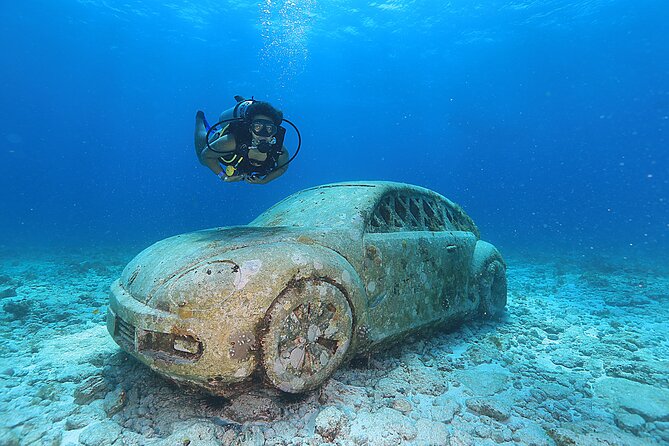
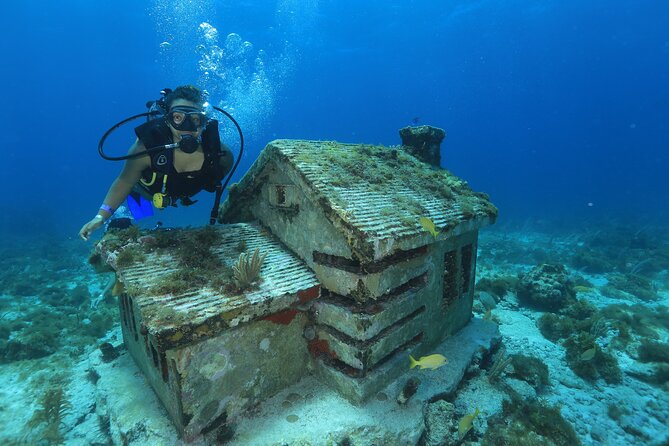
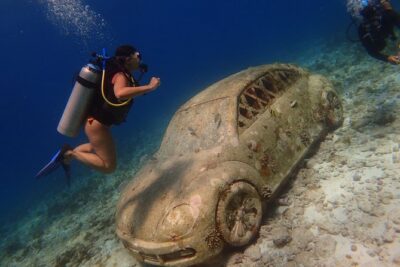
The first tank session happens at MUSA Underwater Museum. MUSA is special because it’s not just scenery. It’s a curated underwater museum environment, so you’re swimming through a place with objects that are designed to attract marine life.
For beginners, that structure can actually be helpful. When you’re still getting used to gear and breathing, it’s easier to focus on something tangible. You can look at the forms, watch how they sit on the seabed, and use them as visual anchors while you build comfort.
You should also expect the underwater team to point things out. In many beginner experiences, the difference between average and memorable comes down to attention from the guide. The guides here are frequently described as taking their time to point out wildlife, including animals hiding under rocks and in the coral.
If you’re worried about sharks, you’re not alone. There’s a real theme in the feedback: people with nerves about the ocean often feel at ease once they see calm instruction and know where to look. And while no one can guarantee specific animals, you can count on the guides helping you spot what is there.
Manchones Reef: wildlife takes over the second session
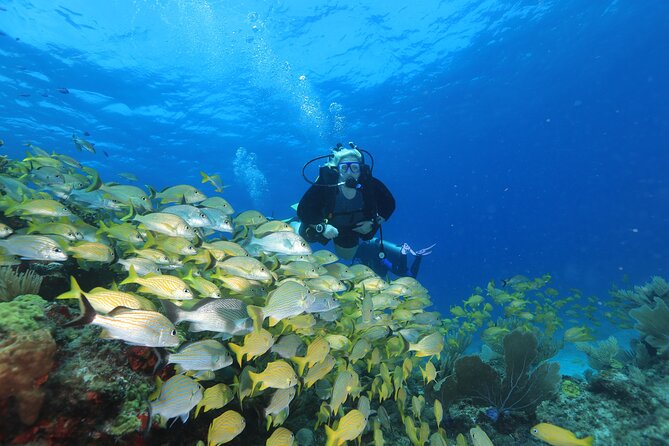
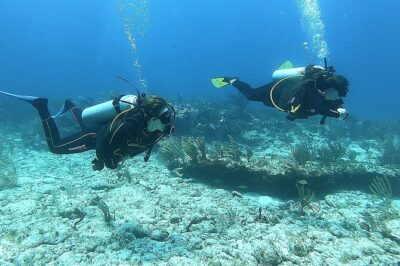
The second tank session is at Manchones Reef. This is where the day often flips from “learning” to “wow.” The reef setting tends to feel more alive, and you’ll be able to spot more wildlife, fish activity, and coral detail.
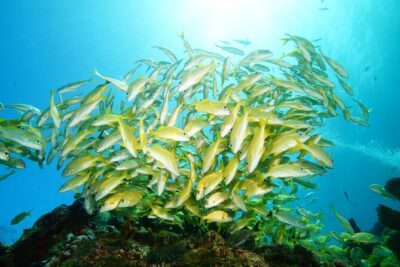
In the experiences shared, people report seeing animals like turtles, sting rays, lobsters, moray eels, octopus, nurse sharks, and lots of tropical fish. You might not see the exact same lineup, but the point is clear: Manchones Reef is a strong choice for wildlife watching, especially if it’s your first time underwater.
Because you’ve already done one tank session, you’ll likely feel more coordinated by the second location. Your breathing rhythm is easier, you know how to signal with the team, and you understand what to do if something feels off. That makes the second site feel smoother and more enjoyable for most beginners.
The equipment details that matter more than you think
Even with scuba gear included, it’s the fit and comfort that makes or breaks your day. Your mask and fins need to work for you, and the BCD and regulator need to feel stable. The program provides the gear, but you still want to take a second to confirm everything fits before you head out.
A few practical notes that come up in the feedback:
- Guides help you adjust when you’re nervous or uncertain.
- Some divers benefit from the guides noticing issues early, like GoPro problems or gear comfort.
- If you have blisters or minor issues, you might find small first-aid type support on board, like bandages and water.
Also remember the “do not rush” rule. If you’re wearing yourself out in the pool, tell your instructor. One of the most helpful coaching themes here is that instructors quickly adjust the teaching pace based on how you’re breathing and moving.
Photos and videos: worth it if you want memories you did not work to capture
Photos and videos are optional and not included in the base price. But if you want a keepsake, this is one of those activities where having someone else handle the camera can be a big win.
People describe photo packages as high quality, and some mention that instructors use their own camera systems, which is ideal when you’re still learning how to manage scuba gear. If you tried to operate your own camera as a first timer, you might find it distracting or hard to keep steady while doing basic skills.
If you already plan to bring a camera, just know the simplest approach is to keep your focus on comfort and safety first. Let the guide capture the big moments, and use your device only if you feel fully in control.
Price and value: what you get for $169 per person
At $169 per person, the value comes from three bundled things that first timers usually pay for separately: instruction, gear, and two separate underwater experiences.
Here’s the trade that you’re making:
- You pay for a structured learning day, not just time in the water.
- You get BCD, regulator, mask, fins, and a wetsuit, so you don’t have to budget for rentals.
- You get two tank sessions with a different location each time, so you’re not repeating the same scenery.
The biggest “value check” is what you need to add yourself. Transportation from your hotel is not included, so factor in taxi or rideshare costs depending on where you’re staying. Also remember: sunscreen is restricted for coral protection, so plan sun protection that fits that rule.
On the scheduling side, the day is efficient. You’re out around the morning, back by early afternoon, and still get real instruction plus two underwater sessions. If you want a one-day scuba experience that’s not rushed, this format usually hits the sweet spot.
Who should book this, and who should skip
This is a strong fit if you:
- Want a beginner-friendly first scuba experience without certification
- Can swim and are willing to practice skills in the pool and in the water
- Want a guide who stays close and helps you build confidence
- Like the idea of doing MUSA first, then wildlife-focused Manchones Reef
It’s not a good fit if:
- You have any of the disqualifying conditions listed on the medical questionnaire, like asthma, high blood pressure, epilepsy, or surgery within the last year
- You cannot complete the required water skills for safety reasons
- You need an option that does not involve a boat ride
One more timing note if you have travel plans: plan 18 to 24 hours of rest after your underwater sessions before taking a flight. That’s specifically called out, and it’s smart planning for comfort and safety.
Also check age limits if you’re traveling as a family. The program lists children minimum age 10 and maximum age 65.
Should you book this Cancun scuba experience?
Yes, book it if you want a guided, beginner-first day with serious support. The combination of pool instruction, small group size, and two different underwater locations is a practical formula for turning nerves into real confidence. Names like Marin, Lorena, and Carolina keep showing up in the feedback because they coach calmly and stay attentive when people get anxious.
Hold off or pick a different plan if you’re unsure about swimming comfort, you have a medical condition that might disqualify you, or you’re not ready for the safety requirement of performing the skills. And if your hotel is far from the meeting point, budget for transportation since that part is not included.
If you’re on the fence, the smartest move is to compare your priorities. If you want learning plus real time under the water in Cancun, this two-tank format is one of the easiest ways to make it happen.
FAQ
Do I need scuba certification to take part?
No. This is a beginner program where you get basic theory and pool practice before you do two tank sessions in open water.
How long is the whole experience?
It runs about 5 hours. Check-in is at 8:00 a.m., boat departure is around 9:30 a.m., and you return around 1:00 p.m.
Is transportation from my hotel included?
No. Transportation from your hotel is not included. The meeting point is at Hotel Sotavento Cancun on Blvd. Kukulcan.
What gear is provided?
You get full scuba equipment: BCD, regulator, mask, and fins, plus a wetsuit.
Do I need to know how to swim?
Yes. You must know how to swim, and you must be able to perform required skills for safety reasons.
Are there medical conditions that prevent participation?
Yes. The program lists restrictions including asthma, heart or brain problems, high blood pressure, lung lesions, organ transplant, diabetes, epilepsy, and surgery within the last year. If any apply, you cannot participate.
Can I use sunscreen before going in the water?
No. Sunscreen or sunblock is not allowed for coral protection.
What should I do if I get motion sickness on boats?
You’re advised to consider anti-nausea pills about 1 to 2 hours before boarding, since this is a boat-based activity.
Just added around Cancun
- Puerto Morelos Foodie Tour, Mexico in every bite!★ 5.0 · 241 reviews
- Private flight to Holbox from Cancun★ 4.5 · 35 reviews
- Luxury FERRY Xcaret: From Cancun to Isla Mujeres★ 4.5 · 167 reviews
- Two Dives and Class for Begginers Divers in Cancun★ 5.0 · 19 reviews
- Explore Contoy Island★ 4.0 · 38 reviews
- Excursion to Chichén Itzá, Valladolid and Cenote xcajum★ 4.0 · 45 reviews
- Exclusive Tour to Chichen Itza, 2 different Cenotes & Valladolid for 1 price!★ 3.5 · 34 reviews
- Exciting Catamaran Tour to Isla Mujeres, from Cancún!★ 4.0 · 49 reviews
Scuba Diving in Cancun, compared.
Diving in the Mexican Caribbean for Beginners | 2 Tanks 2 Dives | All Inclusive
Read our review →
Scuba Diving Under Water Museum and Reef for beginners
Read our review →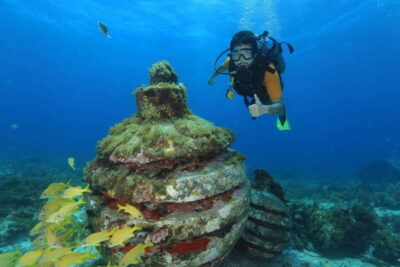
Diving in Cancun for Certified Divers | 2 Dives | All Inclusive
Read our review →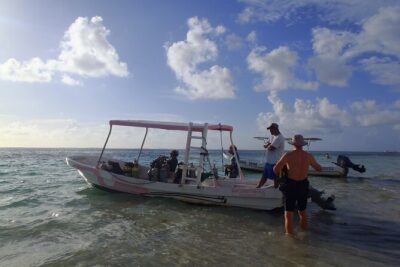
Browse the lists this tour appears in