Reviewed · MEXICO CITY TOURS & ACTIVITIES
The Best of Santa Maria de la Ribera
A quiet neighborhood food tour with strong local flavor. In Santa María la Ribera, a Mexico City area founded in the 1860s that still keeps a turn-of-the-century feel, this tour turns lunch into a guided story. I love the small-group pace, plus the way you get pulled from place to place for real eating: herb-infused salt, a working tamales factory with 20-plus daily options, and a stop that serves pulque without signs and with swinging saloon doors.
One thing to consider is that this is built around heavy tasting and included alcohol drinks, so it is not the kind of tour to do if you want a light snack-only outing or you prefer zero alcohol. Also, transport to and from the start and end points is on you, so plan a simple transit route ahead of time.
In This Review
- Key highlights to look forward to
- Santa María la Ribera: the Mexico City lane most people skip
- What you pay for, and why it is better than it looks
- The itinerary rhythm: how the stops fit together
- Stop 1: Santa María la Ribera and the herb salt start
- The tamales factory: 20-plus daily varieties and real working kitchens
- A quick market stroll: learning the look and feel of a city market
- The cooking school and restaurant: food that supports local business
- Pulque at a no-sign pulquería: swinging doors and pre-Hispanic roots
- The century-old geology museum and buñuelos to finish strong
- The end point at El Estanquillo El 32, and how to keep exploring
- Who should book this tour (and who might not love it)
- Should you book the Santa María la Ribera food tour?
- FAQ
- How long is the tour?
- How much does it cost?
- What language is the tour offered in?
- What is included in the tour price?
- What is not included?
- Where do I meet the guide, and where does the tour end?
- How big is the group?
- What should I know about timing and weather?
- Is it suitable for most travelers?
Key highlights to look forward to
- A small group (up to 8): tighter conversation, quicker questions, and more personal guidance.
- More than tamales: herb salt, market stroll, cooking school visit, pulque tasting, and a sweet finale.
- Pulque in a real pulquería: fermented, pre-Hispanic roots, served at a no-sign neighborhood spot with classic doors.
- Built-in local eating value: enough food for what feels like a large breakfast plus lunch combined.
- Hands-on + insider tips: you make herb salt and you leave knowing where to eat next in the neighborhood.
- Tour ends at El Estanquillo El 32: a family-run stop that sells craft beer, mezcal, coffee, honey, and salsas.
Santa María la Ribera: the Mexico City lane most people skip
Santa María la Ribera has that older Mexico City rhythm. You still get streets and structures that feel like the area did not instantly reset when the city modernized, and it helps the food stops feel grounded rather than staged. The neighborhood vibe is a big part of why this tour works, because the tastings connect to where people actually shop, cook, and drink.
This is also where a guided approach makes sense. If you just wander, you might find good bites. With a culinary guide like Nico Garcia leading the way, you understand why each place exists and how each dish fits into daily life.
Backup plans for Mexico City
- Teotihuacan, Guadalupe Shrine & Tlatelolco Day Tour with Lunch
★ 5.0 · 11,603 reviews - Xochimilco, Coyoacan and Frida Kahlo with Optional Lunch
★ 4.5 · 7,320 reviews - Balloon flight + Breakfast in cave + Pyramids + Pick up CDMX.
★ 5.0 · 6,335 reviews
What you pay for, and why it is better than it looks
At $122.46 per person for about 3 hours 30 minutes, this tour is not cheap in the usual tourist sense. But it is priced like a food-focused experience, and the included food and drinks are the point.
Here is what is covered:
- As much food as you can eat, enough for a large breakfast and lunch combined
- One agua fresca and one coffee or tea at the end
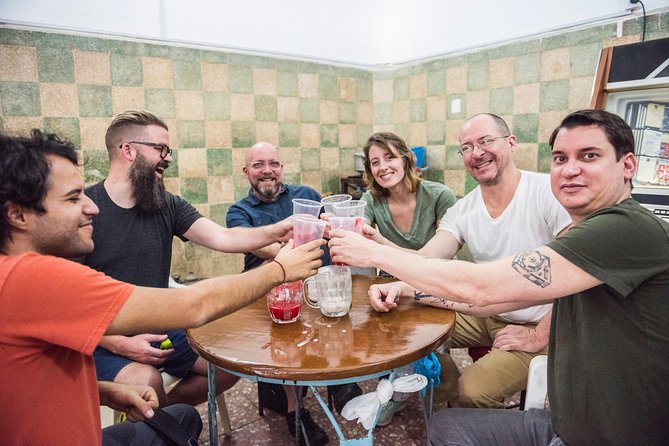
- A generous taste of traditional pulque
- One Mexican microbrew or mezcal
That matters because many food tours give you “samples” that barely fill the gap between meals. This one is built for you to actually eat, then keep eating. If you love trying more than two or three things, the math usually feels fair fast.
The tour runs in English and uses a mobile ticket, which makes it easier to manage your day. It starts at 1:00 pm, and the final stop is a real restaurant/store, Restaurante El Estanquillo El 32, so you do not just walk away after your last taste.
The itinerary rhythm: how the stops fit together
This tour is structured like a meal that grows step-by-step. It starts in Santa María la Ribera, then moves through places that each add a different angle: ingredient work, cooking culture, market reality, and the neighborhood drinking tradition.
You get a lot in a short window, but the stops are different enough that it does not feel like you are repeating the same bite in new wrappers. The guide’s job is to connect the dots, and Nico Garcia is specifically described as offering insight into Mexican history, culture, and resilience through food.
You will also notice something practical: the tour ends at a place where you can keep shopping the flavor you just learned about. That is a smart design, because you finish with momentum, not with a dead end.
Stop 1: Santa María la Ribera and the herb salt start
You begin in Santa María la Ribera and the first true “wow” moment is a neat local garden where you make herb-infused Mexican salt. This is more than a cute activity. It trains your palate, because salt like this changes what you notice in food: herbs, heat, and how flavors build instead of just hitting one taste.
When the tour gives you hands-on time early, it also sets the tone. You are not only eating passively, you are paying attention. After this, the tamales and market snacks feel clearer, like you have a map for what to look for.
Practical tip for this stop: go easy on other salty snacks beforehand. You want your senses working when you make and taste the salt, and you’ll use that “ingredient understanding” at later bites.
Close by, worth a second look:
- Teotihuacan pyramids morning or afternoon without tourist traps
★ 5.0 · 6,186 reviews - Teotihuacan Early Access Guided Tour with optional Lunch
★ 4.5 · 6,138 reviews - Balloon flight + pick up in CDMX + Breakfast in Cave + Pyramids
★ 5.0 · 5,651 reviews - Mexico City: Teotihuacan & Guadalupe Shrine Tour with Lunch
★ 4.7 · 4,465 reviews
The tamales factory: 20-plus daily varieties and real working kitchens
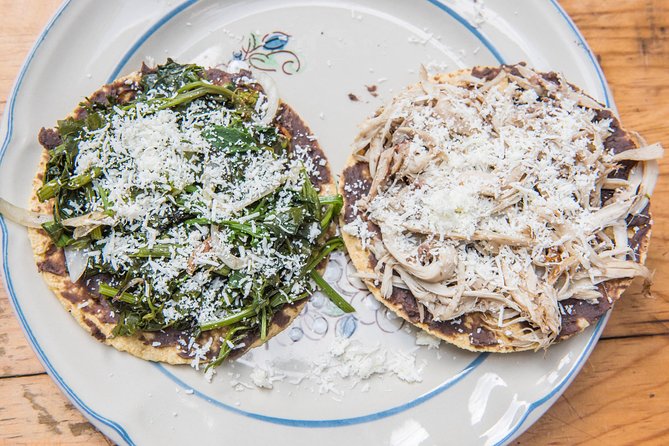
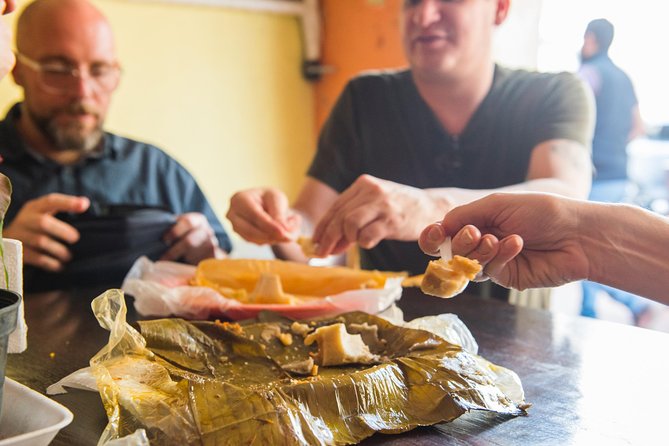
One of the best parts of this tour is the visit to a working tamales factory. The setup matters. You are not just passing a storefront and walking away. You see a place that makes tamales day after day, with more than 20 varieties daily.
That variety changes how you experience the food. Instead of choosing one tamale and moving on, you get a sense of how broad Mexican tamale culture can be across fillings, styles, and flavor profiles. It is also a strong reminder that tamales are not one thing, they are a whole spectrum.
What you should consider is timing and appetite. With so many options, you may feel tempted to keep sampling everything. The tour is designed for that, but it still helps to slow down once you find two or three you truly love. You’ll get more satisfaction that way.
A quick market stroll: learning the look and feel of a city market
Next comes a stroll through the local market to see how a traditional Mexico City market looks and feels. This kind of stop is useful even if you do not buy much. You start recognizing the everyday logic of shopping there: how stalls cluster by product, how people move through the space, and how ingredients show up ready for cooking.
This is also where you get real context for what you eat later and what you might hunt for after the tour ends. A market can teach you more than a menu board because it shows you what people actually choose.
If you like to return to places independently, this is the stop that makes that easier. You leave with a better sense of how markets operate beyond one planned visit.
The cooking school and restaurant: food that supports local business
The tour also pops into a neighborhood cooking school and restaurant that helps locals who may want to start their own food businesses. This matters because food tourism is often only about consumption, not about the systems behind it.
By including a place with a local mission, the tour connects the tasting to opportunity. You are eating something within a story of teaching, practice, and earning.
A small caution: because the tour is moving, you might not get long-form time with every detail. Still, the visit provides a direct link between what you eat and how local training turns into jobs and independence.
Pulque at a no-sign pulquería: swinging doors and pre-Hispanic roots
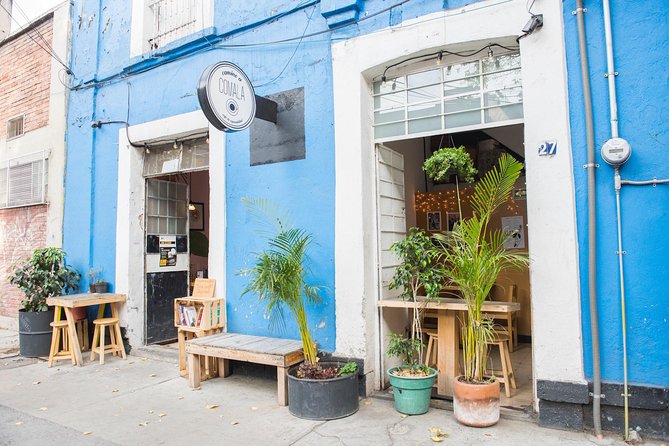
Then you get to one of the most memorable cultural stops on the route, a hidden pulquería with swinging saloon doors and no sign. That sounds playful, but it is also part of why the stop feels real. Neighborhood drinking spaces like this often run on local knowledge, not marketing.
You will get a generous taste of pulque, and you also get the background that it traces its roots to pre-Hispanic times. That historical connection is the kind of context that changes pulque from a novelty drink into something you can place in a longer tradition.
Practical tip: if you have never tried pulque before, go slow with the first sip. Even when you are enthusiastic, the taste and fermentation character can be strong compared to beer or soda. Let the guide’s timing help you pace it.
The century-old geology museum and buñuelos to finish strong
To keep things from turning into only food, the tour includes landmarks that shape the neighborhood story, including a century-old geology museum. This kind of stop is brief, but it gives you a different angle on the area, like a quick reset from the constant tasting.
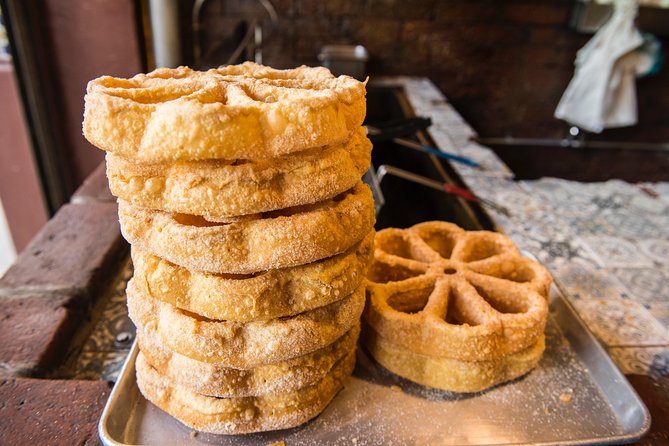
Then you end with a sweet bite: buñuelos, crunchy fried dough topped with sugar syrup. This final stop does two things well. It hits that classic street-dessert craving, and it also rounds out the day by moving from savory to sweet and from savory ingredients to dessert texture.
Because it is the finish, it also helps you leave satisfied rather than still thinking about what dessert you forgot to eat.
The end point at El Estanquillo El 32, and how to keep exploring
The tour ends at Restaurante El Estanquillo El 32. It is family-run and it sells more than just food, including craft beer, artisanal mezcal, coffee, honey, salsas, and more.
This is a smart ending because you can extend your trip in a low-effort way. If you liked the herb flavors, you might look for honey or seasoning items. If you enjoyed the drinks, you can browse craft beer or mezcal options without having to jump through additional logistics.
Also, the end location gives you a practical chance to ask Nico Garcia or the group for where to go next in the neighborhood. If you want to build a day around Santa María la Ribera, this is where the tour helps you do it without guessing.
Who should book this tour (and who might not love it)
Book this tour if you:
- Want a small-group food experience in a neighborhood that is not on every standard checklist
- Love trying lots of different traditional foods, not just one or two bites
- Enjoy culture explained through what people eat and drink
- Like guided insider tips that help you plan your next meals after the tour
Consider skipping if you:
- Prefer a short, snack-only activity rather than a full meal experience
- Do not want to participate in included alcohol drinks like microbrew or mezcal
- Want included transport handled for you, because meeting and end logistics are not included
Should you book the Santa María la Ribera food tour?
Yes, if your goal is to eat well, learn fast, and experience a less touristy part of Mexico City through food culture. The strongest reason to book is the value in the way this tour feeds you, plus the variety, from tamales and herb salt to pulque and buñuelos. The small-group size is also a major plus, because you get more real conversation and less crowd noise.
If you are on the fence, look at one question: do you want a guided food day in one neighborhood, where you finish knowing what to order and where to return? If the answer is yes, this is a solid choice.
FAQ
How long is the tour?
It runs for about 3 hours 30 minutes.
How much does it cost?
The price is $122.46 per person.
What language is the tour offered in?
The tour is offered in English.
What is included in the tour price?
You get as much food as you can eat, enough for a large breakfast and lunch combined, one agua fresca, one coffee or tea at the end, a generous taste of pulque, and one Mexican microbrew or mezcal.
What is not included?
Transport to and from the meeting and end points is not included. Souvenirs, tips for the guide, and additional personal beverages outside what’s listed are also not included.
Where do I meet the guide, and where does the tour end?
You start at Alameda de Santa María, Calle Salvador Díaz Mirón, Sta María la Ribera, Cuauhtémoc, 06400 Ciudad de México. The tour ends at Restaurante El Estanquillo El 32, Dr. Enrique González Martínez 32, Sta María la Ribera, Cuauhtémoc, 06400 Ciudad de México.
How big is the group?
The tour has a maximum of 8 travelers.
What should I know about timing and weather?
It starts at 1:00 pm. The experience requires good weather, and if it is canceled due to poor weather, you will be offered a different date or a full refund.
Is it suitable for most travelers?
Most travelers can participate. The tour is near public transportation.
Just added around Mexico City
- Museum of Anthropology: a look at Mexico’s past★ 5.0 · 52 reviews
- Bike Tour in Mexico City★ 5.0 · 45 reviews
- Xochimilco BOAT LIGHT PARTY WITH 1 DRINK AND 4 TAQUITOES + 18★ 4.5 · 26 reviews
- Riding Boats +Warm Mex Food+ Frida Kahlo’s neighborhood (private)★ 4.5 · 29 reviews
- Small Groups: Xochimilco and Coyoacan★ 4.0 · 37 reviews
- Xochimilco, Coyoacan, Aztec Stadium & UNAM★ 4.0 · 232 reviews
- Xochimilco & Coyoacán Private Tour: Canals, Markets & Local Food★ 5.0 · 58 reviews
- Xochimilco Magic: Culture, Canals & Mezcal, 3hr boat adventure!★ 5.0 · 43 reviews
Mexico City Tours & Activities, compared.
Teotihuacan, Guadalupe Shrine & Tlatelolco Day Tour with Lunch
Read our review →
Xochimilco, Coyoacan and Frida Kahlo with Optional Lunch
Read our review →
Balloon flight + Breakfast in cave + Pyramids + Pick up CDMX.
Read our review →
Teotihuacan pyramids morning or afternoon without tourist traps
Read our review →
Teotihuacan Early Access Guided Tour with optional Lunch
Read our review →
Balloon flight + pick up in CDMX + Breakfast in Cave + Pyramids
Read our review →
Teotihuacan & Guadalupe Shrine Tour with Lunch
Read our review →