
Reviewed · OAXACA TOURS & ACTIVITIES
Prepare an Oaxacan Mole by a Traditional Cook
Mole starts in the market, not the kitchen. This Oaxaca City class takes you from ingredient hunting to cooking Oaxacan mole for real, with small-group attention. I especially like the market to kitchen format, and the way chefs like Víctor (with helpers such as Wendy, in some groups) explain what you are working with, not just what you eat.
Two things I really love: first, the hands-on pace, with you chopping, grinding, frying, and rolling things into a full meal. Second, you get to make Oaxacan staples beyond mole, including corn dough projects like tortillas, memelas, or tetelas. One possible drawback: because so much prep is shared, you may not watch every single step of mole assembly like a live cooking show.
In This Review
- Key Highlights at a Glance
- Mole in Oaxaca City Starts at TeoLabXicoténcatl
- The Market Walk Where Chilies and Corn Get Real Names
- Cooking Oaxacan Mole the Traditional Way, and Why It Takes Team Work
- Tortillas, Memelas, Tetelas, and the Sauces That Make It Oaxaca
- Lunch, Dessert, and the Locally Grown Menu Twist
- Price and Value: Is $59.68 Worth It?
- English Instruction and How the Kitchen Teaching Actually Feels
- Who This Oaxacan Mole Workshop Is Best For
- Should You Book This Prepare an Oaxacan Mole by a Traditional Cook Class?
- FAQ
- How long is the Oaxaca mole cooking class?
- What does the class cost?
- Where do I meet the group in Oaxaca City?
- Is the class offered in English?
- What is included in the price?
- Is lunch included, and is there dessert?
- How many people are in the class?
- Do we cook mole and other dishes, or only mole?
- Is the food plant-based?
- Is the experience suitable if I have knee problems or use a cane?
Key Highlights at a Glance
- A TeoLab start point in Centro makes the timing and neighborhood feel easy to reach.
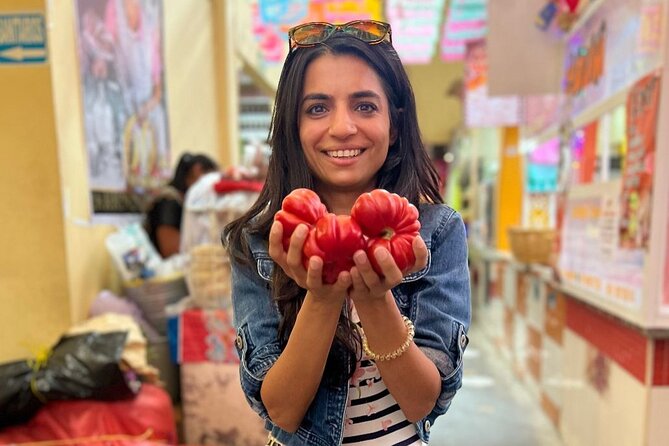
- Market ingredient sourcing helps you learn chilies, vegetables, and corn products by name.
- Hands-on Oaxacan mole making using traditional tools, including options like a mortar and pestle.
- More than mole: you will also cook sauces and work with corn dough for tortillas, memelas, or tetelas.
- Lunch plus dessert, with a local-grown ingredient twist built into the menu.
- Small group energy with a practical, team-work approach in the kitchen.
Mole in Oaxaca City Starts at TeoLabXicoténcatl
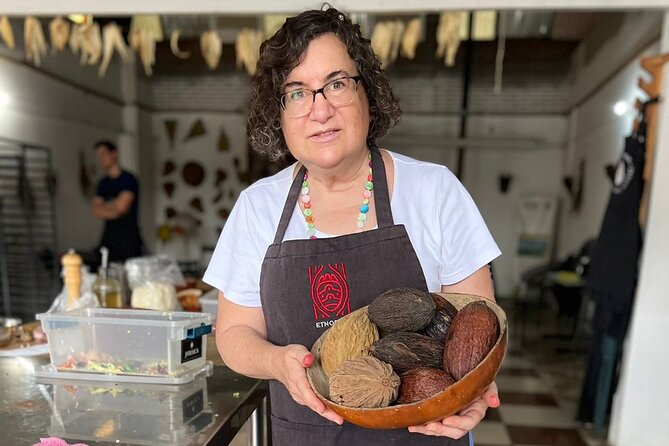
Your experience begins at TeoLabXicoténcatl 609, Centro, Oaxaca de Juárez. That matters because Centro is where you can orient fast, and it keeps the day from turning into a long commute. The class is about 3 hours 30 minutes, which is a sweet spot for learning a complex dish without turning the day into a marathon.
The tour runs in English, and it is designed for a small group. In the materials, the group is capped very tightly, and that usually means more time to ask questions while you are cooking. You also get bottled water, and the meal is part of the deal, not an afterthought.
One more detail I like: the operator states they do not use products of animal or illegal origin. In practice, this points toward a plant-based approach, which is useful to know if you are expecting dairy heavy or meat heavy cooking.
Backup plans for Oaxaca City
- Hierve el Agua, Tule Tree, Mitla and Mezcal Distillery Tour
★ 4.5 · 1,094 reviews - Explore Hierve el Agua, Mitla, Tule, Textile and Mezcal for a day
★ 5.0 · 1,043 reviews - Monte Alban Guided Half Day Tour
★ 5.0 · 880 reviews
The Market Walk Where Chilies and Corn Get Real Names
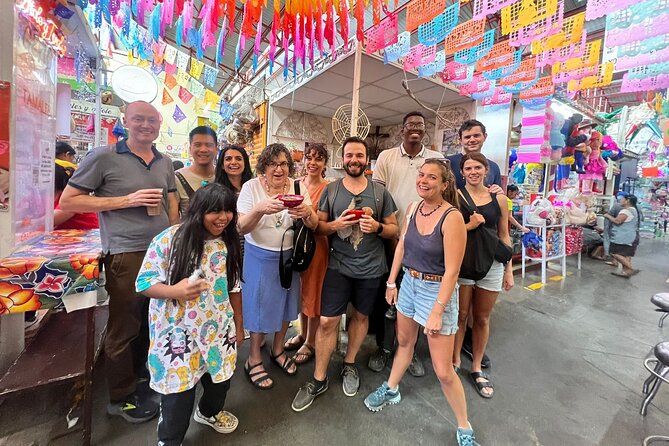
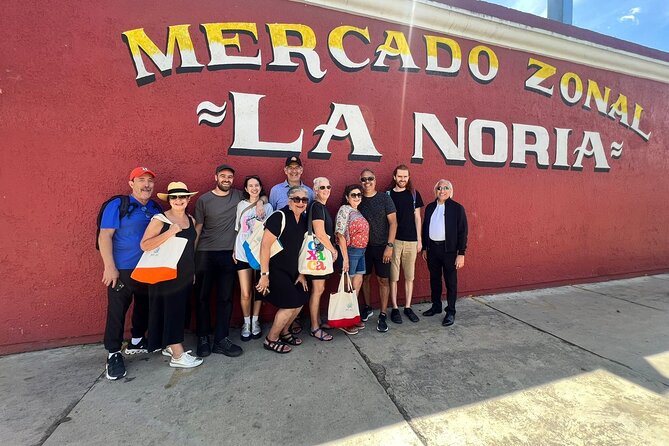
The first major step is a trip to the market to gather mole ingredients. This is not only about shopping. It is where you learn what you are buying, why it matters, and how the flavors build. You are tasting along the way too, including regional items that show up in Oaxaca cooking, not just the usual tourist list.
In different versions of the class, you may sample things like regional cheeses and local produce, then return with a bag of ingredients you helped choose. That one shift, from watching to selecting, changes how you understand mole. Mole is not one sauce. It is a whole family of versions, and Oaxaca’s moles vary a lot.
Practical tip: go hungry. Market sampling can be light, but it still sets you up for the bigger work later in the kitchen.
Also, expect the market portion to be time-sensitive. If you have mobility limits (the class is not for people with knee problems or with canes), ask about how the market walk is handled before you book.
Cooking Oaxacan Mole the Traditional Way, and Why It Takes Team Work
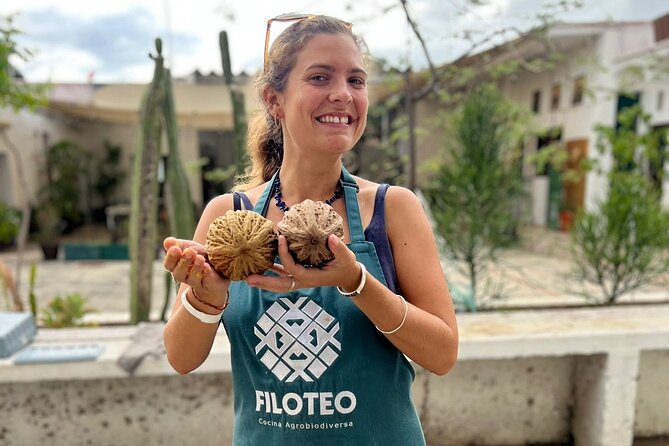
Once you are in the kitchen, the main event is traditional Oaxacan mole. This is where the class earns its keep, because mole is famous for being complicated. It uses many ingredients, and the order of steps matters. Even when you are not standing over the pot the entire time, you usually handle parts of the prep that later connect back to the mole.
The cooking style is very hands-on. You may use classic tools like a mortar and pestle (often a molcajete style approach) for grinding, then you will work with ingredients through chopping, frying, steaming, and other prep steps. In other words, you are not just mixing sauce and calling it mole.
Two things to know so you do not feel surprised:
- The class works like a kitchen assembly line. Everyone takes tasks, and the chef keeps everything moving.
- Because of that, some steps of mole assembly might be happening while you are on your station, so you could miss the exact moment everything gets combined.
If seeing the full sequence matters most to you, tell your instructor what you want to watch. It is fair to ask for a quick walkthrough at the moment the mole comes together. The class is built to teach you the process, but your eyes have to line up with the moment.
And yes, the mole is served at the end with what you cooked alongside it, so you get the payoff of tasting your own work.
Tortillas, Memelas, Tetelas, and the Sauces That Make It Oaxaca
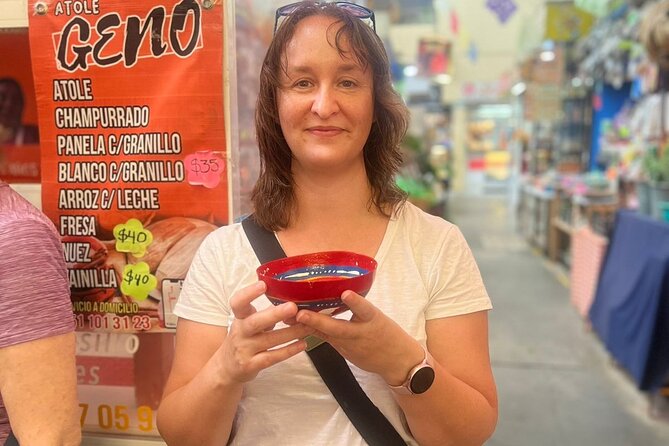
Mole tastes great on its own, but Oaxaca cooking is about what surrounds it. That is why this class layers in other tasks that help the meal make sense.
You will make traditional sauces as starters. The goal is not only to learn one salsa, but to understand how Oaxaca flavors shift depending on chilies and regional ingredients. This is also tied to the experience’s promise to teach you Oaxacan sauces with chilies and local products.
Then comes the corn dough work. You may roll or shape tortillas, and you might also make memelas or tetelas, which are corn-based expressions with different textures and shapes. This part is hands-on and often one of the most memorable, because corn dough responds to touch. When you press, fold, or shape correctly, you can see the change right away.
A practical plus: learning tortilla technique pays off later. You can recreate that method at home, even if you do not recreate mole from scratch every time.
If you are traveling in a group, the corn station is also where conversation happens. It is easy to laugh, share tasks, and learn how others’ batches turn out.
Close by, worth a second look:
- AUTHENTIC OAXACA CULTURAL FOOD TOUR, eat like a local.
★ 5.0 · 462 reviews - Half day tour to Monte Albán
★ 4.5 · 420 reviews - Boil the water and distillery mezcal tour
★ 5.0 · 413 reviews - Immersion Tour and Oaxaca Markets, All gastronomy included
★ 5.0 · 386 reviews
Lunch, Dessert, and the Locally Grown Menu Twist
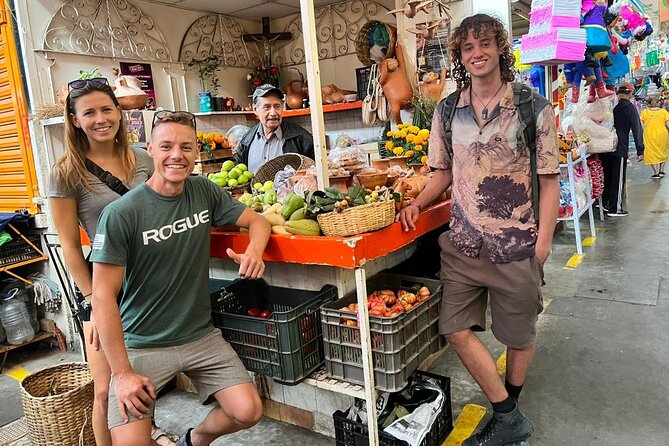
You do not just cook and then leave. You eat the results. Lunch is included, and the meal is described as abundant. That is a big value factor here, since a cooking class that only gives a small sample is a different deal than one that feeds you like you cooked for a family.
The class also includes a typical Oaxacan dessert. While the specific dessert is not listed in the details, the point is that you get a complete meal experience, not only a savory project.
One more interesting feature: the menu includes a locally grown ingredient as a surprise twist. The description frames it as possibly an herb or an exotic fruit. Since you cannot count on the same ingredient every time, treat this as a bonus, not a promise of a specific flavor. It is still a smart way to show how the region’s produce shapes traditional cooking.
Some people also mention mezcal as part of the experience. If alcohol is part of your plan, the class includes alcoholic beverages for adults 18+, so you are covered there.
Price and Value: Is $59.68 Worth It?
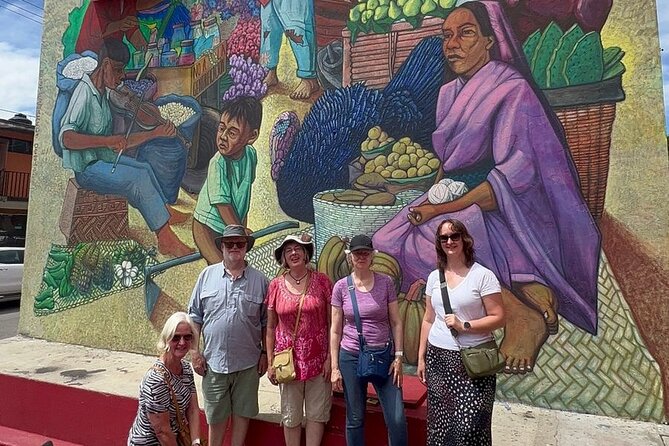
At $59.68 per person for about 3.5 hours, the value comes from three areas.
First, you are paying for more than a meal. You are paying for guided instruction while you work through a complex dish like mole, plus sauces and corn dough components.
Second, the ingredient sourcing step matters. You go to the market to select ingredients that match mole’s personality, and you taste along the way. That makes the experience feel connected to Oaxaca, not generic cooking.
Third, the class is structured for small groups, so you get help as you cook. When the group is small, you are less likely to feel like a spectator while others get the attention.
If you want a cooking class that feels like a workshop, not a performance, this price can feel fair. If you mainly want to watch someone cook, you might find the shared-station style less satisfying.
English Instruction and How the Kitchen Teaching Actually Feels
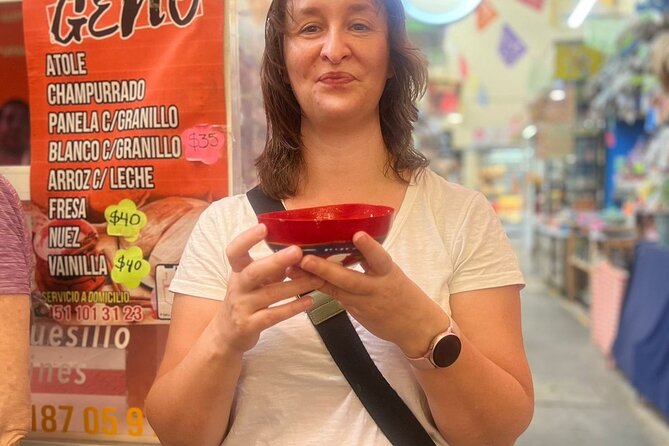
The class is offered in English, and multiple instructors are mentioned across experiences. In some versions, Víctor runs the show, with support from chefs like Wendy. Other names appear too, including Armando, Yara, and Liz in market and kitchen roles.
What that tells me about the experience is that the format is consistent, even when the specific teacher changes. You can expect a mix of explanation and doing. The chef gives tasks, you complete your part, and the meal builds as the day goes.
Teaching style can vary. Some people mention how smooth it felt with efficient coordination. Others mention that instruction can sometimes feel lighter on the exact assembly moment, even while they are learning by doing. The practical takeaway is this: ask questions as you work. If you want to know why something goes in at a certain time, that is when you catch it.
Also, because the class is hands-on, you will likely spend more time at stations than sitting down and watching. Plan to be active.
Who This Oaxacan Mole Workshop Is Best For
This is ideal for you if:
- you love Oaxaca food and want more than restaurant tasting
- you like learning by doing, chopping, grinding, shaping, and cooking
- you want a full meal that includes mole, sauces, corn dough items, and dessert
- you are comfortable with the idea that mole is multi-step and shared work
It is less ideal if:
- you need a mostly observational experience
- you strongly want to see every second of mole assembly, uninterrupted
- you have mobility concerns, since the experience is not for knee issues or cane use
It also fits well for couples, small groups, and solo travelers who want a social table without the chaos. And since it runs in English with small numbers, it can feel welcoming even if you are not fluent in Spanish.
Should You Book This Prepare an Oaxacan Mole by a Traditional Cook Class?
Book this class if your goal is to go home with real technique, especially around Oaxacan mole and corn dough. The market ingredient selection and the hands-on cooking are the core reasons it works. At this price, with lunch included and a small-group setup, it is usually a good bet.
Skip it or ask extra questions before committing if you want a front-row seat to mole assembly the whole time, or if you are dealing with mobility limitations that make market walking or kitchen movement hard.
If you can be hands-on, be curious, and treat mole like the ingredient puzzle it is, this is one of the most practical ways to understand Oaxaca cuisine in a single afternoon.
FAQ
How long is the Oaxaca mole cooking class?
It runs for about 3 hours 30 minutes.
What does the class cost?
The price is $59.68 per person.
Where do I meet the group in Oaxaca City?
You meet at TeoLabXicoténcatl 609, Centro, Oaxaca de Juárez, Oax.
Is the class offered in English?
Yes, it is offered in English.
What is included in the price?
The experience includes bottled water, lunch, and alcohol for adults 18+. It also includes the market ingredient work and the cooking instruction.
Is lunch included, and is there dessert?
Yes, lunch is included, and a typical Oaxacan dessert is also part of the experience.
How many people are in the class?
The experience is described as a small group, with a maximum of 4 travelers. The overall activity info also lists a maximum of 12 people.
Do we cook mole and other dishes, or only mole?
You cook traditional Oaxacan mole and you also prepare traditional sauces. You also work with corn dough items like tortillas and possibly memelas or tetelas, and you eat everything at the end.
Is the food plant-based?
The operator states they do not use products of animal or illegal origin.
Is the experience suitable if I have knee problems or use a cane?
No. It is not for people with knee problems or with canes.
Just added around Oaxaca City
- Wood Engraving Workshop★ 5.0 · 21 reviews
- Oaxaca Walking Tour★ 5.0 · 32 reviews
- Culture, History and Food in Oaxaca City★ 5.0 · 43 reviews
- Private and Secure Transfer Hotel to Oaxaca Airport★ 5.0 · 33 reviews
- Tour Monte Albán “clasico”★ 4.5 · 148 reviews
- Private and safe transfer from the airport to the hotel in Oaxaca★ 4.5 · 58 reviews
- Ultimate Hierve el Agua Hike + Textile Art★ 5.0 · 42 reviews
- Street Food and 3 Markets Tour, Meat or Veggie Options★ 5.0 · 35 reviews
Oaxaca Tours & Activities, compared.

Hierve el Agua, Tule Tree, Mitla and Mezcal Distillery Tour
Read our review →
Explore Hierve el Agua, Mitla, Tule, Textile and Mezcal for a day
Read our review →

Hierve el Agua, Mitla, El Tule Tree, Rugs, Mezcal Distillery Tour
Read our review →
AUTHENTIC OAXACA CULTURAL FOOD TOUR, eat like a local.
Read our review →

Browse the lists this tour appears in