
Reviewed · CITY TOURS
Mexico City: Tourist Bus Tour
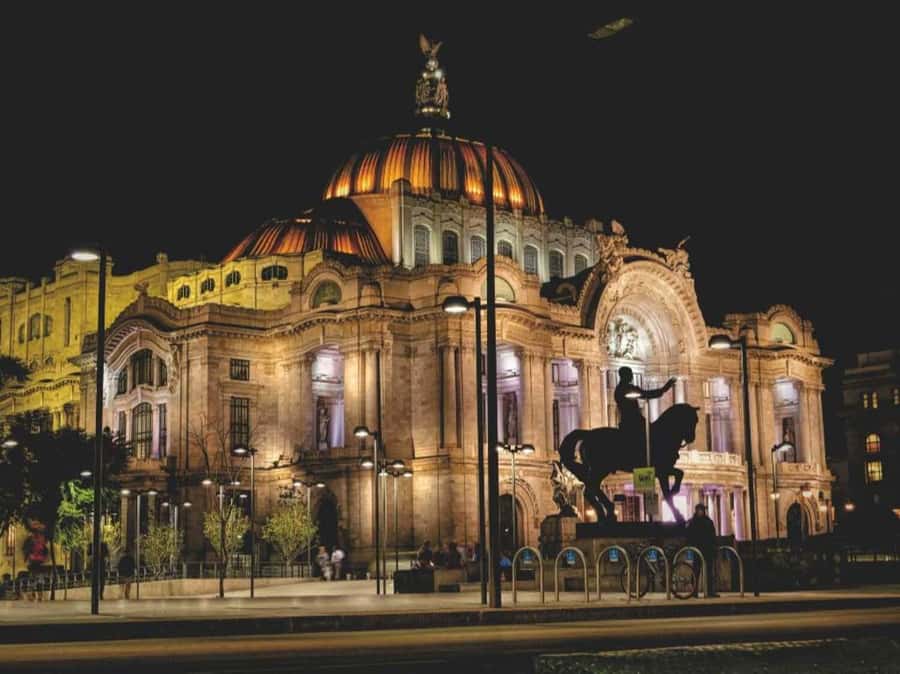
Mexico City can look totally different after dark. This double-decker bus tour lets you see big monuments and major avenues as the lights come on, without wrestling with transit in a short trip.
I especially like the panoramic views from up high and the way the route focuses on recognizable sights like Paseo de la Reforma and the Angel de la Independencia. One thing to plan around is audio and timing, since some people run into headphone or audio issues.
You can choose your style. Go for a hop-on hop-off day option when you want flexibility, or pick the Night Bus for a fixed loop that keeps things simple. I’d only steer clear if you get frustrated by tech workarounds, because the audio setup can be fussy.
In This Review
- Key takeaways before you go
- Choose Hop-On Hop-Off or the Closed Night Bus Loop
- The 75-minute plan: what the ride feels like
- Stop-by-stop: the sights you will actually recognize at night
- Starting area: Catedral Metropolitana zone and the historic center feel
- National Museum of Art (and the angle of the ride)
- Garibaldi: energy, but mostly from the bus
- Tlatelolco: a shift in mood
- Monumento a la Revolución and the long straight lines of Reforma
- Ángel de la Independencia: the postcard moment
- Palace of Fine Arts, Alameda Central, and Historic Center sweep
- The audio guide and headphones: where things can go right or wrong
- Where to sit for the best Mexico City lights
- Price and value: is $12 worth it?
- Logistics that matter, without the headaches
- Who this tour is best for, and who should pass
- Should you book the Mexico City Tourist Bus Tour?
- FAQ
- How long is the Mexico City tourist bus tour?
- Is the Night Bus tour hop-on hop-off?
- What languages are available for the audio guide?
- Do I need to bring headphones?
- Where do I meet the bus?
- Is the tour wheelchair accessible?
Key takeaways before you go
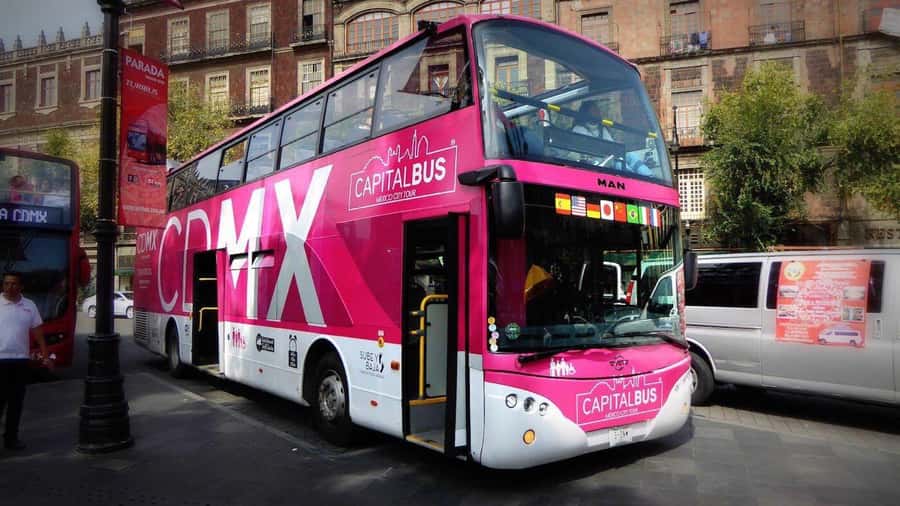
- Two formats, two vibes: hop-on hop-off for day exploring, or a closed Night Bus route so you do not have to decide stops.
- Iconic downtown to Reforma route: you pass the Cathedral area, Garibaldi, Tlatelolco, the Monumento a la Revolución, and end near the same pickup area.
- Night lighting is the main event: the best part is seeing the city lit up from a high vantage point.
- Bring your own headphones: the tour includes an audio guide, but you are expected to have headphones to use it.
- Audio problems can happen: a few riders had trouble with the English commentary or with the QR code audio approach, so have a backup mindset (like expecting some moments with no guide).
Choose Hop-On Hop-Off or the Closed Night Bus Loop
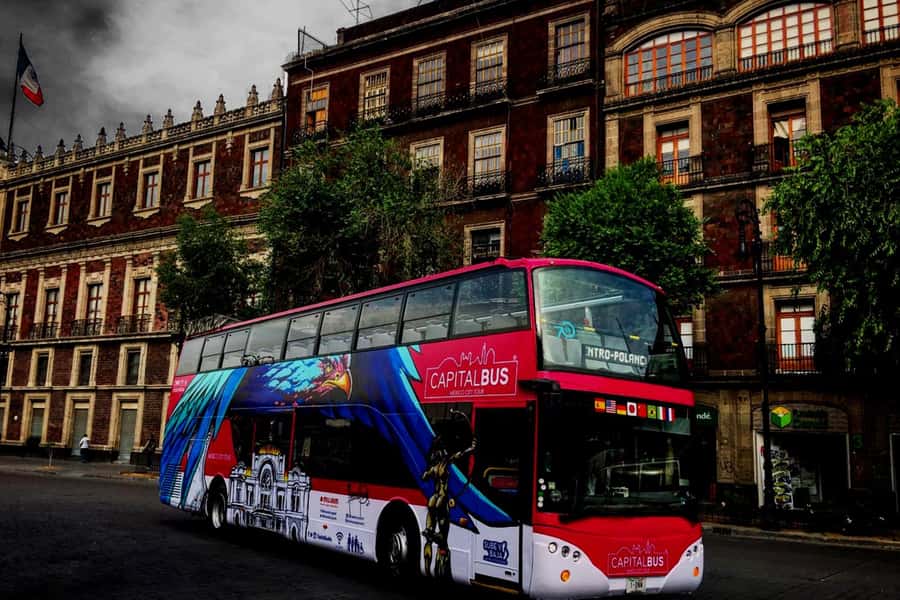
This tour is run by Amigo Tours LATAM, and it comes in two distinct modes.
If you choose the Hop-On Hop-Off option, you get a wristband for the Capital Bus hop-on hop-off service. That means you can ride, get off, and re-board as many times as you like throughout the day. The starting point is the Ángel de la Independencia, and the stops are set up for pacing yourself. You can bounce between big landmarks, museums, and neighborhood-style areas.
If you pick the Night Bus option, it is a closed route. That is not bad, it just means you stay on for the full experience. The benefit is fewer decisions and a smooth “see it all quickly” evening plan, especially when you only have a couple of days in the city.
Either way, the core idea is the same: get city views from a comfortable bus, plus an audio guide while you ride.
Backup plans for Mexico City
- Teotihuacan, Guadalupe Shrine & Tlatelolco Day Tour with Lunch
★ 5.0 · 11,603 reviews - Xochimilco, Coyoacan and Frida Kahlo with Optional Lunch
★ 4.5 · 7,320 reviews - Balloon flight + Breakfast in cave + Pyramids + Pick up CDMX.
★ 5.0 · 6,335 reviews
The 75-minute plan: what the ride feels like
The total duration is listed at 75 minutes, and the tour operates from a meeting point that can vary depending on the option. The address provided as a key stop is Calle Monte de Piedad 2 (used for both the start option and the finish).
On the Night Bus, you are on a guided loop where the “story” is delivered through an audioguide (English and Spanish). You also get the visual payoff first: Mexico City at night has more contrast than you expect. Buildings, plazas, and major avenues pick up a shine you often miss on foot.
In the real world, the bus ride can feel short once you start noticing details. You are going to see many stops close together, which is exactly why this format is good for first-time visitors who want recognition and context fast.
Stop-by-stop: the sights you will actually recognize at night
Even if you do not plan to hop off anywhere, the Night Bus route is built around landmarks most people want to see in Mexico City. Here is how the major stops fit together and what to pay attention to.
Starting area: Catedral Metropolitana zone and the historic center feel
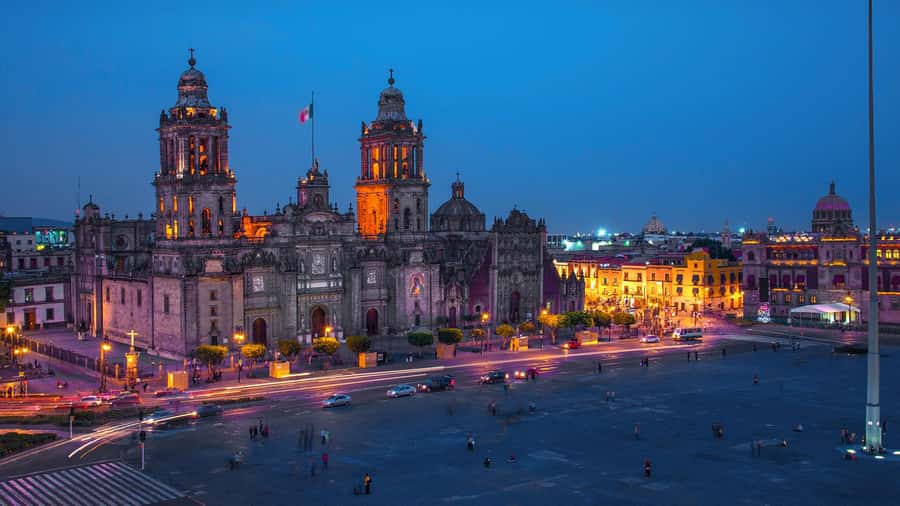
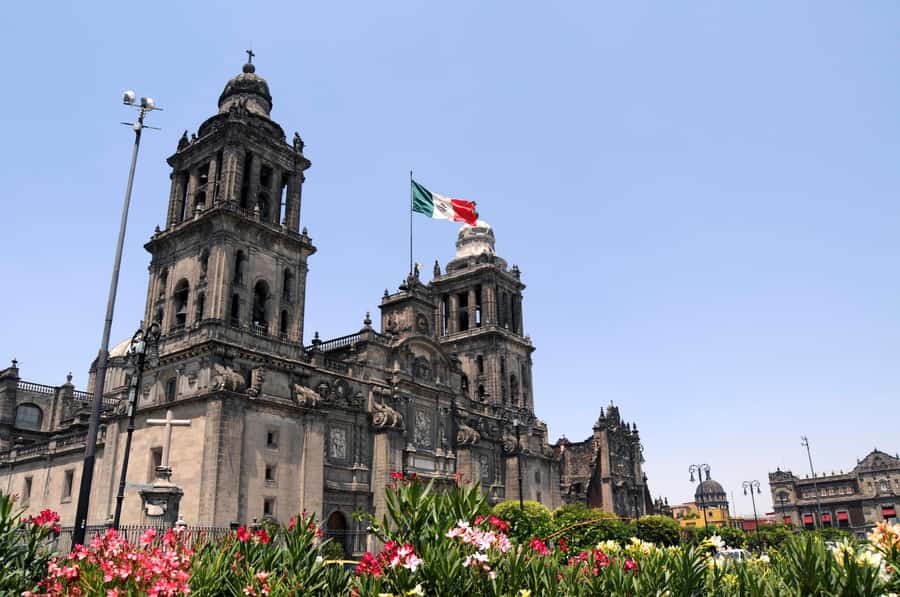
From your starting point near the historic core, the route quickly places you near the Catedral Metropolitana de México. This area gives you a sense of scale and architecture right away. From the bus windows, it is the classic downtown mix: stone facades, dense streets, and the feeling of a city center that never fully quiets down.
Close by, worth a second look:
- Teotihuacan pyramids morning or afternoon without tourist traps
★ 5.0 · 6,186 reviews - Teotihuacan Early Access Guided Tour with optional Lunch
★ 4.5 · 6,138 reviews - Balloon flight + pick up in CDMX + Breakfast in Cave + Pyramids
★ 5.0 · 5,651 reviews - Mexico City: Teotihuacan & Guadalupe Shrine Tour with Lunch
★ 4.7 · 4,465 reviews
National Museum of Art (and the angle of the ride)
Next you head toward the National Museum of Art (Museo Nacional de Arte). The museum is one of those stops where, even if you do not go inside, you can still appreciate how the area is organized. On the bus, you mostly absorb the setting and the way the streets funnel you forward.
Garibaldi: energy, but mostly from the bus
You then pass Garibaldi. This is an area many visitors associate with music and evening atmosphere. From the bus, you usually get a view of the neighborhood vibe rather than a focused look. If you want to spend time there, the hop-on hop-off format is more practical, because the Night Bus is designed as a rolling tour.
Tlatelolco: a shift in mood
The route continues through Tlatelolco. The value here is variety. The city is not one single visual style, and this stop helps you see how Mexico City changes as you move across neighborhoods.
Monumento a la Revolución and the long straight lines of Reforma
Then comes the Monumento a la Revolución, a major landmark that tends to photograph well at night. After that, the bus lines up you with the big street that many visitors plan around in their own schedules: Paseo de la Reforma. This avenue is where the city feels most like a capital. You get a strong sense of direction and the scale of the urban plan.
Ángel de la Independencia: the postcard moment
You also reach the Ángel de la Independencia. This is one of those stops where you likely know the image already, then see it in person from a moving vantage point. The lighting at night helps, and it is a good place to make sure your photos are not blurry, since the bus is still moving.
Palace of Fine Arts, Alameda Central, and Historic Center sweep
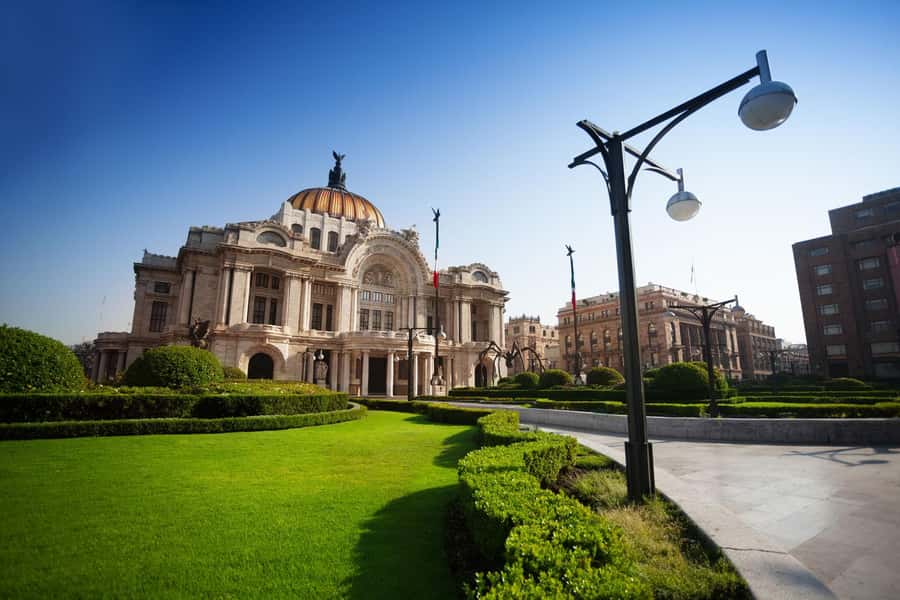
Near the end, the route brings you by the Palace of Fine Arts, then past Alameda Central, and through the Historic Center of Mexico City before returning toward the end point near Calle Monte de Piedad 2.
If you have ever felt overwhelmed trying to decide which downtown sights to prioritize, this is why the closed-night format can be worth it. You are basically getting a guided “greatest hits” pass through the parts of the center people talk about.
The audio guide and headphones: where things can go right or wrong
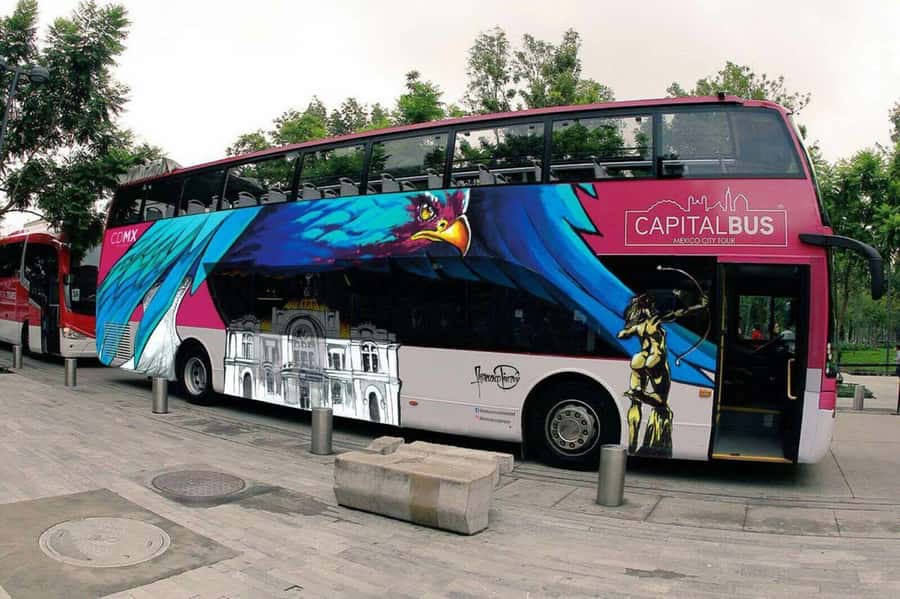
The tour includes an audioguide in English and Spanish. The know-before-you-go note says to bring headphones.
That is important because this is not always a plug-and-play headset situation. Some riders reported that headphones were not provided and the audio came through a QR-code style setup. Others mentioned the English audio did not work for them, which can make it hard to connect what you are seeing with the explanation.
So here is my practical advice:
- Bring your own wired or Bluetooth headphones that you know work.
- Charge your phone if your audio access uses a QR code flow.
- When you board, test audio right away, before you settle in.
Also, if you sit on a higher deck, you often catch more of the skyline view, but the bus noise can still make it tricky. The experience is designed for comfort, yet you still want your audio at a volume where it cuts through street noise.
Where to sit for the best Mexico City lights

Since this is a double-decker bus, the whole concept leans on height. A few people specifically praised the view from being up high, especially for night photos and the way the city glows from major avenues.
If you have a choice:
- Choose the seats that give you the cleanest line of sight outward.
- Avoid spots where the bus structure blocks your view on turns.
- If it is raining, be ready for reduced visibility. In at least one case, bad weather made it harder to see clearly from inside.
It is not just about comfort. Your seat position affects how much of Reforma and the illuminated monuments you actually take in.
Price and value: is $12 worth it?
The price is listed at $12 per person for a 75-minute experience.
For that money, you are paying for three things at once:
- Transport by bus that keeps you in one vehicle while you pass multiple landmarks
- Audio interpretation in English and Spanish
- The convenience of a planned night route that does not require you to map streets in the dark
Could you do it cheaper by taking local buses and walking? Probably. But value is not only the lowest cost, it is also time saved and stress avoided. If you only have one or two evenings, $12 can be a fair trade for a guided loop that hits multiple “must-see” areas.
That said, the audio can make or break the experience. If you land in a situation where the audio is not working well, you still have the visual tour, but you lose a big part of the value. That is why bringing headphones and expecting possible audio glitches is part of a smart plan.
Logistics that matter, without the headaches
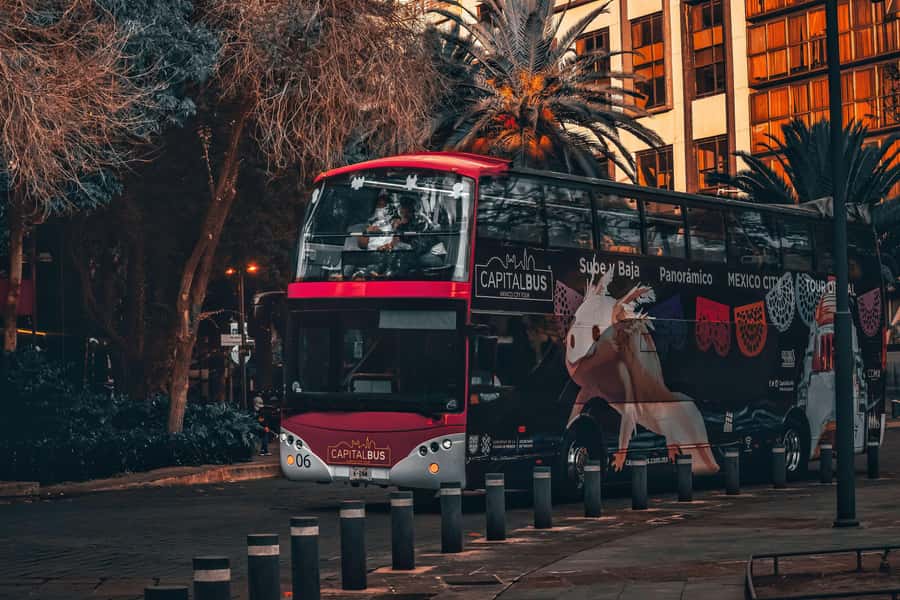
A few operational details are worth your attention because they show up in how the tour plays out.
- Arrive early. The guidance says to be at the meeting point at least 10 minutes before the starting time.
- Know what mode you booked. The Night Tour is not hop-on hop-off. You stay in the loop.
- Expect the bus to be the main comfort zone. This is not a walking tour where you can easily stop for a second look.
Group behavior can also affect your comfort. One person mentioned loud laughing and talking near them, which can drown out any guide audio that is not loud enough. If you want a quieter ride, try to sit a bit away from busy conversation clusters.
Who this tour is best for, and who should pass
This experience is best for you if:
- You want a fast way to orient yourself in Mexico City within one short evening
- You care most about night views of major monuments and avenues
- You like the idea of a guided route that does not require constant navigation
This is not ideal if:
- You depend heavily on the audio guide working flawlessly
- You strongly prefer control, wandering, and stopping whenever you want (the night version does not give that)
- You are traveling during heavy rain and hate reduced visibility from inside a vehicle
If you are someone who likes structure and clean context, the Night Bus loop is a solid first step. If you want maximum flexibility, the hop-on hop-off option is a better match.
Should you book the Mexico City Tourist Bus Tour?
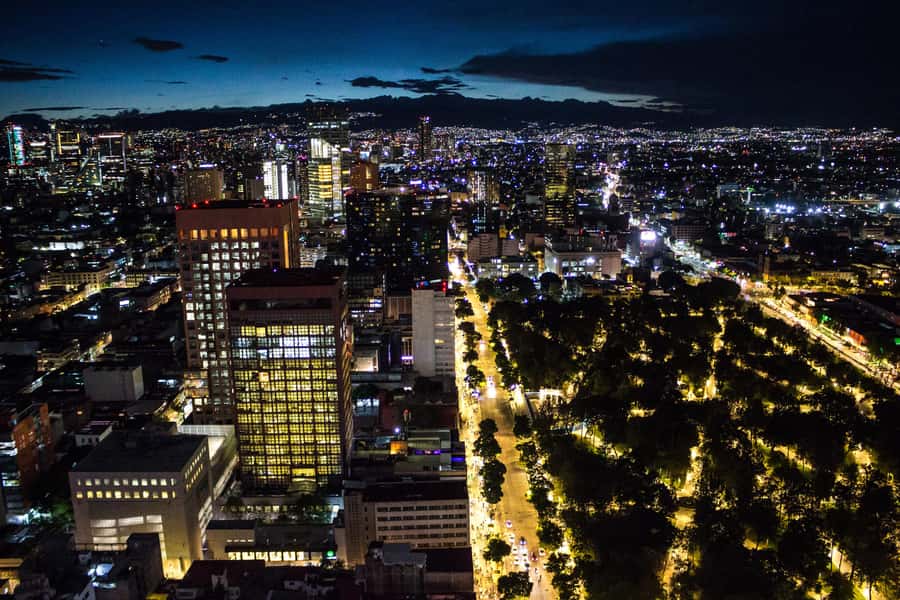
I think you should book it if your goal is a simple night overview of the city, with the best sights strung together in one ride. The standout benefit is the height and the lighting, especially along major routes like Paseo de la Reforma, plus the big monuments like Palace of Fine Arts and the Ángel de la Independencia.
I would hesitate if you are the type who gets annoyed fast when tech fails. The audioguide experience depends on your ability to use headphones and access the audio reliably. If you can handle that with a backup mindset, this $12, 75-minute format can be a good deal.
Bring your headphones, arrive on time, and aim for a top-deck seat. If you do that, you will likely feel like you got your money’s worth in views alone.
FAQ
How long is the Mexico City tourist bus tour?
The duration is listed as 75 minutes.
Is the Night Bus tour hop-on hop-off?
No. The Night Tour is a closed bus route, not a hop-on hop-off service.
What languages are available for the audio guide?
The audio guide is available in English and Spanish.
Do I need to bring headphones?
Yes. The tour notes say to bring headphones.
Where do I meet the bus?
The meeting point may vary by option. An address provided for starting and finishing is Calle Monte de Piedad 2, and the hop-on hop-off experience starts at Ángel de la Independencia.
Is the tour wheelchair accessible?
Yes, it is listed as wheelchair accessible.
Just added around Mexico City
- The Real Mexico City: Under the skin of CDMX★ 5.0 · 21 reviews
- Teotihuacan Pyramids: Guided Tour with Entry Ticket Included★ 4.1 · 45 reviews
- Teotihuacan: Private Tour with Archeologist & Hotel Pick-up★ 4.2 · 164 reviews
- Teotihuacan, Guadalupe, Xochimilco Coyoacan & Frida Kahlo★ 4.0 · 27 reviews
- Soumaya: the greatness of Mexican & western art.★ 4.9 · 26 reviews
- From Mexico City: Puebla and Cholula Day Tour★ 4.2 · 194 reviews
- National Museum of Anthropology: a journey into Mexico’s past – English lang.★ 4.8 · 26 reviews
- Nevado De Toluca: Reach the Summit with Professionals★ 4.8 · 250 reviews
City Tours, compared.
Teotihuacan & Guadalupe Shrine Tour with Lunch
Read our review →
Teotihuacan Hot Air Balloon Flight from Mexico City / Volare
Read our review →
Teotihuacan Early Access Tour & Optional Lunch
Read our review →


The best tour to Teotihuacán from Mexico City
Read our review →
Browse the lists this tour appears in