
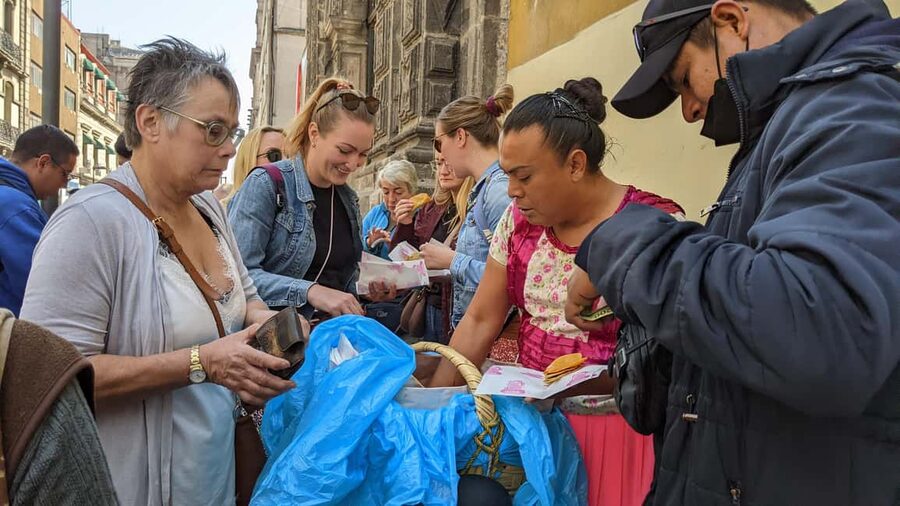
Reviewed · HISTORICAL TOURS
Mexico City: Queer Mexican History
Queer history lives in plain sight here. This 150-minute walk threads Queer Mexican History through Mexico City’s most recognizable public spaces, from Alameda Central to the Templo Mayor area, with a guide who keeps the facts clear and the mood welcoming.
I love how it stays small, limited to 10 participants, so you can ask real questions without feeling rushed. I also like the way the tour links LGBTQ+ presence to both the city’s older landmarks and today’s queer artists and activists, so you get past and present in the same breath.
The main trade-off is simple: it is a walking tour. You need comfortable shoes, water, and sunscreen, and the route can be tough if you do not do long walks, it also is not suitable for children under 11.
In This Review
- Key highlights you will actually feel on the walk
- A Queer History Walk Through Mexico City’s Historic Center
- Starting at Alameda Central, and finding your guide fast
- Alameda Central: where public space sets the tone
- Hemiciclo a Juárez: monuments, memory, and who gets seen
- Palace of Fine Arts and the jump to Madero
- Down to Zócalo: history at full volume
- Templo Mayor Museum area: closing the circle near the Cathedral
- Finish at La Casa de las Sirenas, then keep your momentum
- Price and what $30 buys you in the real world
- What to pack for a 2.5-hour walking day in the center
- Who should book, and who might want a different fit
- Should you book this Queer Mexican History walk?
- FAQ
- How long is the Mexico City Queer Mexican History tour?
- Where does the tour start?
- Is this tour a walking tour?
- How large is the group?
- What languages are the guides available in?
- What is included in the price?
- Is food included?
- What should I bring?
- Is the tour suitable for children?
- Can I cancel and get a refund?
- Where does the tour end?
Key highlights you will actually feel on the walk
- Meet at Alameda Central with a colorful umbrella, the guide uses it as an easy visual marker.
- Hemiciclo a Juárez gets treated like more than a photo stop, it becomes a starting point for public memory.
- Av. Francisco I. Madero to Zócalo is where the story shifts from monuments to everyday visibility.
- Palace of Fine Arts area offers major landmark vibes without turning the tour into museum overload.
- Templo Mayor Museum area finishes the day’s themes with place-based context near major historic walls.
- Finish at La Casa de las Sirenas, a practical end point for continuing your own exploring.
A Queer History Walk Through Mexico City’s Historic Center
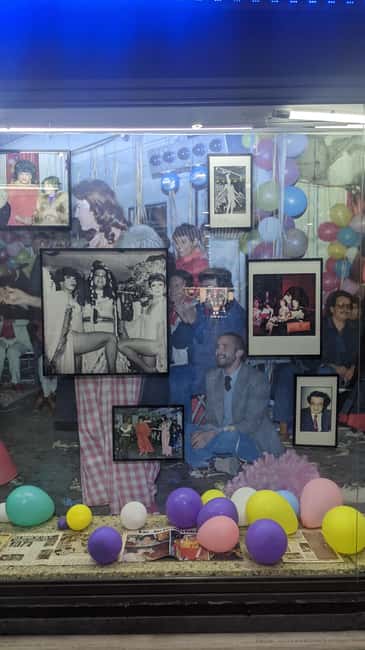
This is the kind of tour that makes you look up. In Mexico City’s center, the architecture is everywhere, but the stories you usually hear are not always complete. This walk is built to correct that, using the city’s landmarks as the timeline, and using LGBTQ+ experience as the lens.
What makes it especially compelling is the balance. You are not just learning names and dates. You are also seeing how contemporary queer artists and activists connect to the same streets and civic spaces. That matters because it changes the feeling of history from something locked in the past to something actively shaping public life now.
The group size helps too. With a small crowd, the guide can keep the conversation human. You should feel like you are part of the walk, not just following someone holding a clipboard. Guides you may meet include Mannu and Ada Narcissa, both described as warm, educated, and easy to talk to.
Backup plans for Mexico City
- Historic Downtown Walking Tour
★ 5.0 · 1,289 reviews - Historic Center Food Tour in Mexico City
★ 5.0 · 1,263 reviews - Mexico City: Historic Downtown Walking Tour
★ 4.8 · 1,039 reviews
Starting at Alameda Central, and finding your guide fast
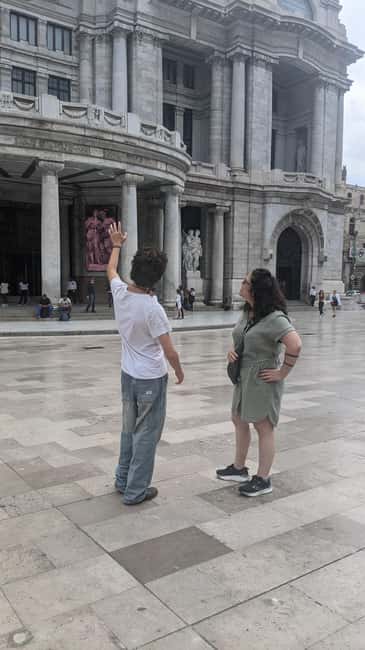
Your morning (or afternoon) begins at Alameda Central Park, at the corner of Hidalgo Av. and Dr. Mora St. The guide meets you holding a colorful umbrella, which is a smart touch in a place full of similar-looking streets and umbrellas.
Depending on what you booked, the exact meeting point may reference Av. Hidalgo 437, but the key idea stays the same: you are meeting in the Alameda Central area. This matters because it helps you reduce the stress of navigating first, then focus on the tour content instead of playing phone map roulette.
There is also a short on-foot transition before the main loop through the park area. The first minutes are not wasted. Expect an introduction and a quick framing of what you will see and why it matters. You are basically being coached on how to read the city like a storybook.
Practical note: this start point is open-air. Even if the day is mild, you will want to have sunscreen and water ready from the first stretch.
Alameda Central: where public space sets the tone
After you get oriented, the walk moves through Alameda Central. This area is a classic Mexico City gathering spot, and it works as a first chapter for a reason. It is close enough to major sights that you will feel the city’s density, but it is still a park, which makes it easier to talk about visibility and community in a shared public setting.
This is also where you start hearing about the way LGBTQ+ life has been woven into Mexico’s story. The tour’s goal is to remember important queer people in Mexican history, but without turning it into a lecture. You are learning while walking, and the park layout helps you pause in useful spots rather than stopping at random.
You will likely notice that the guide keeps the tone both serious and human. That combination comes through in the way some guides are described, with Mannu highlighted for mixing warmth with clear explanations. That is a good sign if you want accurate information that still feels respectful.
Hemiciclo a Juárez: monuments, memory, and who gets seen
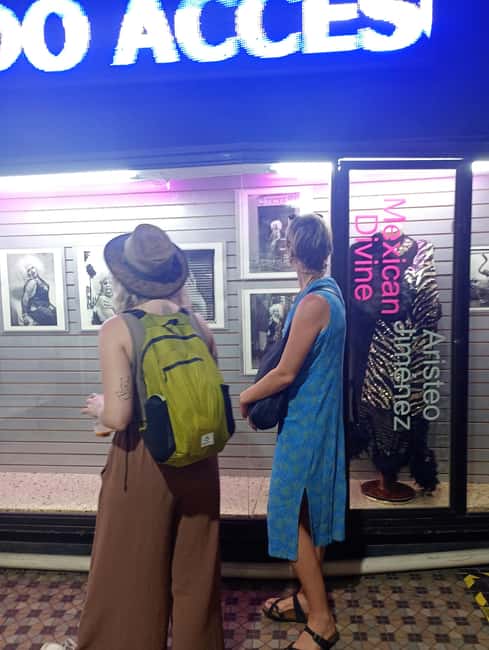
The first big thematic stop is Hemiciclo a Juárez. For most people, it is a landmark you pass by or snap a photo of. Here, it becomes a “why is this here?” conversation.
At this point, the tour starts doing its main work: connecting civic monuments to queer presence in Mexico’s history. The guide is not using the site as decoration. They are using it as a doorway into how public memory gets formed, and how queer people fit into that history in ways that often get overlooked.
One of the smartest parts of a tour like this is that it gives you a method. Instead of treating each stop as a standalone fact, you learn to ask the same kind of question at every place: What does this space communicate to the public, and who has been included or erased in that message?
If you care about culture and politics together, this is a strong early moment. It sets up the rest of the walk so Zócalo and Templo Mayor do not feel like random stops.
Close by, worth a second look:
- Teotihuacan, Guadalupe Shrine & Tlatelolco Day Tour with Lunch
★ 5.0 · 11,603 reviews - Xochimilco, Coyoacan and Frida Kahlo with Optional Lunch
★ 4.5 · 7,320 reviews - Balloon flight + Breakfast in cave + Pyramids + Pick up CDMX.
★ 5.0 · 6,335 reviews - Teotihuacan pyramids morning or afternoon without tourist traps
★ 5.0 · 6,186 reviews
Palace of Fine Arts and the jump to Madero
As you move along Av. Francisco I. Madero, you get a shift in atmosphere. This is the kind of street that pulls you toward the center of the city, and it helps that this tour does not try to sprint through the sights. You get time to see, listen, and connect dots.
You also get a stop near the Palace of Fine Arts area. Even when you are not going inside, the presence of the building matters. It signals that this walk is not only about street-level history, it is also about culture, performance, and public-facing art.
That connects neatly to the tour’s emphasis on contemporary queer artists and activists. The underlying theme is that art and activism are not separate from daily life in the city. They share the same spaces, the same audiences, and the same visibility politics.
If you tend to get photo-happy, this is also a place where you might want to slow down. Let the guide finish a point before you turn your camera back on, because the meaning usually comes right before the best sight angles.
Down to Zócalo: history at full volume
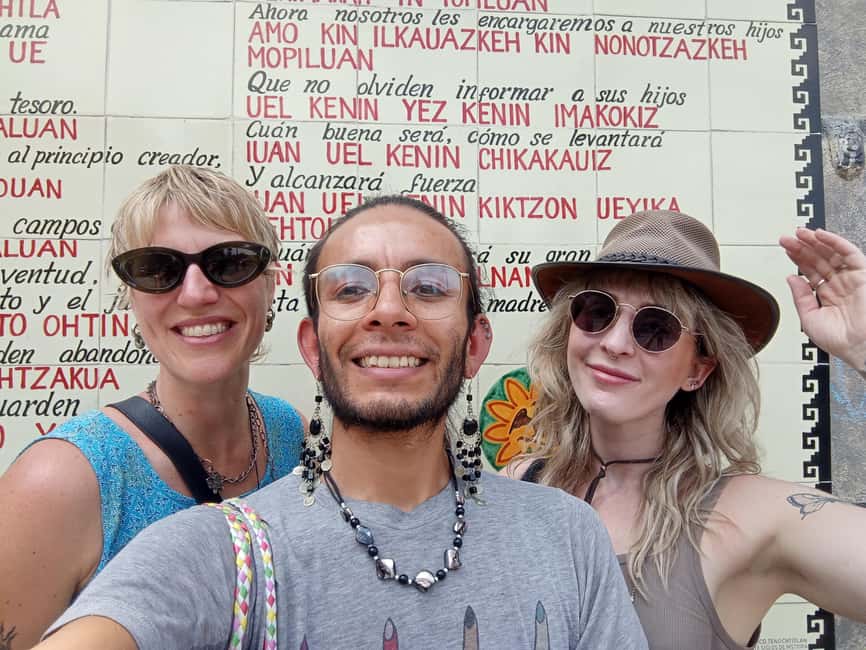
The walk continues toward Zócalo, also known as Plaza de Constitución. This is where the city’s central identity shows up, and it is an ideal stage for a tour about queer history because public space here is intense. You feel the scale of power, community, and storytelling all at once.
This portion of the walk is not just about reaching a famous square. You are learning how LGBTQ+ presence relates to the city’s evolving public identity. That is where the tour’s structure pays off. By the time you reach Zócalo, Hemiciclo a Juárez has already taught you how to “read” monuments. So the square becomes more than a backdrop, it becomes a context.
Expect a sightseeing pause or two. This is also where you will want to check your body. If you have not had lunch yet, do not wait too long. There is no mention of food being included, so I recommend you eat something small earlier, then keep walking without getting shaky.
Also, Zócalo sits in full view. Even with shade from buildings, you will feel sun exposure. Bring water and keep it close.
Templo Mayor Museum area: closing the circle near the Cathedral
The tour finishes by circling around the Templo Mayor area and ending behind the Metropolitan Cathedral, near the historic grounds. This is a powerful way to end, because Templo Mayor is tied to deep layers of history, and the Cathedral area adds another layer of how Mexico City’s identity got built over time.
The tour includes Templo Mayor Museum sightseeing time in this final stretch. The guide’s focus is still on the queer thread. The point is not to treat LGBTQ+ history as a side note. It is to show how queer presence has mattered alongside the major historical layers that shaped the city.
You get a sense of resolution here. The walk is telling you that queer history belongs in the same spaces you already associate with the grand narrative of Mexico City. When you leave, the center looks different. You might start noticing symbols, names, and patterns you previously ignored.
Finish at La Casa de las Sirenas, then keep your momentum
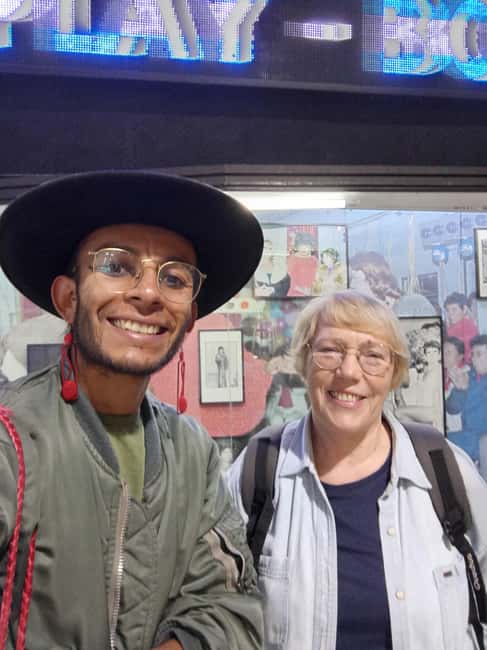
The walk ends at La Casa de las Sirenas. I like finishing at a specific place because it helps you plan the next step immediately. You are not stuck wondering where the group will split.
From there, you can keep exploring nearby at your own pace. If you want to follow the theme further, the best move is usually to pick one or two nearby places and spend time there instead of trying to do everything. If you try to “stack” too many big stops after a guided walk, you end up tired and you miss the meaning.
Also, ending near major center landmarks is practical. Even if you do not know your route perfectly, you can usually find your bearings faster around this part of the city than in quieter neighborhoods.
Price and what $30 buys you in the real world
At $30 per person for about 150 minutes, the value comes from more than just the route. You are paying for an English-speaking guide, a small group of up to 10, and the way the guide connects landmarks into one coherent story.
If you tried to do this on your own, you could cover the same areas. But the city would stay fragmented. You would see Hemiciclo a Juárez, you would see Zócalo, you would see the Cathedral area, and you might take pictures. What you would not get as easily is the intentional focus on queer Mexican history, plus the blend of older memory with contemporary queer artists and activism.
That guide element is the heart of the value. Several guides are described as warm, educated, and good at mixing serious facts with a light touch. That is not a small thing. A tour can be correct and still feel dry. This one sounds designed to keep you engaged and comfortable enough to ask questions.
One more practical consideration: museum entry is not listed as included, so if you want to go into places fully, plan to check what is covered once you are there. The tour does include sightseeing around sites, which is still a lot.
What to pack for a 2.5-hour walking day in the center
This is the part you control, and it makes the tour easier.
Bring:
- Comfortable shoes you can walk in for the whole stretch
- Water
- Sunscreen
- An umbrella (the tour explicitly recommends it)
Try to eat a small lunch beforehand. You are walking, you are stopping for sightseeing, and you will likely be out long enough that hunger can get in the way of listening. Since food is not listed as included, plan your own snack break in advance.
There is one more basic rule included: do not litter. It is a simple ask, but in Mexico City’s center it matters because the area is shared.
And if you are sensitive to walking time or heat, set yourself up early. Start the day hydrated and take your shoes seriously. Your comfort will directly affect how much you enjoy the story.
Who should book, and who might want a different fit
I think this tour is a great match if you want:
- A guided way to understand queer Mexican history in public spaces
- A walking format with multiple landmark stops, not one museum visit
- Contemporary connections, so it does not feel like history only lives in the past
It is also a good choice if you appreciate a guide who keeps the mood respectful and welcoming. Guides such as Mannu and Ada Narcissa are mentioned as friendly and educated, which tends to matter for tours where the topic is personal and historical at the same time.
It may be less ideal if:
- You do not like long walking days
- You are bringing children under 11 (it is not suitable for them)
- You want a fully seated experience or lots of indoor time
Should you book this Queer Mexican History walk?
Yes, if you want a thoughtful, landmark-based walk that treats LGBTQ+ history as part of Mexico City’s public story, not as a side interest. At $30 and 150 minutes, you get a guide-driven experience that connects major sites, including Alameda Central, the Zócalo area, and the Templo Mayor vicinity, with an emphasis on both historical memory and today’s queer culture.
Book it especially if you like history told in the real places where it happened and where it is still visible. If you are planning your first day in the center, this can also be a strong orientation walk, because it helps you read the city beyond surface-level sightseeing.
FAQ
How long is the Mexico City Queer Mexican History tour?
It lasts 150 minutes.
Where does the tour start?
You meet at Alameda Central Park, at the corner of Hidalgo Av. and Dr. Mora St. Depending on the option booked, the meeting point may vary and may reference Av. Hidalgo 437.
Is this tour a walking tour?
Yes. It is described as a walking tour with stops around the Historic Center.
How large is the group?
The group is small, limited to 10 participants.
What languages are the guides available in?
The live tour guide is available in English and French.
What is included in the price?
It includes a walking tour with an English-speaking guide.
Is food included?
No. Any souvenirs or food you want to buy during the tour are not included.
What should I bring?
Wear comfortable shoes, and bring water, sunscreen, and an umbrella.
Is the tour suitable for children?
It is not suitable for children under 11.
Can I cancel and get a refund?
Yes. You can cancel up to 24 hours in advance for a full refund.
Where does the tour end?
It finishes behind the Metropolitan Cathedral near Templo Mayor, at La Casa de las Sirenas.
Just added around Mexico City
- The Real Mexico City: Under the skin of CDMX★ 5.0 · 21 reviews
- Teotihuacan Pyramids: Guided Tour with Entry Ticket Included★ 4.1 · 45 reviews
- Teotihuacan: Private Tour with Archeologist & Hotel Pick-up★ 4.2 · 164 reviews
- Teotihuacan, Guadalupe, Xochimilco Coyoacan & Frida Kahlo★ 4.0 · 27 reviews
- Soumaya: the greatness of Mexican & western art.★ 4.9 · 26 reviews
- From Mexico City: Puebla and Cholula Day Tour★ 4.2 · 194 reviews
- National Museum of Anthropology: a journey into Mexico’s past – English lang.★ 4.8 · 26 reviews
- Nevado De Toluca: Reach the Summit with Professionals★ 4.8 · 250 reviews
Historical Tours, compared.



Mexico City Historical Centre Food Tour with 7 Authentic Tastings
Read our review →
Historical and Cultural Walking Tour of San Miguel de Allende
Read our review →
Historical and Cultural Walking Tour of San José del Cabo
Read our review →
Historical & Cultural Walking Tour of San Miguel de Allende
Read our review →Browse the lists this tour appears in