
Reviewed · CITY TOURS
Mexico City: Jewish Presence
A 500-year story, right under your feet. This Jewish presence walking tour ties together Mexico City’s arrival stories and the spaces of worship and persecution with an easy-to-follow, street-level route and an English guide who keeps it grounded in documented facts.
What I loved most: I got clear context fast, starting with a sit-down intro overlooking the Great Aztec Temple area, and then moving from key Catholic and civic landmarks into Jewish community sites.
The other big win for me was the way the guide builds the timeline in your head, especially with the shifts from forced persecution to a more open, secular society, then to 20th-century growth. With Carlos leading, the tour feels like a walking reference book, and it stays practical, not just dramatic.
One thing to consider: this is a focused walking experience, and it is not suitable for kids under 18 or for people with mobility impairments or wheelchair users. If you want a slow, seated-only outing, this may feel too active.
In This Review
- Key Things You Will Notice on This Tour
- Meeting Under Librería Porrúa, Then Getting Your Bearings
- The Aztec Temple Overlook and the First Shock of 1519
- Patio Norte and the Catedral Metropolitana Zone: Power, Faith, and Public Space
- San Ildefonso Area: Reformation Laws and the Turn Toward Secularism
- Synagogues Near Loreto Park: Old Buildings With a Living Lesson
- The Antiguo Palacio de la Santa Inquisición: Hidden Messages and Trading Survival
- Central Customs House and Mexico City as an Economic Engine
- WWII Rescue, 1970s Synagogue Abandonment, and the City That Keeps Changing
- Price, Pace, and Practical Tips for Getting the Most Value
- Should You Book This Mexico City Jewish Presence Tour?
- FAQ
- How long is the Jewish Presence tour in Mexico City?
- What does the tour cost?
- Is the tour guided, and what language is used?
- Where do I meet for the tour?
- Where does the tour end?
- Are entrances included?
- What should I bring?
- Is flash photography or drone use allowed?
- Is this tour suitable for children or people with mobility impairments?
- Is there free cancellation?
Key Things You Will Notice on This Tour
- A sit-down start with a big-picture view over the Aztec Great Temple area before you head into the streets
- Jewish arrivals tied to the Spanish Inquisition, including persecution connected to trade
- Clear “waves of arrival” storytelling, from early 1500s arrivals to late-1800s Eastern European and Ottoman Empire migration
- Synagogue time with a guided visit, including what you can still see today in these older buildings
- A WWII and later-history ending, including Mexico’s rescue efforts and the 1970s shift as families moved
- Carlos as your anchor, praised for staying on proven facts while answering questions
Meeting Under Librería Porrúa, Then Getting Your Bearings

The tour starts at República de Argentina 15, outside a white building across Justo Sierra Street from the northern entrance to the Aztec Great Temple Bridge. Your meetup point is specific: stand under the main door labeled #15, with the sign above reading Librería Porrúa. You will want to be there early enough to confirm you are at the right door, because this tour depends on starting together.
From the first moments, I like that the experience is set up to help you orient yourself. You do not just get handed a history lecture. You get an immediate sense of place, which matters in Mexico City where layers of time sit on top of each other, literally and emotionally.
You will also want to think about the basics: comfortable shoes, sun protection, and a hat if you burn easily. The route is outdoors for a good chunk of the 3.5 hours, and you will feel it if you show up in sandals or flip-flops.
Backup plans for Mexico City
- Teotihuacan, Guadalupe Shrine & Tlatelolco Day Tour with Lunch
★ 5.0 · 11,603 reviews - Xochimilco, Coyoacan and Frida Kahlo with Optional Lunch
★ 4.5 · 7,320 reviews - Balloon flight + Breakfast in cave + Pyramids + Pick up CDMX.
★ 5.0 · 6,335 reviews
The Aztec Temple Overlook and the First Shock of 1519
Before you dive into buildings, you begin with a sitting-down intro chat that looks out toward the Great Aztec Temple zone. This is not just scenic. It is the mental framework the guide uses to connect empires, religions, and power. Nearby, you can sense the closeness of institutions that shaped daily life, including the Catholic Cathedral area and other nearby Christian spaces.
Then the story begins with Jewish arrival in 1519 CE, and it does not stay polite about what came next. The tour covers the tragic reality of persecution tied to the Spanish Inquisition, including the moment where punishment becomes a form of control. The guide keeps bringing you back to cause and effect: why communities formed, why they were targeted, and how survival looked in practice.
What I appreciate is that the tour does not treat the Jewish story as a side note to Mexico’s main timeline. It frames Jewish presence as something embedded in the city’s development, especially through commerce.
Patio Norte and the Catedral Metropolitana Zone: Power, Faith, and Public Space
One of your early stops is Patio Norte, around 45 minutes. This kind of courtyard-to-street pacing works well in Mexico City because it gives you breathing room while still keeping you in the historical flow. It is a place where you can absorb the architecture and then connect it to what the guide is saying about daily life, public institutions, and how different groups navigated city power.
After that, you spend time at the Catedral Metropolitana de México area, also around 45 minutes. The cathedral is more than postcard material here. The point is proximity and contrast. The guide helps you understand how church authority, state authority, and social life overlapped. In tours like this, the temptation is to stay in one box, religious history only or Jewish history only. This route keeps pulling you out and making the connections visible.
A drawback to flag: if you are the type who hates religious sites, you will still be around them because the guide uses them as context. For me, that overlap is exactly the value. You understand why Jewish life had to operate in a city shaped by dominant institutions.
San Ildefonso Area: Reformation Laws and the Turn Toward Secularism
You then go to the Former College of San Ildefonso area for about 30 minutes. Even in that shorter time, the stop plays an important role in the story. This is where the tour pivots from the heavy Inquisition-era material toward the transformation that came through laws and reformation, when Mexico moved into a more secular state with room for new immigrants.
That transition matters for you because it explains why the late-1800s and early-1900s Jewish community growth was possible. Without that legal and political shift, the next chapters in the tour could feel like random immigration history. Instead, it reads like a result of policy and conflict, including the civil-war era changes that reshaped what was allowed and what was not.
I also like that the guide does not sanitize the past. The story includes resistance to anti-Semitic efforts, including an anti-Fascist resistance that helped cancel an initial anti-Semitic convention. You get a sense that public policy is not inevitable. People fought it.
Close by, worth a second look:
- Teotihuacan pyramids morning or afternoon without tourist traps
★ 5.0 · 6,186 reviews - Teotihuacan Early Access Guided Tour with optional Lunch
★ 4.5 · 6,138 reviews - Balloon flight + pick up in CDMX + Breakfast in Cave + Pyramids
★ 5.0 · 5,651 reviews - Mexico City: Teotihuacan & Guadalupe Shrine Tour with Lunch
★ 4.7 · 4,465 reviews
Synagogues Near Loreto Park: Old Buildings With a Living Lesson
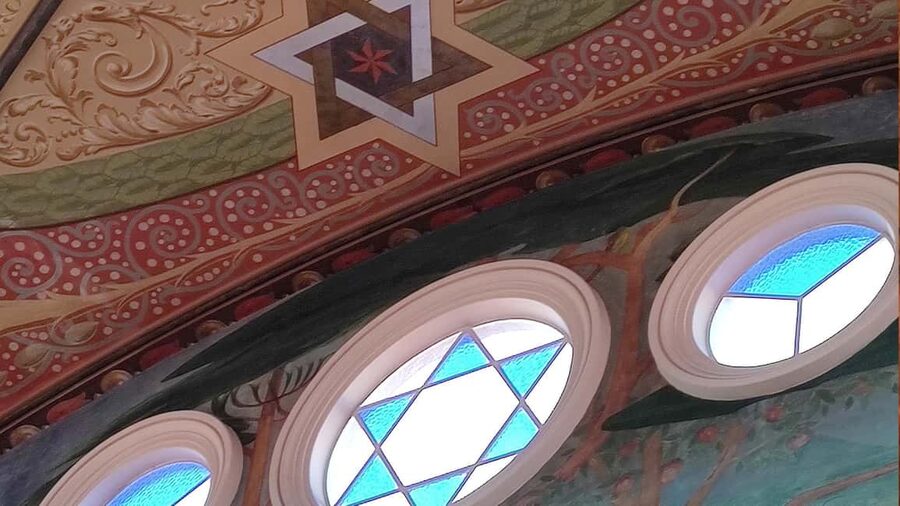
Later, you head toward Loreto Park, where the second wave of Jewish immigrants settled toward the end of the 19th century. The migration story here is specific: people from Eastern Europe, from the Ottoman Empire, and people who were not accepted at Ellis Island. That adds texture because it reframes Mexico City as part of the wider immigration map, not a bubble.
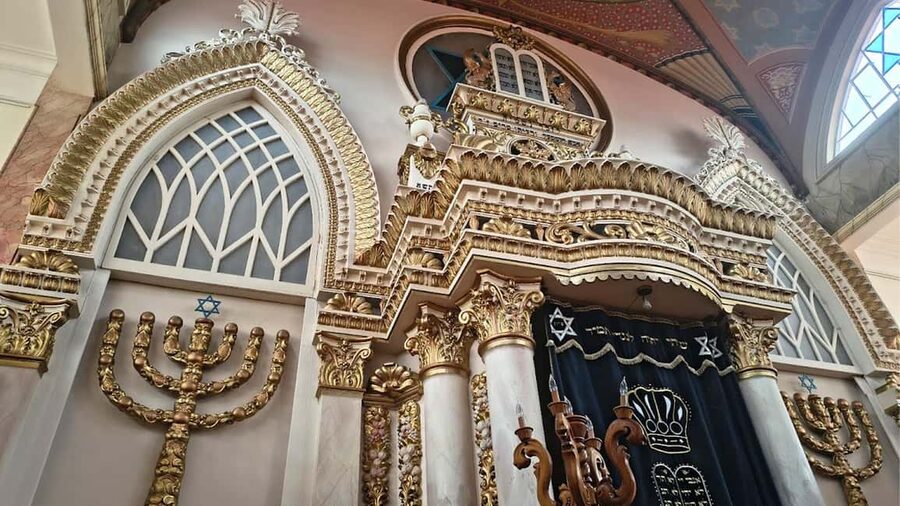
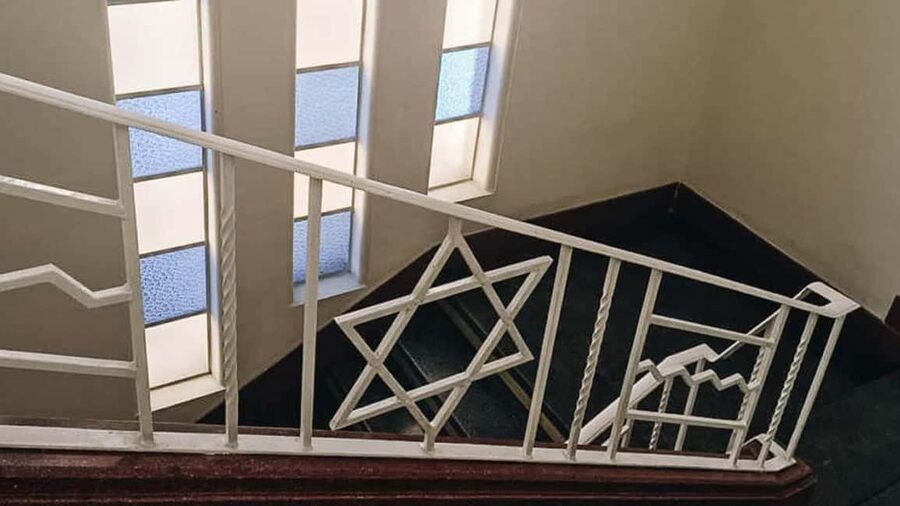
Around this area, you will see two of the oldest synagogues and then visit one on a guided tour for about 45 minutes. This is the heart of the experience for many people, and for good reason. It takes what you heard about persecution and survival and gives it a physical place. You can stand inside a synagogue space and understand how community identity shows up in architecture, routines, and the ongoing meaning of religious life.
One practical note: you will get the most out of this part if you listen carefully for details about what you are seeing. The guide tends to point out things tied to community history rather than treating the visit as just a photo stop. And since flash photography is not allowed, you will rely on observation more than camera speed.
The Antiguo Palacio de la Santa Inquisición: Hidden Messages and Trading Survival
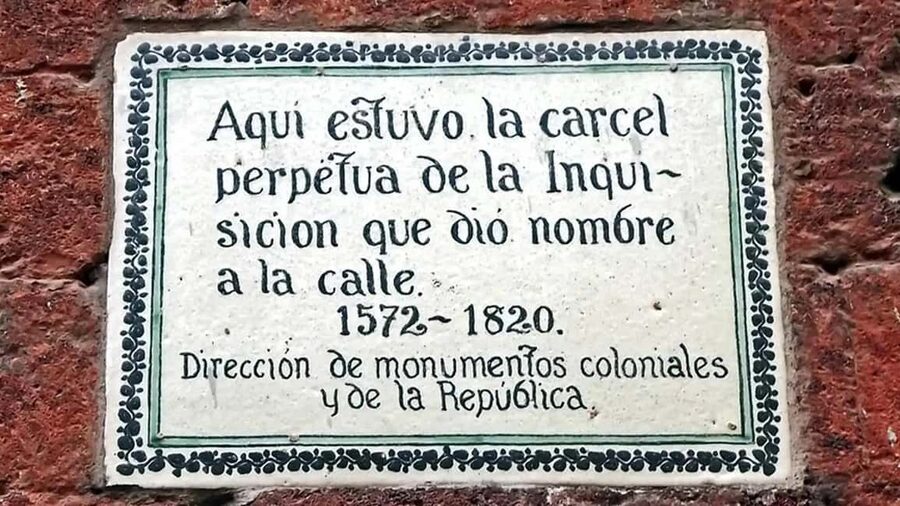
Your route then includes the Antiguo Palacio de la Santa Inquisición area, about 45 minutes. This is one of the places where the tour’s message gets most intense. The guide discusses how persecution targeted Jews, mainly trading ones, and how that pressure lasted for centuries.
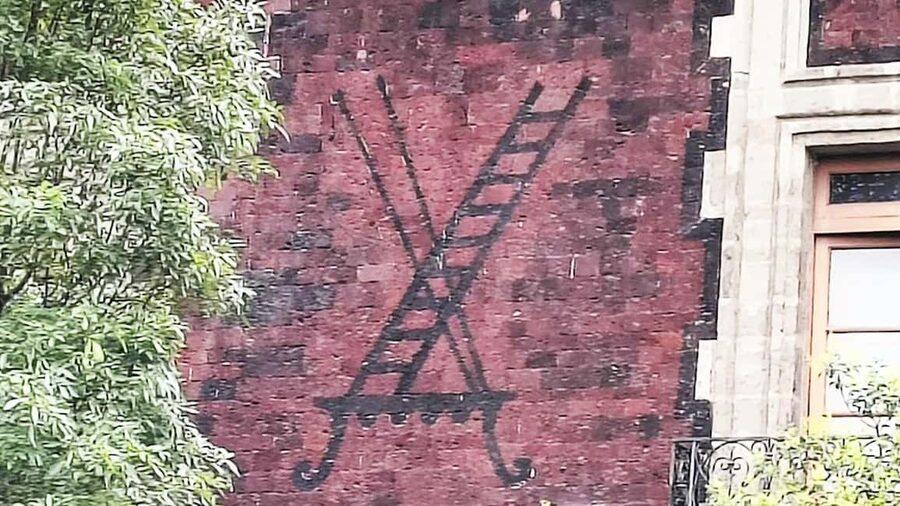
What makes this stop especially memorable is the talk about hidden messages connected to persecution. Even if you only catch fragments, the idea is powerful: control can hide in plain sight, in coded messaging, in the structure and design of power.
If you are sensitive to heavy history, give yourself permission to absorb it slowly. This is not a “smile and move on” segment. The guide keeps it factual, but the subject is brutal.
Central Customs House and Mexico City as an Economic Engine
The tour also ties Jewish presence to the city’s role as an economic center of the Spanish Empire, which ruled territories across Asia, North America, and the Caribbean. You will hear how this global reach mattered locally, including in places like the Central Customs House area.
For you, this is a key interpretive shift. Jewish survival is not only about religion or persecution, it is also about work, trade routes, and the kind of economic niches that allowed communities to endure. The guide connects those dots without turning it into a spreadsheet.
Later, the story grows into 20th-century changes where the community moved from many smaller trades, like tailors and seamstresses, into textile and jewelry industries that helped establish Mexico’s financial system, with Jewish capital playing a major role. That is not just a “they worked hard” statement. It explains how economic participation can be both opportunity and, sometimes, risk.
WWII Rescue, 1970s Synagogue Abandonment, and the City That Keeps Changing
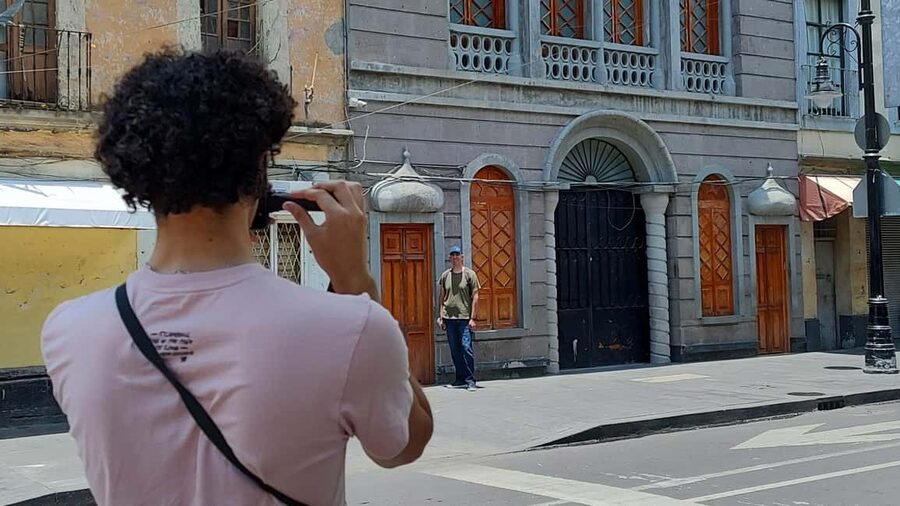
The ending arc is what makes the whole tour feel complete rather than stuck in one era. You will learn about Mexico’s rescue of Jews during World War II. That chapter adds a sense of moral complexity and real-world consequence to everything you heard earlier about power and survival.
Then the guide brings you to the 1970s, when synagogues were abandoned as Jewish families migrated to more affluent parts of the city. I found that detail surprisingly grounding. Communities do not just disappear. They move, adjust, and remake their lives, and the buildings they leave behind become reminders.
This is also where Carlos’s role shines. He keeps the timeline crisp and connects cause and effect so you can remember it. In one of the strongest parts of the experience, you end with modern city reality, not a museum finish. You leave with a story that still belongs to Mexico City today.
Price, Pace, and Practical Tips for Getting the Most Value
At $89 per person for about 3.5 hours, you are paying for three things at once: an English guide, entrance to the open locations included in the route, and guided time inside at least one synagogue. That combination matters. If you try to replicate this on your own, you can find sites, but you will struggle to stitch the story into a single clear narrative, especially around the Inquisition-era persecution and the multi-wave immigration timeline.
The pace is walking-focused, and the tour is clearly designed as a historical circuit through major central landmarks. For that reason, come ready to walk for most of the outing. It is not a “pop in for 10 minutes” kind of experience.
What to bring is simple and non-negotiable for comfort: comfortable shoes, a sun hat, and sunscreen. What not to bring: sandals or flip-flops, food and drinks, drones, and anything that violates site rules like flash photography. If you want to take photos, plan on using regular lighting without flash, and follow any guide instructions on where and when you can shoot.
Also note the language is English. If you prefer detailed history in English rather than a mix-and-match translation approach, this format should work well.
Should You Book This Mexico City Jewish Presence Tour?
Yes, I think you should book it if you want Jewish history that is tied to real places, and you do not just want a list of dates. The standout is how the guide keeps connecting the dots from early arrival and persecution, to secular legal change, to community growth, to WWII rescue, and then to the later shift in where families lived.
I would skip it if you need an accessible, low-walking format, or if the tour is for someone under 18. And because the meetup is very specific, you should arrive on time and confirm you are at the correct door labeled #15 at Librería Porrúa.
If you do book, do one small thing that makes the tour work better: go in curious about how a city’s institutions shape who can live, work, worship, and survive.
FAQ
How long is the Jewish Presence tour in Mexico City?
It lasts about 3.5 hours.
What does the tour cost?
The price is $89 per person.
Is the tour guided, and what language is used?
Yes, it is a live guided tour in English.
Where do I meet for the tour?
You meet outside the white building across Justo Sierra Street from the northern entrance to the Aztec Great Temple Bridge, under the main door marked #15. The sign above the door says Librería Porrúa.
Where does the tour end?
It finishes at Justo Sierra 71.
Are entrances included?
Yes, entrance to all open private or public locations mentioned is included and does not require reservations or tickets.
What should I bring?
Bring comfortable shoes, a sun hat, and sunscreen.
Is flash photography or drone use allowed?
Flash photography is not allowed, and drones are also not allowed.
Is this tour suitable for children or people with mobility impairments?
No. It is not suitable for children under 18, people with mobility impairments, or wheelchair users.
Is there free cancellation?
Yes, you can cancel up to 24 hours in advance for a full refund.
Just added around Mexico City
- The Real Mexico City: Under the skin of CDMX★ 5.0 · 21 reviews
- Teotihuacan Pyramids: Guided Tour with Entry Ticket Included★ 4.1 · 45 reviews
- Teotihuacan: Private Tour with Archeologist & Hotel Pick-up★ 4.2 · 164 reviews
- Teotihuacan, Guadalupe, Xochimilco Coyoacan & Frida Kahlo★ 4.0 · 27 reviews
- Soumaya: the greatness of Mexican & western art.★ 4.9 · 26 reviews
- From Mexico City: Puebla and Cholula Day Tour★ 4.2 · 194 reviews
- National Museum of Anthropology: a journey into Mexico’s past – English lang.★ 4.8 · 26 reviews
- Nevado De Toluca: Reach the Summit with Professionals★ 4.8 · 250 reviews
City Tours, compared.
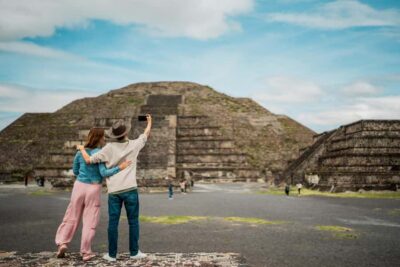
Teotihuacan & Guadalupe Shrine Tour with Lunch
Read our review →
Teotihuacan Hot Air Balloon Flight from Mexico City / Volare
Read our review →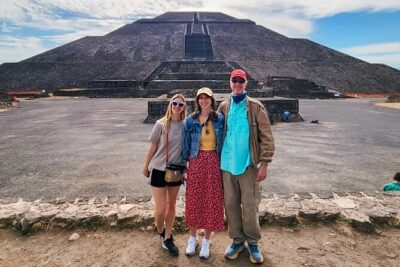
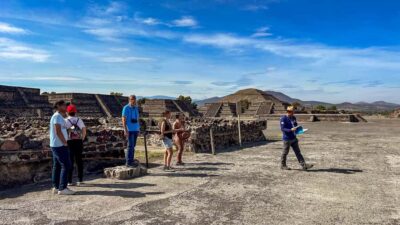
Teotihuacan Early Access Tour & Optional Lunch
Read our review →

The best tour to Teotihuacán from Mexico City
Read our review →
Browse the lists this tour appears in