
Reviewed · HISTORICAL TOURS
Mexico City: Historical walking tour of Tenochtitlan
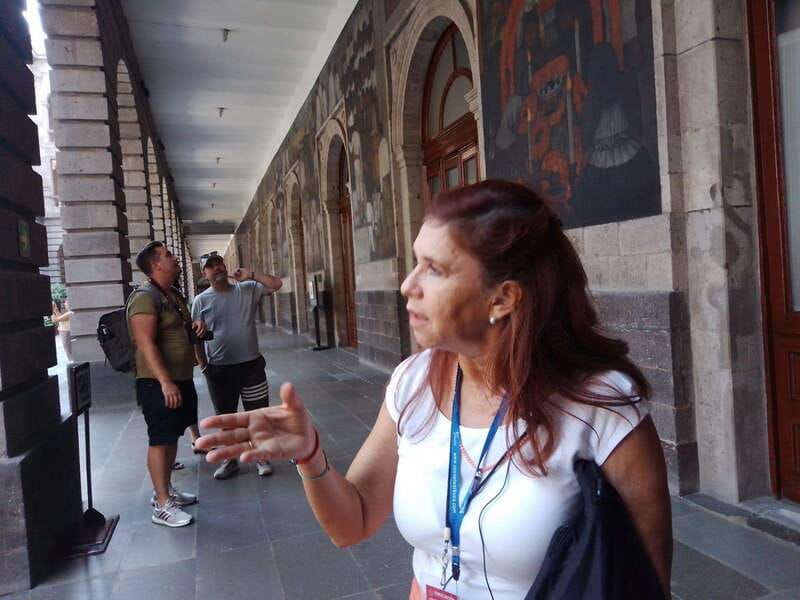
Tenochtitlan’s story is easy to walk. This morning tour threads Mexico City’s founding to later Spanish and early-modern landmarks, led by PhD Prof. Cristina Ríos. I like that the pace stays human, and you get audio support (earphones when the group is bigger) so the explanations stay clear even around noisy plazas.
I also love the focus on street-level architecture and what you can actually see, including an outdoor look at the Templo Mayor area and a tile-heavy visit to Casa de los Azulejos. One possible drawback to weigh: the tour does not include museum tickets or entry most of the time, so if you want to go inside archaeological exhibits, you will need a separate plan.
In This Review
- Key highlights you should care about
- Getting oriented in 3 hours: how this walk actually helps
- Where the tour starts: Centro Cultural España’s smart setup
- Stop 1: Templo Mayor from the outside, models included
- Behind the Cathedral: Animas del Purgatorio and Calmecac cues
- Old Axayacatl Palace area: Cortés’s lodgings context
- Iturbide Palace and Banamex Cultural Center: a 19th-century pause
- Church of San Francisco facade: why a short stop can be meaningful
- Casa de los Azulejos: tiles outside, Orozco inside
- Palacio de Bellas Artes: pass-by first, then take over on your own
- Optional Dulcería Celaya sweets: small, very worth it
- What you get for the price: value at $43 per person
- Who this tour fits best (and who should skip it)
- Practical tips to enjoy it without rushing
- Should you book this Tenochtitlan historical walking tour?
- FAQ
- How long is the Mexico City historical walking tour of Tenochtitlan?
- Where is the meeting point?
- Do we enter the Templo Mayor Museum?
- Is the tour wheelchair accessible?
- What languages is the tour offered in?
- Is food included?
- Is the tour suitable for children?
Key highlights you should care about
- PhD guide, Prof. Cristina Ríos: you get detailed, question-friendly explanations in English or Spanish
- Small groups (3 to 10): easier conversations, fewer speed bumps, and a more personal route
- Earphones when needed: helpful in busy spaces so you are not guessing what the guide is saying
- Templo Mayor models from outside: a quick orientation to the archaeological zone without ticket hassles
- Casa de los Azulejos plus art talk: tiles outside, plus a guided look at José Clemente Orozco’s mural inside
- End at Palacio de Bellas Artes: a natural handoff to keep exploring after the tour
Getting oriented in 3 hours: how this walk actually helps
If Mexico City feels like a blur of churches, plazas, and grand facades, this is a solid way to put it in order fast. You get a guided route that moves through layers of time, from the founding story tied to Tenochtitlan through the city that grew around it. The format is also practical: you spend the morning walking downtown, stopping just long enough to understand what you are looking at.
The big win is that you do not just see monuments. You learn why they sit where they sit and how different eras reused space and symbols. Prof. Cristina Ríos keeps the talk anchored to the visual details in front of you, so your photos make more sense later. And with a group capped at 10, you are less likely to feel like you are herding cats or stuck behind someone’s selfie stick.
More Walking Tours in Mexico City
- Historic Downtown Walking Tour
★ 5.0 · 1,289 reviews - Mexico City: Historic Downtown Walking Tour
★ 4.8 · 1,039 reviews - Frida Kahlo VIP [Museum Tickets Included] Walk, Markets & Churros
★ 5.0 · 982 reviews
Where the tour starts: Centro Cultural España’s smart setup
The meeting point is Centro Cultural España en México, Guatemala #18. Starting here matters because it gives you a “launchpad” location in the historic center, before the route pulls you toward the Templo Mayor area and the cathedral zone.
You also get a clear plan for the walking portion right away: comfortable shoes are a must, and the tour runs in the morning. If you bring a hat and sunscreen, you will be happier once the sun climbs, because downtown stops can be surprisingly exposed.
Stop 1: Templo Mayor from the outside, models included
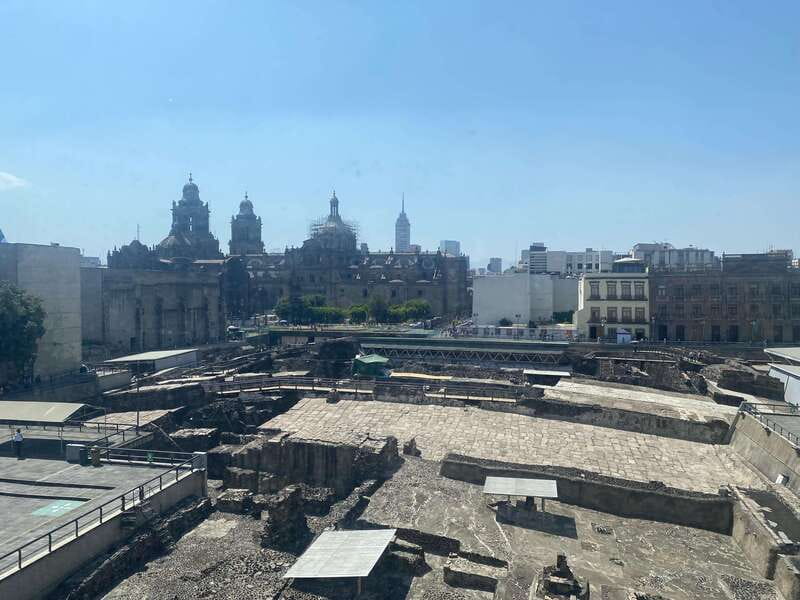
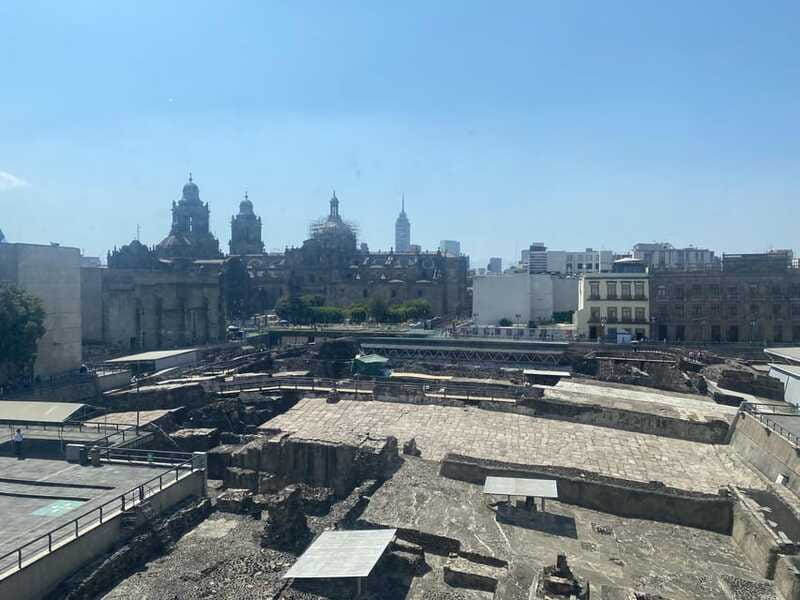
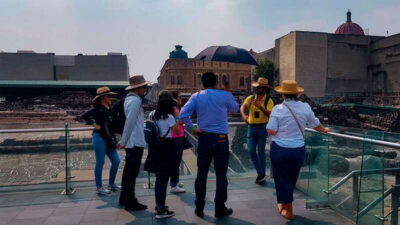
You begin with Templo Mayor Museum entrance area, but you do not enter the museum. Instead, you get to view the archaeological zone from the outside, plus models that help you understand the layout without needing extra tickets.
This is a good strategy if you want context first. Models are especially useful for an Aztec-period site because you need a mental map. Even if you later choose to go deeper on your own, you will already have the “what am I looking at” foundation.
A small note to keep expectations realistic: this visit is designed as orientation. If you were hoping for a long indoor archaeological deep-scan, this is not that. It is the start of a guided story, not the final chapter.
Behind the Cathedral: Animas del Purgatorio and Calmecac cues
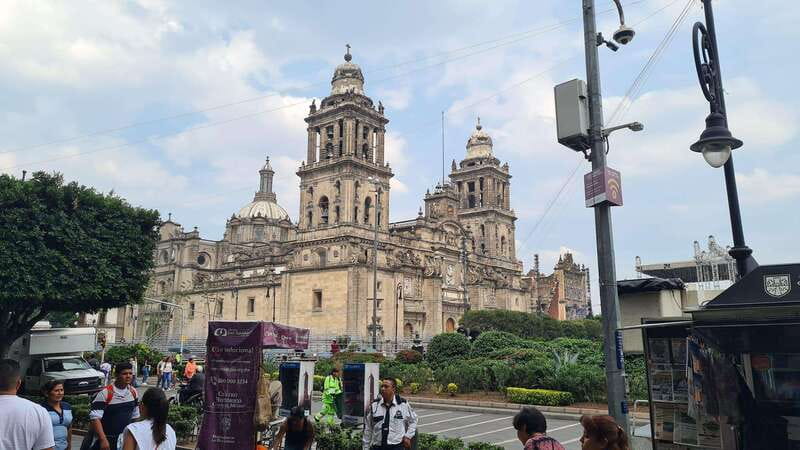
Next comes the cathedral area, with a stop behind Catedral Metropolitana de México. You also see Animas del Purgatorio and the Calmecac site through the Centro Cultural España context (it is listed as the Calmecac Site Museum stop within the cultural center).
Why this section is worth your time is simple: it connects the religious and cultural geography of the center to the older layers under and around it. You are walking through a part of downtown where the “surface” (cathedrals, churches, major streets) exists side by side with the idea of earlier urban life. The guide’s job here is to help you read those relationships instead of just passing by them.
This is also a spot where hearing matters. Because it is a busy area, earphones (when your group size requires them) make a difference. You do not want to miss key explanations while you are staring at stone details.
Backup plans for Mexico City
- Walking Tour of the Historic Center of Mexico City
★ 5.0 · 870 reviews - Anthropology Museum Private Experience Walking Tour
★ 5.0 · 355 reviews - Mexico City: Guided walking tour through the most historic parts of the city.
★ 4.5 · 172 reviews - Mexico City: Lucha Libre Show, Walking Tour & Tequila
★ 4.6 · 156 reviews
Old Axayacatl Palace area: Cortés’s lodgings context
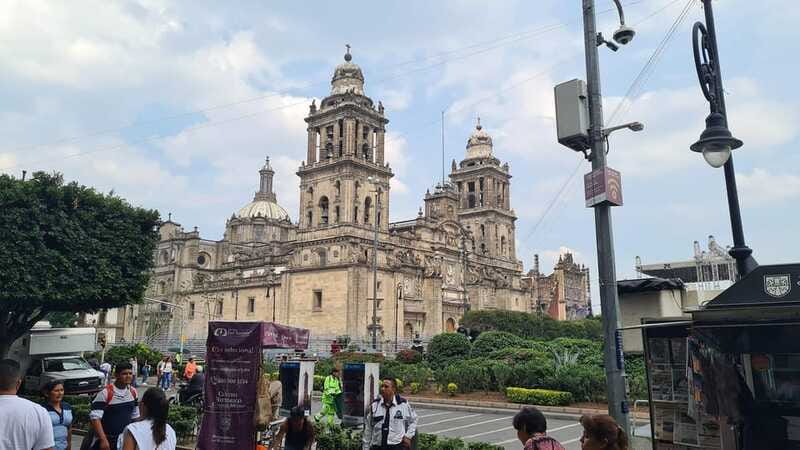
One of the route highlights is a pass by Cortés’s Lodgings at the Old Axayacatl Palace (listed as the old houses of Moctezuma). This is where history turns from “legend” into “street location.” The guide points you toward the meaning of the place, not just the name.
This stop is especially useful if your Mexico City interests sit at the intersection of architecture and political change. You get a chance to connect the founding era to the Spanish conquest era through how spaces were used and remembered. And if you are a question person, this section tends to be where you can slow down mentally and ask about how one period influenced the next.
Iturbide Palace and Banamex Cultural Center: a 19th-century pause
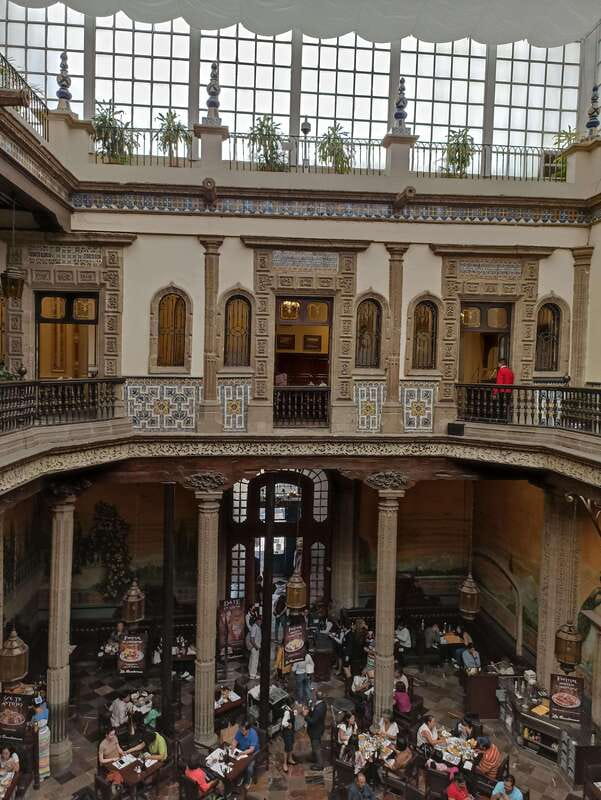
Then you move to Iturbide Palace, also listed as the Banamex Cultural Center stop. Even when you are not going deep into every room, this kind of building adds an important “middle layer” to your understanding of the city.
In practical terms, this is also a break point. After walking and listening through the older core, you get a breather in a landmark space that helps you reset. And because the tour is only three hours, every stop has to do double duty: provide visual payoff and explain the why.
If you like architecture, you will likely enjoy how the guide ties the building style and function to the storyline of Mexico City’s growth after the early colonial period.
Church of San Francisco facade: why a short stop can be meaningful
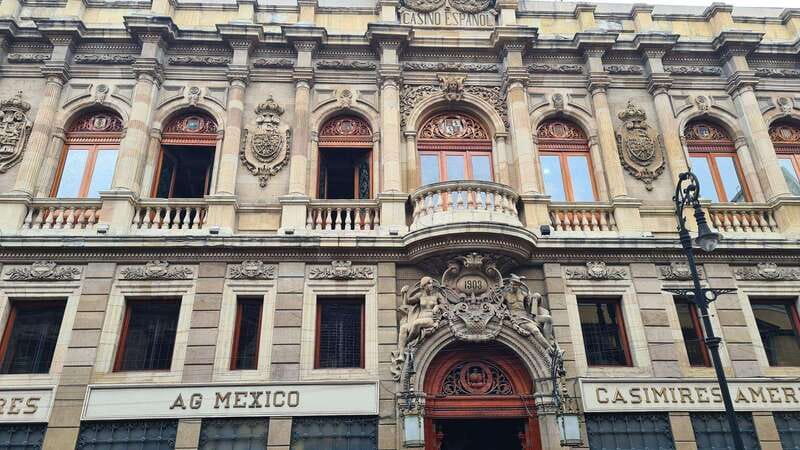
The route includes Church of San Francisco with time focused on the facade. This kind of stop is easy to underestimate if you think you need interior access to feel satisfied. But facades carry a lot of clues, and the guide uses the exterior to talk about style and era.
It is a short block of time (listed as a guided segment), which keeps the tour moving and keeps you from burning your feet too early. You can think of it as a “read the cover” moment before moving on to bigger visual hits.
Casa de los Azulejos: tiles outside, Orozco inside
Next up is Casa de los Azulejos. This is one of the stops that many people remember, because it combines eye candy with interpretation. The outside is all about the tiles, which you will notice instantly. Inside, you get a guided look at the José Clemente Orozco mural with a detailed explanation.
This is where the tour’s “why it matters” approach really shines. Decorative surfaces can feel like just decoration if nobody explains them, but here the guide uses the art and the building to connect themes across time. Orozco’s presence also gives a later chapter to the story, reminding you that Mexico City’s identity is not only about the ancient and colonial eras, but also about modern cultural expression.
If you are the kind of person who likes to see how art and politics share space, plan to stay present during this stop. It is easy to take pictures quickly, and then realize you missed the point of what you were photographing.
Palacio de Bellas Artes: pass-by first, then take over on your own
You end at Palacio de Bellas Artes. The route includes it as a pass-by only segment during the tour, with the finish point at the palace.
This is a smart choice because it gives you a familiar landmark as your endpoint, right at a place where you can keep wandering after the three hours. I recommend leaving time to explore on your own after you finish. The tour helps you understand the context; your extra time is what turns that understanding into satisfaction.
Optional Dulcería Celaya sweets: small, very worth it
There is an optional stop for traditional Mexican sweets at Dulcería Celaya. This is the kind of add-on I like on history tours because it gives you a quick cultural taste without derailing your morning.
Keep it optional in your head until you see how you feel. If you are enjoying the walking and listening rhythm, the timing works well for a quick sugar break. If you are more focused and want to stay on schedule, you can skip it without losing the main thread.
What you get for the price: value at $43 per person
At $43 per person for a 3-hour walk, the value comes from three things: the specialist guide, the structure, and the sound system.
First, you are not getting a casual “stand and point” tour. You are guided by Prof. Cristina Ríos (PhD), with detailed explanations built around the landmarks you see. Second, the route design is efficient. You cover the kind of historic-center highlights that otherwise require planning and cross-referencing map pins. Third, earphones and audio equipment are included (especially helpful when groups get larger than 7), which reduces the common frustration of missing key points in crowded areas.
You should also note what is not included: tickets and food and drinks. That is normal for many city walks, but it affects your planning. If you want museum entry, you will likely pay extra elsewhere. Still, as an orientation tour and an architecture-and-history story on foot, this price feels reasonable.
Who this tour fits best (and who should skip it)
This is best for adults and older teens who enjoy history, architecture, and art. The tour is listed as not suitable for children under 10, and the walking format makes sense for that age recommendation.
It also fits you if you like asking questions. The guide’s approach is very detailed, and the small-group format makes it easier to engage rather than just listen. If you care about the links between pre-Hispanic and later Mexico City, this route gives you a clear thread.
If you are more in the mood for heavy museum time, you may find the “from the outside” approach less satisfying. In that case, treat this as your warm-up tour, then add museum visits separately.
Practical tips to enjoy it without rushing
A few small things make a big difference on a morning walk like this:
- Wear comfortable shoes. The tour is only three hours, but downtown walking adds up fast.
- Bring a hat, sunglasses, and sunscreen. You may get bright sun between stops.
- Plan for a question-friendly pace. With a capped group size, you will likely want time to ask follow-ups.
- Save energy for Casa de los Azulejos and Orozco. This is the stop where you should slow down mentally, even if you are tempted to move quickly for photos.
One more tip: since the tour ends at Palacio de Bellas Artes, you can make that your next “walk on your own” target. If you schedule it as the last event of the morning, you will get the best flow.
Should you book this Tenochtitlan historical walking tour?
Book it if you want a guided morning that helps you read Mexico City’s historic center. The combination of Prof. Cristina Ríos, outdoor orientation at Templo Mayor, and a strong finish at Palacio de Bellas Artes gives you a clear mental map fast. It is also a great option for day one in CDMX, when everything feels new and you need order more than more stamps on your ticket.
Skip or reconsider if you want mostly museum entry or a long archaeological indoor visit. This tour is built around street-level landmarks and explanations, not ticketed deep time.
If you book, do one thing to make it pay off: after the tour, head to Palacio de Bellas Artes or the Templo Mayor area on your own and look again with your new timeline in mind. That is when the city clicks.
FAQ
How long is the Mexico City historical walking tour of Tenochtitlan?
The tour lasts 3 hours.
Where is the meeting point?
You meet at Centro Cultural España en México, Guatemala #18.
Do we enter the Templo Mayor Museum?
No. You view the Templo Mayor area and models from the outside, and you will not enter the museum.
Is the tour wheelchair accessible?
Yes, it is listed as wheelchair accessible.
What languages is the tour offered in?
The tour is offered in English and Spanish.
Is food included?
No. Food and drinks are not included. There is an optional sweets stop at Dulcería Celaya.
Is the tour suitable for children?
It is not suitable for children under 10.
More Historical Tours in Mexico City
- Historic Center Food Tour in Mexico City
★ 5.0 · 1,263 reviews - Mexico City Historical Centre Food Tour with 7 Authentic Tastings
★ 5.0 · 723 reviews - Coyoacán: History and Life of a Magical Neighborhood
★ 5.0 · 36 reviews - Mexico City: Queer Mexican History
★ 4.7 · 24 reviews
Just added around Mexico City
- The Real Mexico City: Under the skin of CDMX★ 5.0 · 21 reviews
- Teotihuacan Pyramids: Guided Tour with Entry Ticket Included★ 4.1 · 45 reviews
- Teotihuacan: Private Tour with Archeologist & Hotel Pick-up★ 4.2 · 164 reviews
- Teotihuacan, Guadalupe, Xochimilco Coyoacan & Frida Kahlo★ 4.0 · 27 reviews
- Soumaya: the greatness of Mexican & western art.★ 4.9 · 26 reviews
- From Mexico City: Puebla and Cholula Day Tour★ 4.2 · 194 reviews
- National Museum of Anthropology: a journey into Mexico’s past – English lang.★ 4.8 · 26 reviews
- Nevado De Toluca: Reach the Summit with Professionals★ 4.8 · 250 reviews
Historical Tours, compared.



Mexico City Historical Centre Food Tour with 7 Authentic Tastings
Read our review →
Historical and Cultural Walking Tour of San Miguel de Allende
Read our review →
Historical and Cultural Walking Tour of San José del Cabo
Read our review →
Historical & Cultural Walking Tour of San Miguel de Allende
Read our review →Browse the lists this tour appears in