
Reviewed · DESSERT TOURS
Make Your Own Chocolate with Oaxacan Tradition Private Class
Cacao starts tasting better when you touch it. This small-group workshop walks you through Oaxacan chocolate step by step, from bean qualities to roasting on a clay comal, then ends with a drink you make yourself. You also customize your chocolate percentage of sugar with local add-ins, so your cup is truly yours.
What I like most is the hands-on ritual, peeling cacao by hand and learning why each stage changes flavor. I also love the mix of education and eating, you roast, grind, taste, and then enjoy a cocoa-based snack at the end.
One consideration: it is not a quick foodie stop. With about 2 hours 30 minutes of active steps, it is best if you plan for a longer visit and do not mind getting a little involved.
In This Review
- Key things to know before you start
- Oaxaca City cacao class, built around your hands
- Meeting point and practical timing in the Centro area
- Step 1: cacao basics in Oaxaca, and why beans taste different
- Step 2: roasting cacao on a clay comal from San Marcos Tlapazola
- Step 3: hand-peeling cacao, with culture built into the ritual
- Step 4: turning cacao into your own artisanal blend
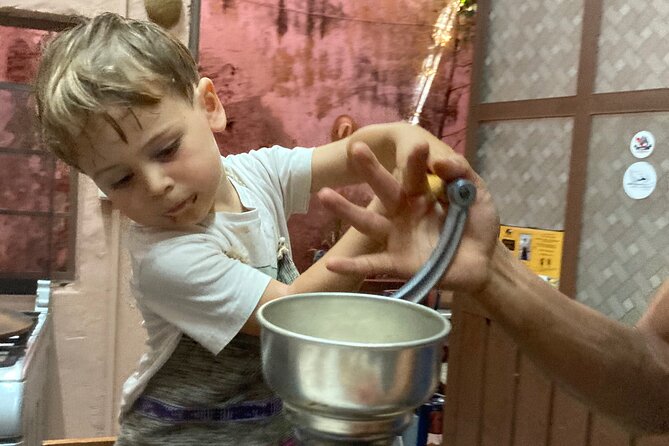
- Step 5: grinder time, learning how to make the drink the traditional way
- The sweet ending: tasting your drink and a cocoa-based snack
- Guides that make it work: names you might meet in Oaxaca
- Price and value, what $98.57 buys you
- Who should book this cacao workshop
- Should you book this make-your-own chocolate class?
- FAQ
- How long is the Make Your Own Chocolate with Oaxacan Tradition Private Class?
- What is the price per person?
- How many people are in the group?
- Is the class offered in English?
- What will I make during the class?
- Where does the experience start?
- Is free cancellation available?
Key things to know before you start
- Clay comal roasting: You roast cacao on a comal from San Marcos Tlapazola, Central Valleys.
- Flavor training, not just a demo: You learn to spot organoleptic differences between beans.
- Hands-on peeling ritual: You peel cacao by hand as part of the cultural story.
- Your own sugar percentage: You choose how sweet your chocolate blend becomes.
- Grinder drink finish: You learn how to prepare the drink using a traditional grinder.
- A small group class: Maximum of 4 travelers, so you get real attention.
Oaxaca City cacao class, built around your hands
If you want chocolate that tastes like it came from a place, not a factory, this is a great match. The focus here is traditional Oaxacan cacao processing, taught in a way that still feels practical: you learn what to look for, then you do the work.
This is also a good value if you care about understanding what you are eating. At $98.57 per person for about 2 hours 30 minutes, you are paying for ingredient quality, guided technique, tasting time, and the fact that you will make your own drink and take something home from the process. It is pricier than a plain chocolate tour, but it is closer to a hands-on craft lesson.
The class is offered in English, and the group size stays small, with a maximum of 4 travelers. That matters in Oaxaca, where many cooking or food experiences can feel crowded. Here, you are more likely to ask questions, watch details closely, and move at a comfortable pace.
Backup plans for Oaxaca City
- Hierve el Agua, Tule Tree, Mitla and Mezcal Distillery Tour
★ 4.5 · 1,094 reviews - Explore Hierve el Agua, Mitla, Tule, Textile and Mezcal for a day
★ 5.0 · 1,043 reviews - Monte Alban Guided Half Day Tour
★ 5.0 · 880 reviews
Meeting point and practical timing in the Centro area
The class starts at 5 de Mayo 210, Ruta Independencia, Centro, 68000 Oaxaca de Juárez, Oax. The activity ends back at the meeting point, so you can plan your day without worrying about hopping across town at the end.
Because the workshop runs about 2 hours 30 minutes, treat it like a main event, not an in-between errand. If you schedule it too close to dinner, you might find yourself slightly hungry again right after, especially once you hit the tasting portion.
One more practical note: since it is a real food workshop, you may want comfortable clothes you do not mind getting touched by cacao dust and kitchen aromas. Service animals are allowed, and the location is near public transportation.
Step 1: cacao basics in Oaxaca, and why beans taste different
The first part sets the stage with an introduction to cacao in Oaxaca. You learn how to identify the organoleptic qualities of different seeds, meaning how aroma and flavor traits show up based on how cacao is processed.
This is where the experience becomes more than entertainment. Instead of only teaching a recipe, you train your palate to notice things you could easily miss on your own. That matters when you later choose sugar percentage and mix regional ingredients. You will understand why some beans taste more floral or more earthy, and why processing steps can shift bitterness, acidity, and overall balance.
They also explain the difference between:
- Cacao (the bean product)
- commercial chocolate (often standardized and altered)
- a conscious chocolate approach (focused on what goes into it and how it is handled)
This part is especially helpful if you have only ever tried sweet bars. You start realizing that “chocolate flavor” is not one fixed taste. It is a spectrum you can steer.
Step 2: roasting cacao on a clay comal from San Marcos Tlapazola
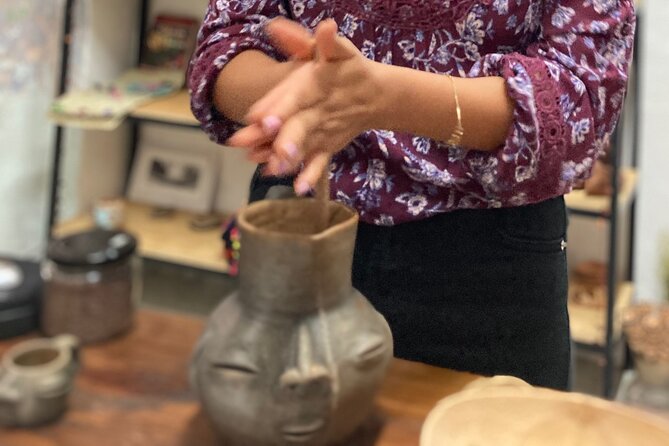
Next comes one of the most memorable moments, roasting cacao in a traditional way. You roast on a clay comal that comes from the community of San Marcos Tlapazola in the Central Valleys.
Why this matters: heat changes cacao fast. Roasting affects aroma compounds, and it can bring out nutty notes, deeper cocoa tones, or more toasted character. A clay comal also holds and releases heat differently than flat metal surfaces, and that can influence how evenly and gently the roast happens.
In a class like this, you are not just watching. You get the idea of timing and sensory cues, like smell and color, which is how local chocolatiers work. If you are the type who likes cooking by instinct, this portion will feel satisfying because it gives you signs to follow.
Close by, worth a second look:
- AUTHENTIC OAXACA CULTURAL FOOD TOUR, eat like a local.
★ 5.0 · 462 reviews - Half day tour to Monte Albán
★ 4.5 · 420 reviews - Boil the water and distillery mezcal tour
★ 5.0 · 413 reviews - Immersion Tour and Oaxaca Markets, All gastronomy included
★ 5.0 · 386 reviews
Step 3: hand-peeling cacao, with culture built into the ritual
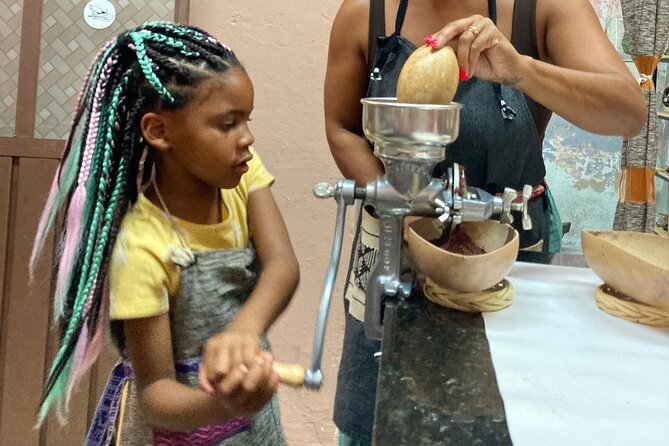
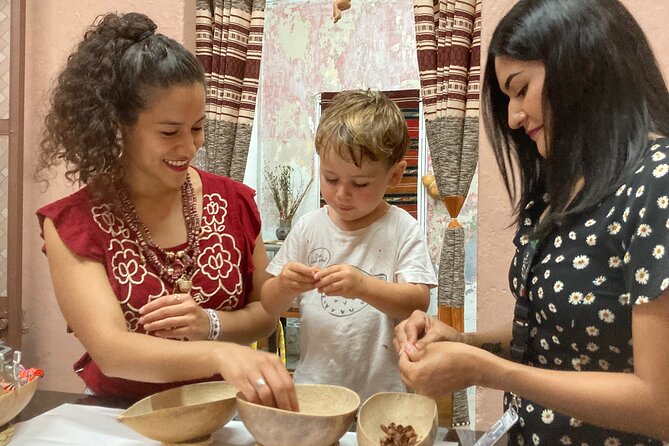
Then you peel cacao with your hands. Yes, it is as tactile as it sounds. And yes, it can feel a bit ritual-like, not just like prep work.
During this stage, you hear stories about the history and culture of cacao in the community behind the process. This is not a vague background talk. It is tied to what your hands are doing and what the cacao is going through. That keeps the class grounded in place, rather than turning into a generic “food science” lesson.
If you are traveling with kids, this is often one of the favorite steps, because it feels hands-on and playful. The class has worked well for families with children from young ages through early teens, especially when the instructor keeps directions clear and patient.
Step 4: turning cacao into your own artisanal blend
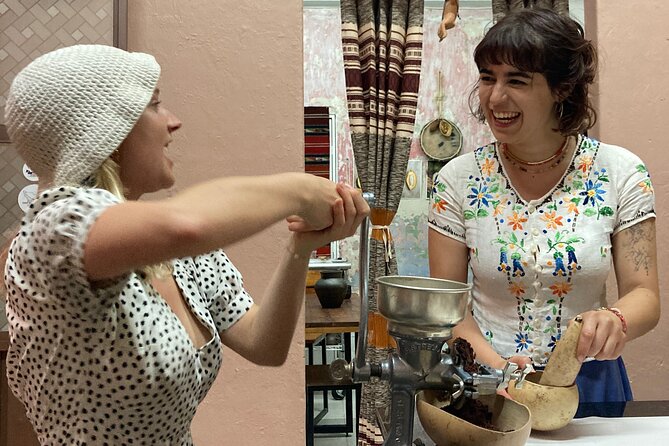
Once the cacao is roasted and processed, you transform it into chocolate in an artisanal way. This is where your personal choices show up.
You get to choose the percentage of sugar for your chocolate. That is a big deal, because sweetness level changes how cacao tastes in your final drink. If you make it too sweet, you can hide the bean’s natural character. If you keep it lower, you will taste more cocoa depth and any natural bitterness.
You also mix it with different ingredients from the region. In practice, this can mean spice-forward options, and some people create blends that include chil-based additions. If you prefer mild flavors, you can usually steer your blend toward what you like during the mixing stage.
This part is also the moment when many people start geeking out. Once you understand you are building a blend, not following a fixed recipe, you pay attention in a new way.
Step 5: grinder time, learning how to make the drink the traditional way
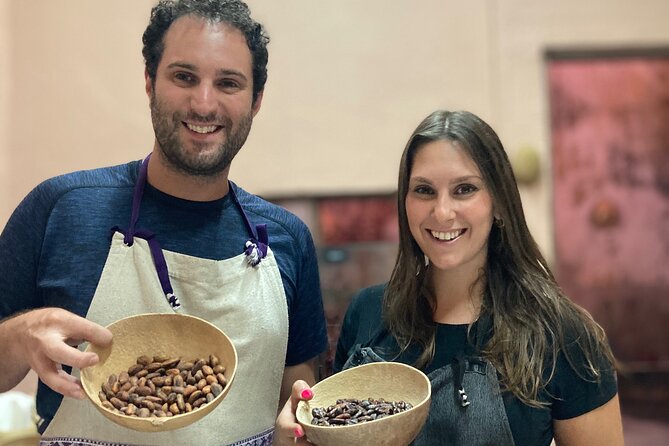
The finish is all about preparing the drink with a grinder, a traditional kitchen utensil used to incorporate and integrate the chocolate.
This is not just stirring in hot water. The point is texture and integration. Grinding helps combine cacao and liquid so the drink becomes smoother and more cohesive, with the cocoa flavors distributed rather than sitting in a heavy layer.
You also get to taste your own creation, which is usually the moment people stop thinking and just enjoy. If you like breakfast drinks, hot cocoa, or mole-like flavors, you are likely to love the final result because it sits at the intersection of sweet and cacao-forward depth.
The sweet ending: tasting your drink and a cocoa-based snack
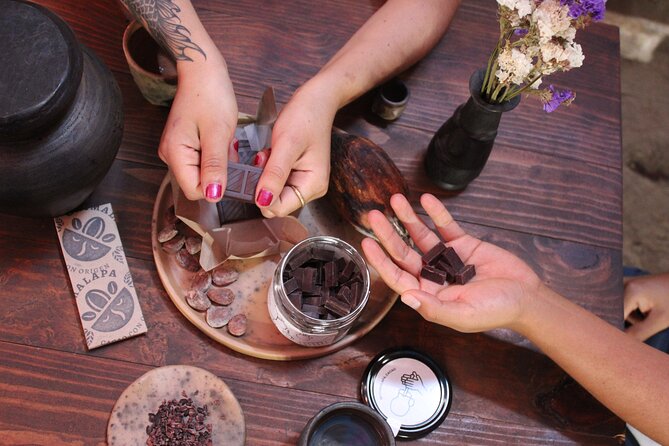
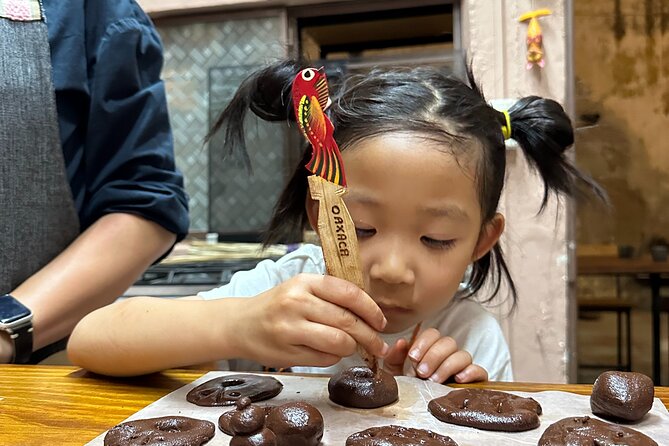
At the end, you close with tasting your drink and a cocoa-based sandwich. The sample dessert is listed as cocoa toast, so you can expect a chocolate-centered snack or dessert finish, not just a quick sip and out the door.
One extra detail that makes this workshop feel complete: you may also keep leftover ground chocolate from the process as a souvenir. That turns the class into something you can recreate later, even if you do not have the grinder equipment at home.
Guides that make it work: names you might meet in Oaxaca
Instruction quality matters in workshops, and this one tends to shine because the teachers are patient and hands-on. Depending on the date, you may work with instructors such as Diego, Fernanda, Lupita, or Ruth. People often appreciate clear explanations paired with real-time correction, so you understand what you are doing and why.
If you have questions about how to adjust sweetness or which beans lead to which flavors, this is the kind of class where asking is worth it. Small group size helps a lot, because you are not competing with a crowd.
Price and value, what $98.57 buys you
Let’s talk value, because $98.57 can feel like a lot until you see what is included.
For that price, you get:
- a guided lesson on cacao qualities and how processing changes flavor
- clay comal roasting and hand peeling (actual traditional steps)
- the chance to create a custom chocolate blend by choosing sugar percentage
- training on using a grinder to make the drink properly
- tasting your drink and finishing with a cocoa-based snack
What you are really buying is technique plus ingredients plus time. If you only want a quick sample, you might not feel satisfied. But if you want to leave Oaxaca with knowledge you can actually use, and a drink that tastes personal, this becomes a fair trade.
It also helps that the group caps at 4. In a larger class, the value can feel diluted because you spend more time waiting. Here, you tend to get time on task.
Who should book this cacao workshop
This class fits best if you fall into one of these groups:
- Food lovers who want process, not only products. If you care about why something tastes the way it does, you will appreciate the bean-by-bean flavor training.
- Couples and friends who want a shared activity. You will both create your own blend and taste it together, which turns the class into a mini experience you can talk about later.
- Families. Kids can handle parts like peeling and tasting, and the teaching approach has worked well for younger travelers when the instructor keeps things patient and organized.
- People who like DIY souvenirs. You may be able to take home leftover ground chocolate, which is a nice bonus when you are trying to remember Oaxaca after the trip.
If you have zero interest in food steps and just want a bar to buy, consider whether a workshop is the best use of your time.
Should you book this make-your-own chocolate class?
I think you should book it if you want a hands-on Oaxaca experience that goes beyond tasting. The biggest strengths are the small group, the traditional steps like roasting on a clay comal, and the way you learn cacao flavor traits before you customize your blend. That combination makes the final drink feel earned.
You might skip it if your schedule is tight, because 2 hours 30 minutes is a meaningful block. You should also consider whether you like the idea of active work with cacao and grinding. If that sounds fun, you are in the right place.
FAQ
How long is the Make Your Own Chocolate with Oaxacan Tradition Private Class?
It lasts about 2 hours 30 minutes.
What is the price per person?
The price is $98.57 per person.
How many people are in the group?
The class has a maximum of 4 travelers.
Is the class offered in English?
Yes, it is offered in English.
What will I make during the class?
You will learn to make traditional Oaxacan chocolate, choose the percentage of sugar for your blend, and prepare a cocoa-based drink using a grinder. You will also finish with a cocoa-based sandwich and cocoa toast.
Where does the experience start?
It starts at 5 de Mayo 210, Ruta Independencia, Centro, 68000 Oaxaca de Juárez, Oax., Mexico, and ends back at the meeting point.
Is free cancellation available?
Yes, you can cancel for a full refund up to 24 hours before the start time. Changes within 24 hours are not accepted.
Just added around Oaxaca City
- Wood Engraving Workshop★ 5.0 · 21 reviews
- Oaxaca Walking Tour★ 5.0 · 32 reviews
- Culture, History and Food in Oaxaca City★ 5.0 · 43 reviews
- Private and Secure Transfer Hotel to Oaxaca Airport★ 5.0 · 33 reviews
- Tour Monte Albán “clasico”★ 4.5 · 148 reviews
- Private and safe transfer from the airport to the hotel in Oaxaca★ 4.5 · 58 reviews
- Ultimate Hierve el Agua Hike + Textile Art★ 5.0 · 42 reviews
- Street Food and 3 Markets Tour, Meat or Veggie Options★ 5.0 · 35 reviews
Dessert Tours, compared.
Finca 18 Puerto Vallarta Tequila Tour + Chocolate Pairing
Read our review →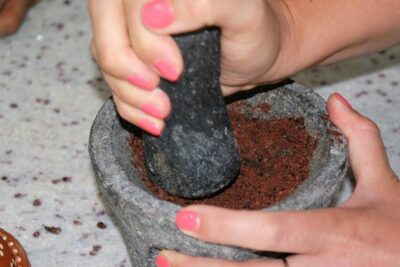
Bean to Bar Chocolate Workshop in Puerto Vallarta
Read our review →

Tour to Uxmal Kabah and Chocolate Museum from Mérida
Read our review →
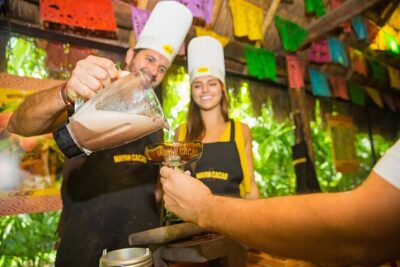
Cacao, Chocolate Experience in Oaxaca for Small Groups
Read our review →
Browse the lists this tour appears in