Reviewed · MEXICO CITY TOURS & ACTIVITIES
Learn to Cook Mexican Salsas
Salsa-making in Mexico City starts with a market visit. This 2.5-hour class leads you from Tacuba Market ingredients to hands-on cooking of four salsa styles in traditional ways. It is fun, practical, and built around the kind of flavors you can actually recreate at home.
A key consideration: no private transportation is included, and the activity depends on good weather. That means you’ll want to plan your own arrival and leave yourself a little buffer for the short walk between stops.
In This Review
- Key things that make this class worth your time
- Why Tacuba Market matters more than a cooking demo kitchen
- The meeting point: an ancient church, then straight to ingredients
- Tacuba Market: what you learn while choosing chile and produce
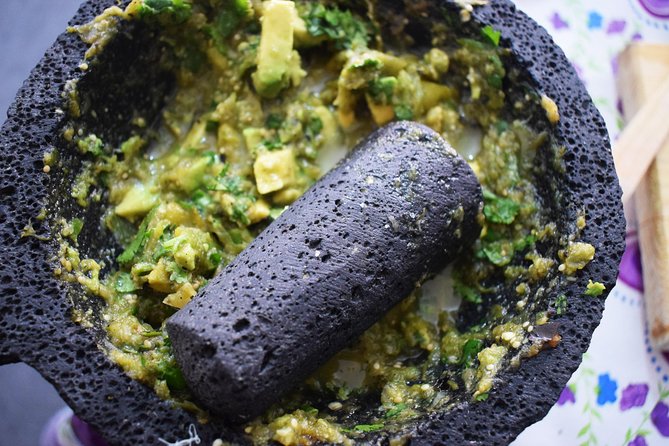
- Four ways to cook salsa: raw, fried, boiled, roasted
- Raw salsa: bright and chile-forward
- Fried salsa: deeper roasted notes and smoother edges
- Boiled salsa: gentle, harmonized, and mellow
- Roasted salsa: smoky depth and caramel-like complexity
- Quesadillas and totopos: what you eat while you learn
- Agua fresca, jamaica water, and pacing the meal
- Your take-home jar plus recipe cards
- Price, timing, and why $96 can make sense
- Who this class fits best in your Mexico City plan
- Meeting new instructors: the vibe you can expect
- Small practical tips before you go
- Should you book Learn to Cook Mexican Salsas?
- FAQ
- Where do we meet for the salsa class?
- What happens after the Tacuba Market?
- What types of salsa will we learn to make?
- What is included in the class besides salsa?
- Is there a vegan option?
- Is transportation included?
Key things that make this class worth your time
- Tacuba Market shopping first: You pick fresh ingredients before you cook.
- Four methods, not one: Raw, fried, boiled, and roasted salsa each taste different.
- You eat what you make: Totopos, quesadillas, and agua fresca are part of the flow.
- Spice control in your hands: You can match the heat level to your group’s comfort.
- Take-home jar plus recipe cards: You leave with enough salsa and instructions to keep going at home.
Why Tacuba Market matters more than a cooking demo kitchen
If you care about eating well in Mexico City, you’ll learn faster when you start with ingredients, not recipes. This experience begins right at the heart of Tacuba, where you shop for the produce and chile base that shapes each salsa’s taste.
That matters because Mexican salsas are not just a sauce. They are a system. Freshness, roast level, and how you treat the chile and aromatics all change the final flavor and heat. Starting at the market makes the lesson stick, because you see the ingredients you will later handle at the cutting board.
I also like that you do not just taste a sample and leave. You cook, adjust, and then eat right away, so the class becomes a small meal plus a skill you can repeat later.
Backup plans for Mexico City
- Teotihuacan, Guadalupe Shrine & Tlatelolco Day Tour with Lunch
★ 5.0 · 11,603 reviews - Xochimilco, Coyoacan and Frida Kahlo with Optional Lunch
★ 4.5 · 7,320 reviews - Balloon flight + Breakfast in cave + Pyramids + Pick up CDMX.
★ 5.0 · 6,335 reviews
The meeting point: an ancient church, then straight to ingredients
You meet at Parroquia San Gabriel Arcángel in Tacuba, a historic church area that anchors the neighborhood before the Spanish arrived. From there, you are only a short walk to Tacuba Market.
This sequence is smart. You get a quick sense of place, then you jump into the practical stuff. Market shopping is where you learn what to look for, what to smell, and what to buy when you want salsa that tastes like it belongs in Mexico, not like it came out of a jar.
From the market, you walk about five minutes to the instructor’s place to start cooking. So expect a little walking in lively neighborhood streets, not a sit-down transfer in a vehicle.
Tacuba Market: what you learn while choosing chile and produce
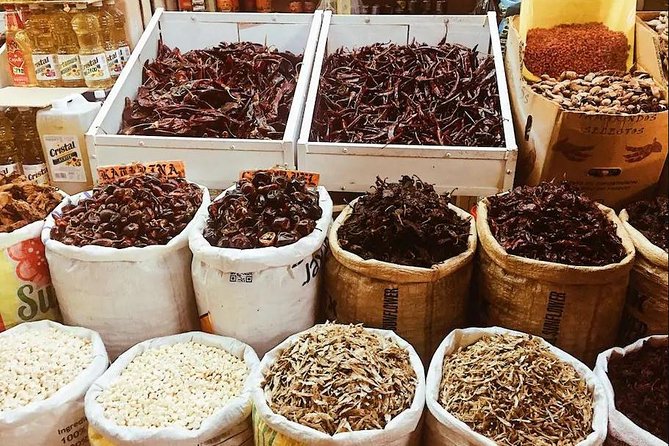
You spend time at Tacuba Market selecting the fresh ingredients used for the salsas. This is not “browse and hope” shopping. The class guides you on what to look for and encourages you to taste along the way, so you understand how ingredient choices affect the end result.
You’ll likely notice that different salsas lean on different textures and roast levels. That is why fresh produce and properly chosen chile matter so much here. Even if you have cooked before, a market-based lesson can recalibrate your instincts quickly.
One practical bonus: because you are at a real market, you can also spot other Mexican staples you may want to buy for later. If you have space in your bag, it is a good place to look for extras like mole or other chile-based products, depending on what’s available that day.
Four ways to cook salsa: raw, fried, boiled, roasted
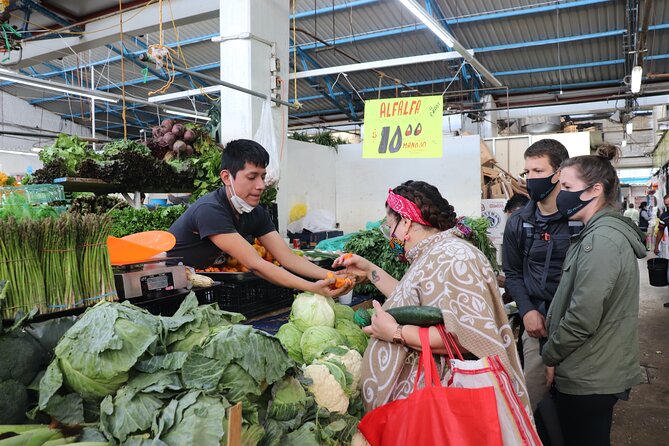
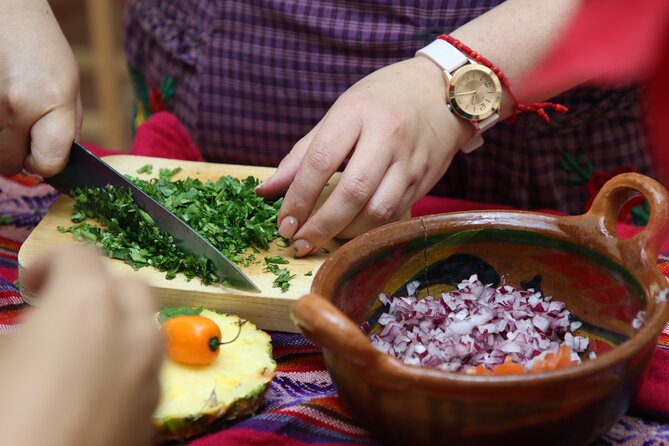
The main event is making four traditional salsas. What makes this class stand out is that it does not treat salsa like a single recipe. It treats salsa like a set of techniques, each with its own personality.
Here’s how the four methods change the flavor logic:
Close by, worth a second look:
- Teotihuacan pyramids morning or afternoon without tourist traps
★ 5.0 · 6,186 reviews - Teotihuacan Early Access Guided Tour with optional Lunch
★ 4.5 · 6,138 reviews - Balloon flight + pick up in CDMX + Breakfast in Cave + Pyramids
★ 5.0 · 5,651 reviews - Mexico City: Teotihuacan & Guadalupe Shrine Tour with Lunch
★ 4.7 · 4,465 reviews
Raw salsa: bright and chile-forward
Raw salsa usually keeps flavors sharp and direct. It teaches you how raw chile and aromatics behave when you do not cook them into softness. This is the salsa style that often tastes freshest, with a more immediate chile punch.
Fried salsa: deeper roasted notes and smoother edges
With fried salsa, you learn what happens when you warm and cook the chile and aromatics just enough to round the edges. Frying often adds a mellow depth and a slightly thicker mouthfeel. It’s a great technique for people who think salsa should feel rich, not just spicy.
Boiled salsa: gentle, harmonized, and mellow
Boiling softens ingredients and blends flavors in a more uniform way. You learn how heat changes structure, especially for components that need time to mellow. The result tends to be balanced and easy to pair with tortillas and cheese.
Roasted salsa: smoky depth and caramel-like complexity
Roasted salsa brings the aroma you expect from good roasting, plus a smoky layer that can make even simple ingredients taste more complex. Roasting teaches you timing and how much color matters, which is hard to learn from a written recipe alone.
Across all four, the class emphasizes that each salsa can have a different flavor profile and spicy level. You’ll learn that “spicy” is not one thing. It’s a range shaped by chile type, prep, and cooking method.
Quesadillas and totopos: what you eat while you learn
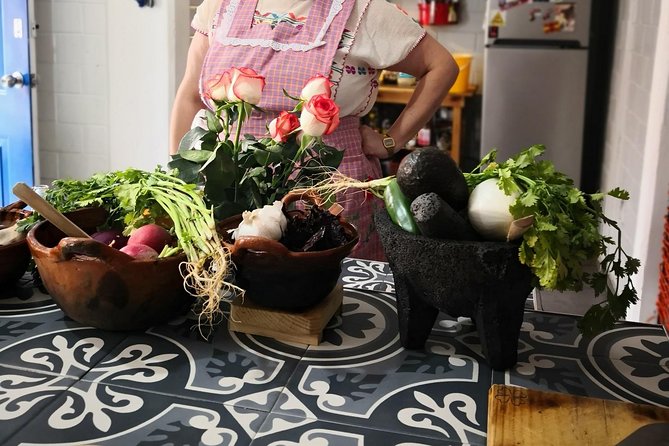
Salsa classes often forget the food part. Not this one. You eat what you make.
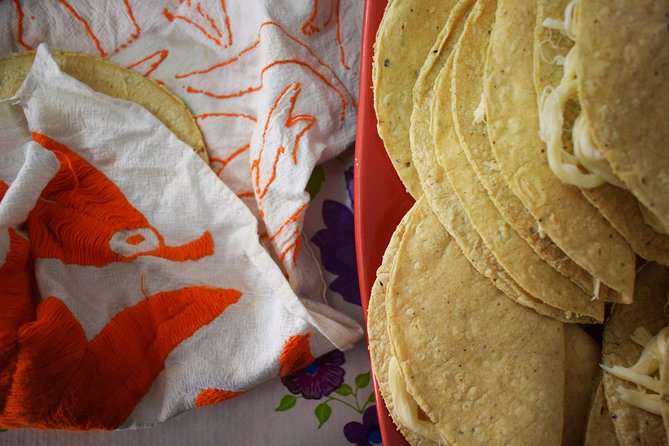
You start with Salsa & Totopos. Totopos are fried corn tortilla chips, and they are the perfect setup because you get crisp texture and salsa flavor at the same time. This is also a low-stakes way to test heat levels as you go.
Then comes quesadillas. You get hot tortillas with melted Oaxaca cheese inside, which pairs especially well with salsas that are smoky, fried, or roasted.
There is also a vegan option. The class can use beans and nopales in place of the cheese filling. If you are traveling with mixed diets, this is a helpful detail that keeps everyone fed without a separate process.
Agua fresca, jamaica water, and pacing the meal
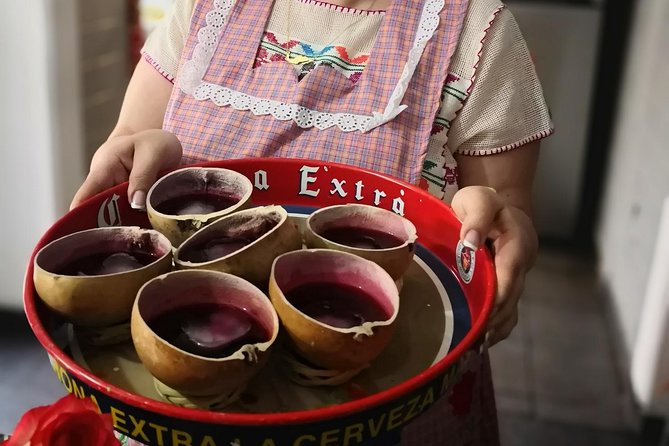
You also get unlimited agua fresca, specifically jamaica water, made with hibiscus flower, ice, and a touch of sugar. This is not an afterthought. It is part of how you keep tasting without burning your tongue.
Hibiscus water is tart, lightly sweet, and cool. That flavor profile clears your palate and makes the next salsa sample easier to judge. It is also a classic pairing with spicy or chile-heavy foods, so it fits the theme of the class.
Your take-home jar plus recipe cards
The best part of a cooking class is what you can reproduce later. Here, you leave with a jar of salsa and recipe cards.
That matters because Mexico City salsas are not just “tastes good today.” The goal is to bring the technique home. Recipe cards give you a baseline, and the jar gives you immediate gratification, plus a reference point for what the finished salsa should taste like.
If you plan a food-focused trip, this take-home piece is what turns a fun morning into a longer memory. You can remind yourself of the flavors when you cook later, instead of relying on your memory alone.
Price, timing, and why $96 can make sense
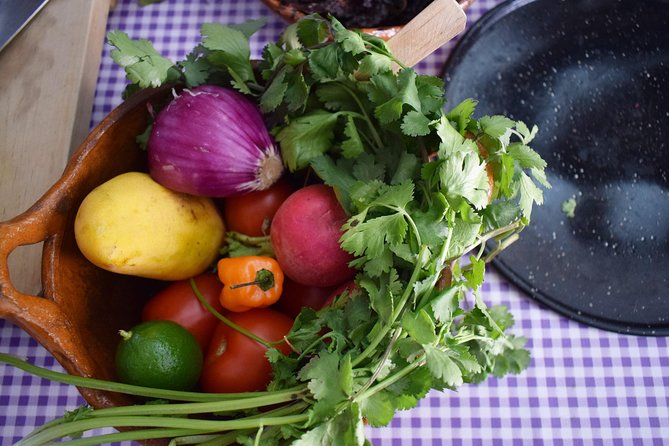
At $96 per person for about 2 hours 30 minutes, the price is competitive for a hands-on, market-to-kitchen cooking class in Mexico City. You are not just paying for instruction. You are paying for:
- Market shopping time, which is the learning backbone
- Cooking four different salsa methods, not a single variation
- Food included: totopos, quesadillas, and agua fresca
- A jar of salsa to take home plus recipe cards
Also, the class is often booked in advance (on average about 20 days out). That can be a good sign of consistent demand, and it can also mean you should lock your slot early if your dates are fixed.
Private tour does not mean private transportation, but it does mean you are not sharing your kitchen table with strangers if the operator assigns you as a group.
Who this class fits best in your Mexico City plan
This works best if you want more than a tasting. If your trip includes food neighborhoods and markets, you will enjoy this because it teaches you what to look for and how to cook with it.
It also fits a range of travelers:
- Couples who want a memorable shared activity
- Families, including kids, since you get hands-on tasks and a full snack-and-meal setup
- Food lovers who want a skill to repeat at home
- People who like controlling heat, because the class is built around spicy level differences among salsa types
It is less ideal if you are looking for a quick, purely observational experience. This is a doing class, with active cooking steps.
Meeting new instructors: the vibe you can expect
The class experience often comes down to the teacher’s energy and teaching style. Names you may see associated with this experience include Luis, Jazz, Veronica, Yazmin, and Natalia.
Common strengths show up repeatedly in what you can expect in practice:
- Hands-on cooking guidance
- Active market interaction, including tasting along the walk
- Fun, upbeat teaching that keeps the group moving
- Support for different spice comfort levels
That combination is what makes the class feel like a cultural outing, not a rushed factory lesson.
Small practical tips before you go
Since the tour includes market shopping and a cooking kitchen setup, come prepared for hands-on work.
- Wear comfortable shoes for the walk between the meeting area and the cooking location.
- Expect chile aromas, even if you wash hands well. Plan a light wardrobe if you’re sensitive to smells.
- If you know you dislike high heat, tell the instructor early. The salsas are made with different spicy levels, and you’ll want your guidance up front.
Should you book Learn to Cook Mexican Salsas?
Yes, if you want a Mexico City activity that turns market shopping into a real skill. You get a structured experience: shop fresh ingredients at Tacuba Market, cook four salsa types using different methods, and eat your results with totopos, quesadillas, and jamaica water. Then you take home a jar and recipe cards, so the class keeps paying off after your trip ends.
I would skip it only if you strongly prefer food sightseeing without kitchen work, or if you cannot handle a short walk between stops and you rely on private transport.
If your goal is to leave with both flavor knowledge and a repeatable salsa plan, this one is a solid booking.
FAQ
Where do we meet for the salsa class?
You meet at Parroquia San Gabriel Arcángel, Calz México-Tacuba S/N, Tacuba, Miguel Hidalgo, 11490 Ciudad de México, CDMX, Mexico.
What happens after the Tacuba Market?
After shopping in Tacuba Market, you walk about five minutes to the host’s place to start cooking.
What types of salsa will we learn to make?
You cook four traditional styles: raw, fried, boiled, and roasted salsas.
What is included in the class besides salsa?
You’ll also have snacks including totopos, quesadillas, and agua fresca (jamaica water). Unlimited jamaica water is included.
Is there a vegan option?
Yes. There is a vegan option for the quesadillas, using beans and nopales.
Is transportation included?
No. Private transportation is not included, so you’ll handle getting yourself to the meeting point.
Just added around Mexico City
- Museum of Anthropology: a look at Mexico’s past★ 5.0 · 52 reviews
- Bike Tour in Mexico City★ 5.0 · 45 reviews
- Xochimilco BOAT LIGHT PARTY WITH 1 DRINK AND 4 TAQUITOES + 18★ 4.5 · 26 reviews
- Small Groups: Xochimilco and Coyoacan★ 4.0 · 37 reviews
- Riding Boats +Warm Mex Food+ Frida Kahlo’s neighborhood (private)★ 4.5 · 29 reviews
- Xochimilco, Coyoacan, Aztec Stadium & UNAM★ 4.0 · 232 reviews
- Xochimilco & Coyoacán Private Tour: Canals, Markets & Local Food★ 5.0 · 58 reviews
- Xochimilco Magic: Culture, Canals & Mezcal, 3hr boat adventure!★ 5.0 · 43 reviews
Mexico City Tours & Activities, compared.

Teotihuacan, Guadalupe Shrine & Tlatelolco Day Tour with Lunch
Read our review →
Xochimilco, Coyoacan and Frida Kahlo with Optional Lunch
Read our review →
Balloon flight + Breakfast in cave + Pyramids + Pick up CDMX.
Read our review →
Teotihuacan pyramids morning or afternoon without tourist traps
Read our review →
Teotihuacan Early Access Guided Tour with optional Lunch
Read our review →
Balloon flight + pick up in CDMX + Breakfast in Cave + Pyramids
Read our review →
Teotihuacan & Guadalupe Shrine Tour with Lunch
Read our review →