
Reviewed · HISTORICAL TOURS
History and Murals: Walking Tour Guadalajara
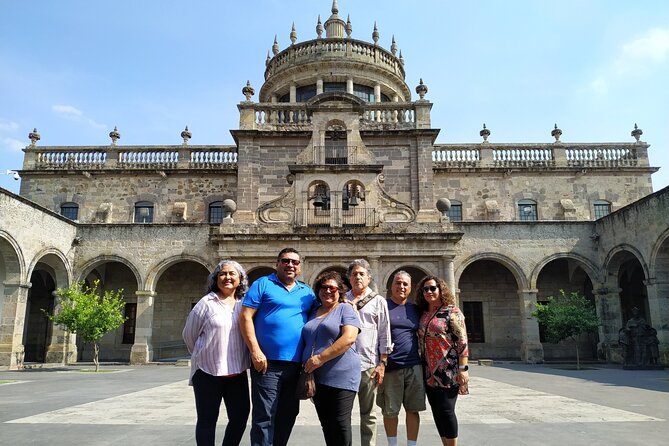
Guadalajara’s story shows up on every corner. I love the way this walk blends Cabañas Museum tickets with a guide like Fernando who connects architecture, politics, and art into a clear timeline you can actually remember. The big reason to book is the centerpiece: José Clemente Orozco’s mural work at Hospicio Cabañas, where you get to focus instead of wasting time in line.
I also like that you finish where the city actually eats and shops. The Mercado Libertad stop is built for trying regional favorites and picking up souvenirs without paying tourist prices. The main consideration is simple, most of the tour is on your feet, and there are no audio headsets or microphones, so come prepared for a fair amount of walking and standing.
In This Review
- Key highlights worth marking
- Getting oriented at Plaza de Armas in the historic center
- Parroquia El Sagrario and Guadalajara Cathedral: two styles, one timeline
- Rotonda de los Jaliscienses Ilustres and the independence-focused Plaza de la Liberacion
- Plaza Fundadores and Plaza Tapatía: Guadalajara’s “old roots” and newer commerce
- Municipal Palace and Palacio de Gobierno: where access can change
- Teatro Degollado: the beauty stop that can be subject to rules
- Cabañas Museum (Hospicio Cabañas): the Orozco murals that anchor the day
- Mercado Libertad: where lunch turns into a local shopping strategy
- Price and value: what your $53.05 is really paying for
- What to wear and bring for a half-day on foot
- Is this the right fit for you?
- Should you book this Guadalajara murals and history walking tour?
- FAQ
- How long is the Walking Tour Guadalajara?
- Where does the tour start and end?
- What language is the tour in?
- Are entrance tickets included?
- How many people are in the group?
- Does the tour run in bad weather?
Key highlights worth marking
- Cabañas Museum line-saver with your included entrance ticket
- Orozco murals, 57 frescoes across walls and domes at Hospicio Cabañas
- Historic center route from Plaza de Armas through Cathedral and key plazas
- Market time at Mercado Libertad for food, crafts, and bargaining
- Small group size (max 15) that makes questions easy
Getting oriented at Plaza de Armas in the historic center
The tour starts right in the action, at Plaza de Armas in Guadalajara’s Zona Centro. This is one of those places where you instantly feel the city plan: the oldest square in the historic center, founded in the 1500s, surrounded by the buildings that shaped Guadalajara’s power and identity.
From the first stop, the guide sets the tone well. You are not just collecting photos. You are learning how plazas work in Mexico, as social rooms where religion, government, and commerce end up in the same view. That matters because later, when you see the church fronts and government facades, they stop looking like random stops and start looking like a system.
Also, the pacing is designed for a half-day feel. The whole outing runs about 3 to 4 hours, starting at 10:00 am. You do not need to be a museum person to enjoy it, but you do need comfortable shoes.
Backup plans for Guadalajara
- Walk Guadalajara!
★ 5.0 · 474 reviews - Guadalajara City Center Walking Tour
★ 5.0 · 225 reviews - Guadalajara Private Walking Tour
★ 5.0 · 167 reviews
Parroquia El Sagrario and Guadalajara Cathedral: two styles, one timeline
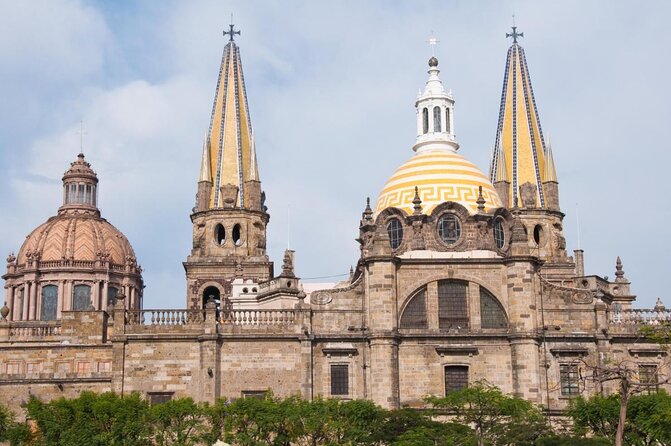
Next up is Parroquia El Sagrario Metropolitano, inaugurated in 1839. What I like here is how the tour treats this building as a clue. It is described as a neoclassical style parish built with golden quarry, and it is one of Guadalajara’s architectural jewels. Even if you are not a detail hunter, you can still read it as a shift in taste and authority.
Then you move to the Guadalajara Cathedral, which is the bishopric’s headquarters. Construction began in the 1500s, and today it is one of the state’s most important churches and a major one across Jalisco. From the outside, you get the scale and seriousness. From the inside, you understand why a cathedral is more than a pretty building. It is where a city’s identity gets formalized.
A practical note: most of this part is walk-and-look. You will want to pause, listen, and let the guide explain what you are seeing before you rush ahead for the next photo.
Rotonda de los Jaliscienses Ilustres and the independence-focused Plaza de la Liberacion
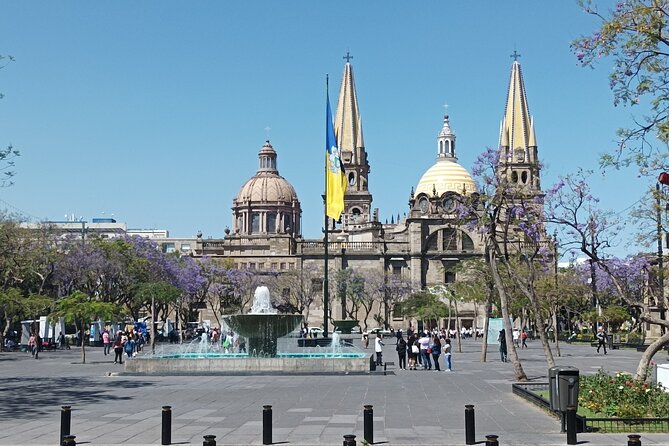
After the big religious anchor points, the tour shifts to memory and monuments. At Rotonda de los Jaliscienses Ilustres, you see a neo-classical style monument dedicated to the most important men and women in Jalisco’s history.
This stop is short but useful because it frames how the city tells its own story after the political upheavals. Then you walk to Plaza de la Liberacion, dedicated to Mexico’s independence. Built in the 1950s, it connects older national narratives to later Guadalajara public space. In other words, the city keeps revisiting its past, but it does it with different eras’ design choices.
If you like context, these quick stops are where it clicks. You start noticing how Guadalajara layers time instead of replacing it.
Plaza Fundadores and Plaza Tapatía: Guadalajara’s “old roots” and newer commerce
At Plaza Fundadores, you are pointed at the foundation story. The square is dedicated to Guadalajara’s founding in 1542 and includes a bronze sculpture by local artisan Rafael Zamarripa dedicated to the founders.
Then you reach Plaza Tapatía, built in the 1970s and described as the largest and newest square in the historic center. It is dedicated to commerce and the sale of handicrafts. This is a good contrast point because it gives your feet a break in a wide open place while showing you how the center evolved into a shopping and gathering zone.
One of my favorite travel habits is using a square as a “breathing station,” and these work well. You can take a moment, check your bearings, and then get ready for the more formal and institutional buildings ahead.
Close by, worth a second look:
- Full Day Tour to Tequila and Amatitán with Fun and Culture
★ 5.0 · 681 reviews - The Agave Experience Tequila Tour in Jalisco
★ 5.0 · 520 reviews - Tour to Lake Chapala, MAGIC TOWN of Ajijic from Guadalajara
★ 4.5 · 476 reviews - Full Day in Tequila with Tasting and party in Cantaritos
★ 5.0 · 356 reviews
Municipal Palace and Palacio de Gobierno: where access can change
Now you move into government-land, and this is where you should expect flexibility. The route includes the Guadalajara Municipal Palace, a neocolonial style building built between 1949 and 1952, which houses the Municipal Council of the capital of Jalisco.
The next major stop is Palacio de Gobierno del Estado de Jalisco. It was inaugurated in 1790 and served as the Guadalajara Court during the viceregal period. Later, it became military barracks and then the seat of the Jalisco congress. The tour highlights the main staircase, where you can appreciate one of the murals by José Clemente Orozco.
Important practical reality: access to some government buildings is subject to availability based on state government indications. If entry is limited, you still get the architectural explanation, but you may not see the interior mural areas. The tour’s design tries to keep the mural payoff strong by focusing on the included Cabañas Museum visit, which is the reliable centerpiece.
If you are traveling in busy seasons or around major events, this kind of access variability is normal. Build in a little wiggle room in your day, and you will enjoy the walk even if one doorway is closed.
Teatro Degollado: the beauty stop that can be subject to rules
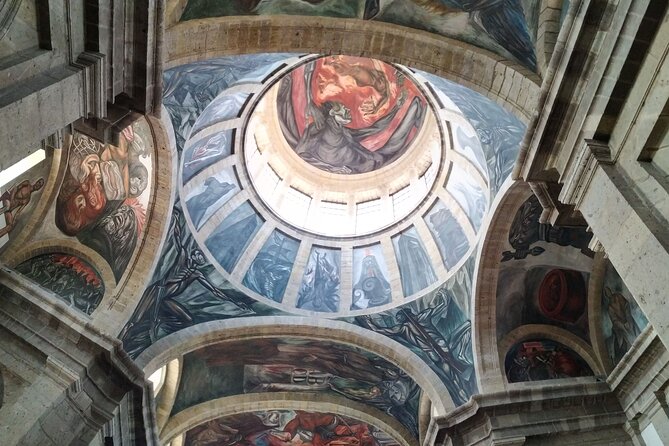
Teatro Degollado is next, opened in 1866 during the War of Reform. It is widely treated as one of the city’s most important theaters for both beauty and acoustics.
Again, access can be subject to availability based on local instructions. If you cannot enter, do not treat it as a failure. The exterior and the guide’s historical framing still give you the key idea: theaters were culture engines, not just entertainment spaces. They helped define who mattered, what audiences valued, and what “modern” sounded like in the 1800s.
Cabañas Museum (Hospicio Cabañas): the Orozco murals that anchor the day
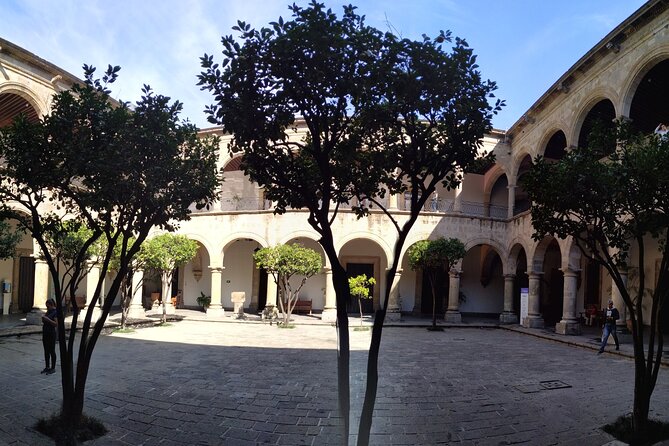
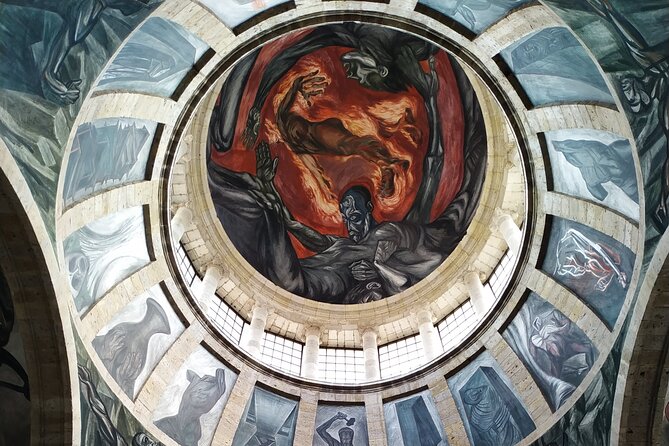
This is the moment that makes the tour worth your time. The Cabañas Museum visit is about seeing José Clemente Orozco’s work at Hospicio Cabañas, which holds one of Mexico’s best-known mural programs.
You get around the most annoying part, because your entrance ticket helps you beat the queues at the museum. Inside, you focus on 57 fresco murals painted on the walls and domes of the main chapel. That number matters, because it is not just one masterpiece you glance at. You are walking into a full visual argument built with paint, scale, and symbolism.
The murals are also connected to UNESCO recognition. The guide’s approach here is especially practical. One strong theme from feedback is how you get a first experience before the explanation floods in. That is a smart way to build your own impressions, then compare your interpretation with what the murals are saying about history and society.
If you like art history, this stop is a gift. If you do not, you still get something concrete: the sense that Guadalajara is not only a city of churches and plazas. It is also a city of ideas, and Orozco’s murals are one of the clearest ways to see that.
Mercado Libertad: where lunch turns into a local shopping strategy
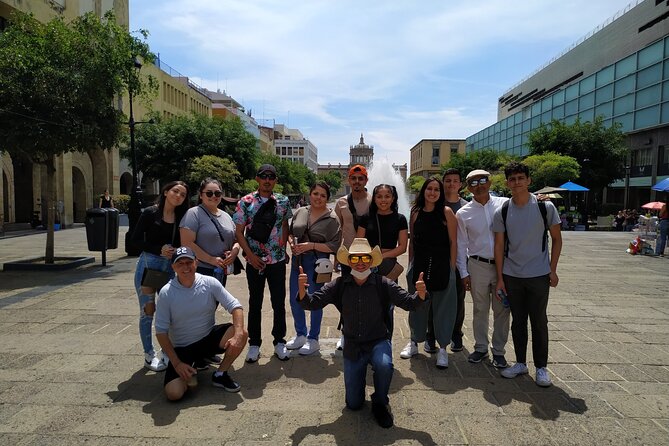
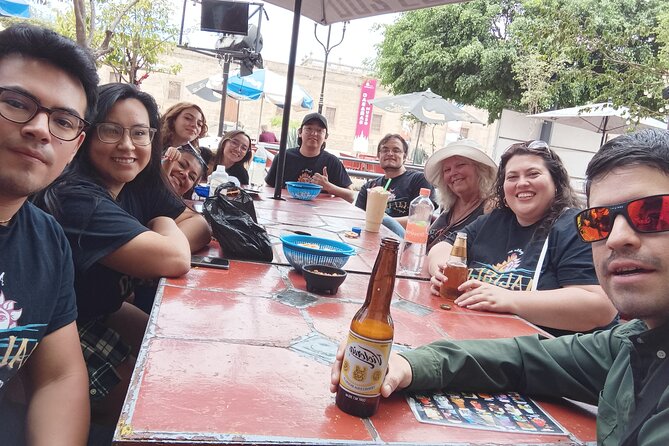
The tour ends at Mercado Libertad, also known as San Juan de Dios. It is positioned as the largest traditional market in the city and one of the largest of its kind in Latin America.
This stop is timed to help you connect the dots. You already learned how the city formed and how it commemorates itself. Now you get to see how daily life works, including how people eat, trade, and bargain.
You can expect traditional food, regional crafts, and souvenirs. The market is also where you can test a few Guadalajara staples. From what I saw and heard in guide-style recommendations, a common best bet includes local favorites like tejuino, and you might also find tortas ahogadas, plus options such as birria nearby depending on what stalls are cooking.
One more reason I like this market finish: it gives you real value for your money. Many walking tours stop before you can eat, and then you hunt for dinner with no plan. Here, you get a structured launch into the market, and the guide can point you toward what tends to taste best.
Price and value: what your $53.05 is really paying for
At about $53.05 per person for roughly 3 to 4 hours, this is not a bargain in the “cheap group bus” sense. It is better to think of it as paying for three things that are hard to DIY:
First, you pay for guided context. The city’s church fronts and government facades can look similar if you only read signs. Fernando’s storytelling is a big part of the appeal, and it helps you connect the architecture to how Guadalajara actually evolved.
Second, you pay for included admissions. Parroquia El Sagrario Metropolitano and the Guadalajara Cathedral have admission included. Cabañas Museum is included and helps with queue time. Mercado Libertad also has admission included. That is a lot of entry fees bundled into one pass.
Third, you get a practical local ending at the biggest market, which saves you time and decision stress. In a place like Guadalajara, time is money because you want to eat well and still have energy to explore.
If you only want one museum and you hate walking, you might find this cost harder to justify. But if you like a guided route with a clear art payoff, it is strong value.
What to wear and bring for a half-day on foot
Because this walk is mostly on foot, you should plan like it is a short hike, not a slow stroll. Choose shoes you can stand in. Bring water. If you are sensitive to sun, plan for shade breaks, since the guide tends to manage rest stops and timing so the group stays comfortable.
Also keep in mind the tour does not use audio headsets. That means you need to be close enough to hear the guide clearly, especially in louder areas.
If you use maps on your phone, great. Still, let the guide lead. The route is designed so each stop adds meaning to the next.
Is this the right fit for you?
This tour is a great match if you want a first-timer-friendly introduction to Guadalajara Centro with a strong art focus. It is also a strong option if you care about murals, architecture, and how public spaces tell political stories.
You might choose something else if you have limited mobility, if you hate standing, or if you prefer a museum-only day. For everyone else, especially anyone who likes learning while walking, this works.
Should you book this Guadalajara murals and history walking tour?
Yes, if your goal is to understand Guadalajara quickly without losing the fun. I would book it if you want the best-known mural stop at Hospicio Cabañas, plus a well-paced walk through the historic center, and then a market finish where you can eat and shop without guessing.
I would pause before booking only if you need lots of seated time, if you strongly prefer fewer moving pieces, or if you are traveling on a day where government building access might be restricted. The tour still delivers the core mural experience at Cabañas, so those access changes are not likely to ruin your day.
If you are in town for a short visit and you want one smart, high-impact afternoon, this is a solid choice.
FAQ
How long is the Walking Tour Guadalajara?
It runs about 3 to 4 hours.
Where does the tour start and end?
It starts at Plaza de Armas in Guadalajara’s Zona Centro and ends at Mercado Libertad on Calle Dionisio Rodríguez 52, San Juan de Dios.
What language is the tour in?
The tour is offered in English.
Are entrance tickets included?
Admission is included for Parroquia El Sagrario Metropolitano, Guadalajara Cathedral, Cabañas Museum, and Mercado Libertad. Other stops listed have free admission.
How many people are in the group?
The tour has a maximum of 15 travelers.
Does the tour run in bad weather?
It requires good weather. If it is canceled due to poor weather, you will be offered a different date or a full refund.
Just added around Guadalajara
- TLAQUEPAQUENSE DAY, Tram + Workshops + Gastronomy★ 4.5 · 26 reviews
- Transfer by car to or from Guadalajara Airport★ 4.5 · 49 reviews
- Viva Guadalajara: Exploring Mexico’s Culinary Frontier★ 5.0 · 19 reviews
- Full-Day Private Tour in Guadalajara★ 5.0 · 19 reviews
- Hike and Swim in fresh springs and waterfalls in Guadalajara★ 4.5 · 26 reviews
- Tlaquepaque Tour with Transportation!★ 5.0 · 21 reviews
- Tlaquepaque and Tonala Private Full-Day Tour★ 5.0 · 31 reviews
- Guachimontones Archaeological Tour★ 5.0 · 60 reviews
Historical Tours, compared.
Mexico City Historical Centre Food Tour with 7 Authentic Tastings
Read our review →
Historical and Cultural Walking Tour of San Miguel de Allende
Read our review →
Historical and Cultural Walking Tour of San José del Cabo
Read our review →
Walking Tour in Mexico City for Exploring their Cultural Heritage
Read our review →Browse the lists this tour appears in