
Reviewed · HISTORICAL TOURS
Half-Day Small-Group Historical Center Mexico City Tour
Cut through traffic and learn Mexico City fast. This half-day small-group historical bike tour mixes street-level riding with real context for the Centro Histórico layers, from convent churches to Aztec ruins. You roll with up to 10 people and usually two guides, and I like that it’s designed to feel personal rather than like a conveyor belt.
I love the hands-on way you get set up, including how to ride safely in the city before you’re dropped into the Historic Center rhythm. I also love the food angle, because you do more than look, you also taste, with lunch included and snack time at the start. The one drawback to consider is the moderate fitness requirement, since you will be cycling for a few hours in busy areas.
In This Review
- Key things I’d circle before you go
- Why this bike tour is a smart way to start Mexico City
- Getting rolling at Londres 37, Juárez (and why setup matters)
- Bazar Fusion snack stop: history lessons start before you even mount
- Plaza Tlaxcoaque: a short stop that teaches you how to read a city
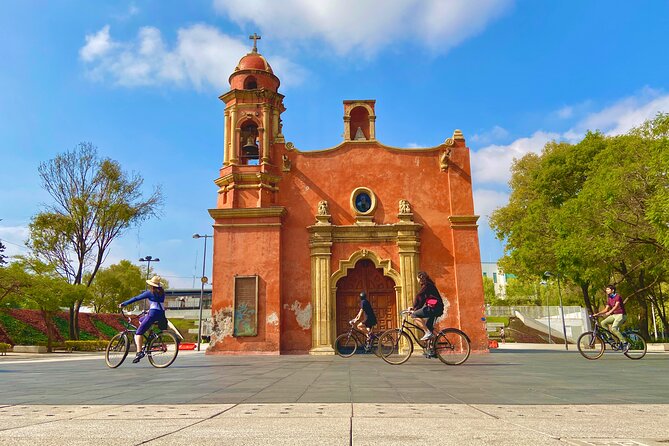
- Regina Coeli Parish: convent-era architecture and why locals still care
- Zócalo: the heart of Mexico City, and the history that radiates outward
- Museo del Templo Mayor (outside): Aztec core under colonial layers
- Museo Mural Diego Rivera at La Alameda: muralism you can actually see
- Passing Palacio de Bellas Artes, then stopping for the Revolution monument
- The food and lunch angle: more than a break from riding
- Safety and pace: easy biking is part of the plan
- Language, group size, and who this tour fits best
- Should you book this half-day Historical Center Mexico City bike tour?
- FAQ
- How long is the half-day historical center Mexico City bike tour?
- How many people are in the group?
- What should I bring, and is a helmet included?
- Is lunch included?
- Do I need to pay for admission to all stops?
- Where does the tour start and end?
Key things I’d circle before you go
- Max 10 people with 2 guides, so you get more attention and less waiting around
- Bikes and optional helmets included, so you can show up with only yourself
- A snack plus riding tips at the start at Bazar Fusion, then you’re learning as you move
- Historic Center highlights in short stops, including Zócalo and the outside view of Templo Mayor
- Diego Rivera’s mural at La Alameda for 40 minutes, a real art lesson while you park and look
- Lunch included, with food stops that feel local rather than purely sightseeing-driven
Why this bike tour is a smart way to start Mexico City
Mexico City can feel like a lot at first. There’s the scale, the traffic, and the fact that history is piled on top of history. This tour helps you make sense of it without turning the day into a museum sprint.
What works is the format. You’re not standing still for long periods. You get a steady flow of context that explains what you’re seeing as the streets shift from neighborhood corners to major landmarks. The guide team I’ve seen mentioned, including Velia, Valentino, Augustine, Isaac, and support staff like Amistad and Miranda, tends to bring both architecture details and everyday city life into the same story.
And since it’s capped at 10 people, you’re more likely to get a direct answer to your question, or to get pulled to the right spot for a view or a mural check. If you want your first day in the Historic Center to feel useful, this is a strong way to do it.
Backup plans for Mexico City
- Historic Downtown Walking Tour
★ 5.0 · 1,289 reviews - Historic Center Food Tour in Mexico City
★ 5.0 · 1,263 reviews - Mexico City: Historic Downtown Walking Tour
★ 4.8 · 1,039 reviews
Getting rolling at Londres 37, Juárez (and why setup matters)
You meet at Londres 37, Juárez, Cuauhtémoc, 06600 Ciudad de México, CDMX, with a 9:00 am start. The tour returns to the same meeting point. It’s near public transportation, which matters in Mexico City because getting out to a pickup area can be half the battle.
From the start, they take the biking seriously. At Stop 1, Bazar Fusion, you don’t just grab something to eat and go. You receive a snack and get an introduction to what you’ll see next, plus clear guidance on how to bike in Mexico City. That early moment is more important than it sounds. If you’re even a little unsure about riding in a big city, this is where you settle your nerves before you’re in the heavier flows near the Historic Center.
Bikes are included, and optional helmets are available, so you are not scrambling to rent gear. You’ll want to follow the guide’s lead for how closely to ride together and where to position yourself at crossings, especially since the route moves through active streets.
Bazar Fusion snack stop: history lessons start before you even mount
The tour begins with a snack at Bazar Fusion, and the timing is tight: about 40 minutes. This is long enough for a real start rather than a quick handshake.
Here’s what I like about this first block. You’re given a preview of the route and what the guides want you to notice. Then you get quick training on driving a bicycle in Mexico City. That blend of prep plus fuel means you’re not learning history only with stop-and-go standing around. You’re learning it while your body is in motion, which tends to make the landmarks stick.
It also sets expectations. When you later reach sites like the Zócalo and Templo Mayor area, you’re not trying to figure out what’s where. You’ve already been primed to look for layers, not just individual buildings.
Plaza Tlaxcoaque: a short stop that teaches you how to read a city
Next comes Plaza Tlaxcoaque with a 15-minute stop. This isn’t a “wait in line at a major museum” kind of visit. The guide uses the plaza to explain history and also checks a street mural.
That mural check matters because the Historic Center isn’t only stone and official monuments. It’s also the visual language of neighborhoods: murals, paint, symbols, and local commentary in public space. In just 15 minutes, you get a sense of how the city communicates.
The tradeoff is time. You won’t go deep here. But that’s the point of a half-day format. It’s more like a set of lenses than a full textbook.
Close by, worth a second look:
- Teotihuacan, Guadalupe Shrine & Tlatelolco Day Tour with Lunch
★ 5.0 · 11,603 reviews - Xochimilco, Coyoacan and Frida Kahlo with Optional Lunch
★ 4.5 · 7,320 reviews - Balloon flight + Breakfast in cave + Pyramids + Pick up CDMX.
★ 5.0 · 6,335 reviews - Teotihuacan pyramids morning or afternoon without tourist traps
★ 5.0 · 6,186 reviews
Regina Coeli Parish: convent-era architecture and why locals still care
At Regina Coeli Parish (also described as a former convent church) you get about 30 minutes. This is Roman Catholic parish church architecture with a convent past, located right in the Historic Center.
What makes this stop interesting is how the guide frames the church not as a standalone sight, but as part of why this area matters to people today. Expect the explanation to focus on what you can actually see: the building style and how it connects to the broader story of the neighborhood.
Also, this is a moment where you can slow down a bit mentally while still staying in the cycling rhythm. You’re not sprinting through everything. You’re getting one structured look at a building you might otherwise pass without understanding.
Zócalo: the heart of Mexico City, and the history that radiates outward
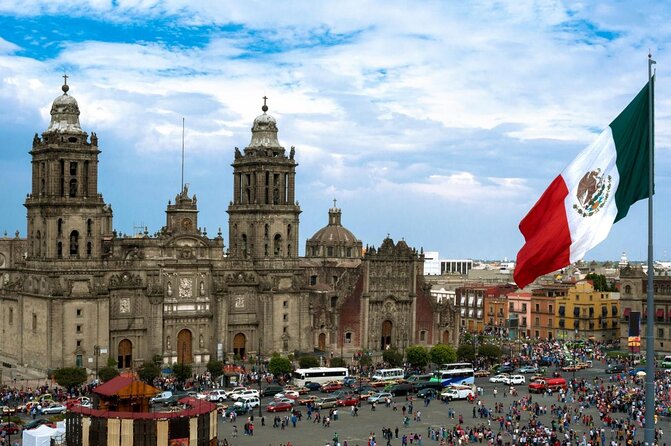
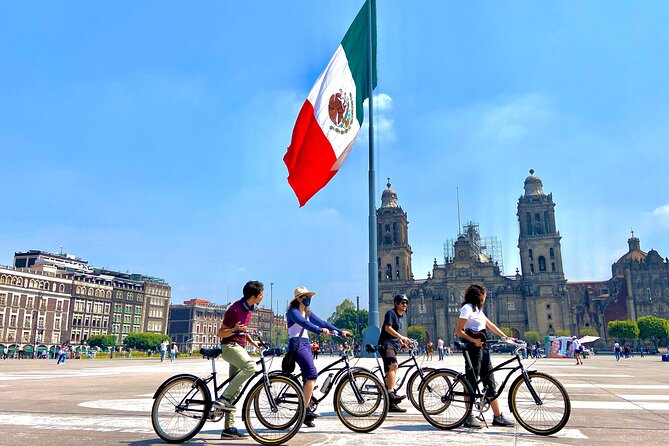
Then you reach Zócalo, the central heart of Mexico City, with about 15 minutes. For many visitors, Zócalo is either “I’ve seen photos” or “I’m not sure what I’m looking at.” A good guide fixes that quickly.
Here, the guide’s job is to explain the history connected to the place, not just list names. In a short stop like this, you’ll want to watch how the story is organized: what events happened here, why the public square matters, and how it connects to the other stops on your ride.
The possible drawback is the limited time. Fifteen minutes means you’ll likely see the key idea and take in the atmosphere, but you won’t have long to explore surrounding buildings in depth. For me, that’s fine because you get bigger context without losing the energy to keep biking.
Museo del Templo Mayor (outside): Aztec core under colonial layers
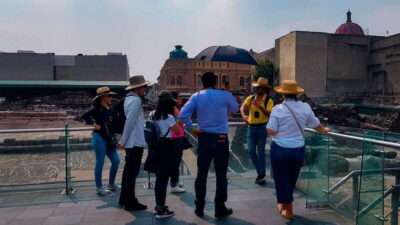
One of the most compelling stops is the Museo del Templo Mayor area. You spend about 15 minutes, and the plan is to check the temple from outside only. Admission is listed as not included for this stop.
Even from outside, this is a site that lands. The Templo Mayor area is described as literally the center of the Aztec empire, and you can understand the impact of time because part of it is visible while the rest sits under surrounding colonial buildings. That contrast is the point. You’re standing in a place where layers of power and rebuilding shaped what exists today.
Because the visit is outside-focused, you should go in expecting a clear, guided look rather than an extended museum-style experience. If you were hoping for a long deep study indoors, this isn’t that. But as a half-day overview, it’s powerful, and it gives you a mental anchor for the rest of the ride.
Museo Mural Diego Rivera at La Alameda: muralism you can actually see
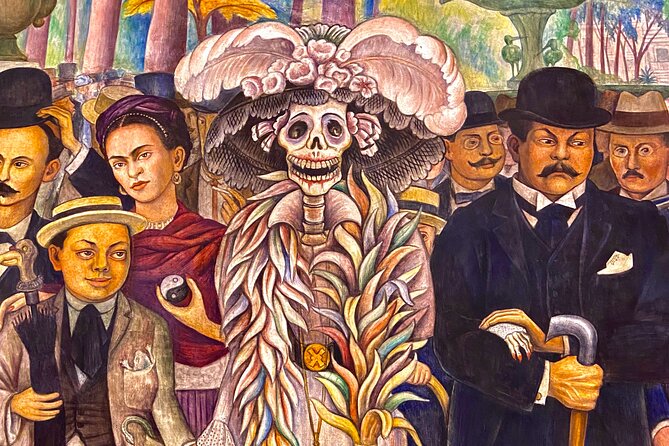
After Templo Mayor, you roll to Museo Mural Diego Rivera in La Alameda park, and this is one of the longer, more relaxed blocks: about 40 minutes. Admission is included here.
The key detail is that your guides are framed as experts in muralism, and the time reflects that. You park the bicycles and then focus on the mural story that tells of Mexico in an artwork context tied to La Alameda.
This is also where the tour feels less like a checklist and more like a lesson. Rivera’s murals are not just decoration. They’re designed to be read, with themes and symbolism that connect art to social and political storytelling. When you stand in front of it with a guide pointing out how the story is built, you start to understand why people treat murals in Mexico as more than background culture.
If you care about art and want a break from constant movement, this is the stop that usually justifies the whole half-day format. You get time to look, time to ask, and time to reset your eyes.
Passing Palacio de Bellas Artes, then stopping for the Revolution monument
You then pass by Palacio de Bellas Artes. The time is very short, about 5 minutes, and admission isn’t included. The guide talks about the architecture and how the Mexican Revolution interfered with its construction.
This is a “catch the idea” stop. You won’t get the full interior or a long architectural walkthrough. But you get the core story: why the building exists the way it does, and what historical disruptions left marks behind.
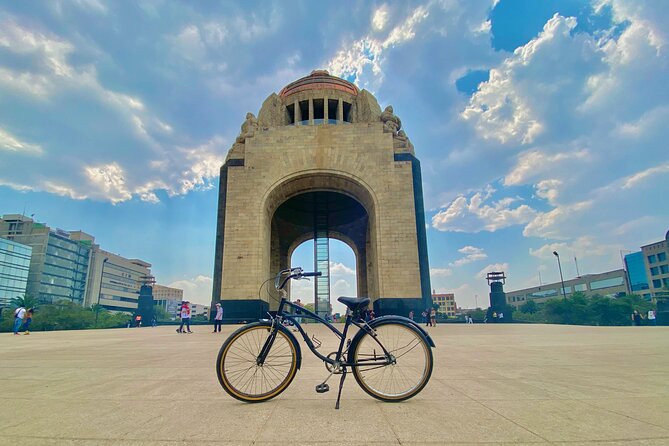
Finally, you reach the Monumento y Museo de la Revolución, spending about 20 minutes. The plan is to drive past and then stop in the middle to explain the Mexican Revolution. Admission is listed as not included.
This is a good fit for a bike tour because it’s visual and interpretive. You don’t need museum time to understand the scale and symbolism of a major monument. The guide’s explanation helps you connect the physical structure to the historical narrative, so it feels more like understanding than just photographing.
The food and lunch angle: more than a break from riding
This tour is built as a history ride with lunch included, and the route is designed around food moments, too. Even without you needing to know every exact stop name ahead of time, you can tell the approach is about local tastes, not only tourist snacks.
The reviews that match this tour style describe authentic street-food energy, including taco shops and pastry stops that feel connected to how the city eats day to day. One theme that shows up is how the guides keep you moving through the city while still making the food part of the story, not an afterthought.
My practical takeaway for you: if you’re doing Centro Histórico for the first time, this kind of lunch inclusion is real value. You’re spending time in central areas where meal planning can be a headache, and you’re already scheduled to be in the right zones at the right times.
Safety and pace: easy biking is part of the plan
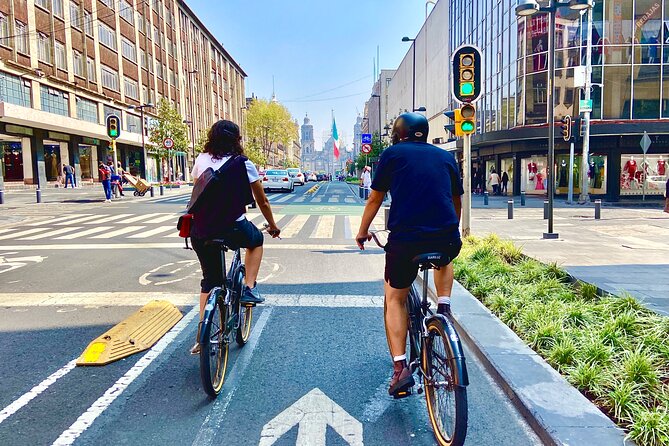
Biking in Mexico City is not for people who want a calm, closed-course ride. But this tour addresses that reality directly. You’ll have two guides, and in practice the guide team is positioned to help you safely traverse busy parts of the center.
Multiple guides are named in reviews, including Amistad and Valentino, and they’re described as actively managing traffic and keeping the group safe. That’s exactly the kind of support you want if you’re comfortable on a bike but you do not want to stress about lane changes and crossings.
In terms of pace, plan for shorter time at each major landmark. That suits you if you want a guided overview without a full-day marathon. It also means you should be selective about what you want to linger on after the tour, since your guided time is intentionally compressed.
Language, group size, and who this tour fits best
This tour is offered in English and uses a mobile ticket. It’s also designed around a small maximum group size of 10 travelers, capped for a personalized experience with two guides.
Who it fits best:
- First-time visitors who want Centro Histórico context fast
- People who can cycle at a steady pace for several hours and handle busy city streets
- Travelers who want history plus lunch, without turning the day into museum-only mode
Who might think twice:
- If you want lots of walking on your own at each stop and lots of museum time, this half-day format may feel brief
- If you are very sensitive about cycling in traffic, do not assume it will feel like a quiet countryside ride, even with guide support
Should you book this half-day Historical Center Mexico City bike tour?
I’d book it if you want the best kind of first-day win: a guided sweep through the Historic Center with real context, a comfortable small group, and food built in so you do not spend the afternoon hunting for meals.
It’s also a great choice if you like your history explained through the spaces where it still shows up, like Zócalo, convent-era architecture at Regina Coeli, and the Aztec layers around Templo Mayor. And if you care about art, the long stop at Diego Rivera’s mural at La Alameda is the moment you’ll remember after the ride ends.
If you have a very fragile bike comfort level or you want a slow, deep museum itinerary, you might prefer a different style of sightseeing. But if you want a half-day plan that feels efficient and human, this is one of the strongest ways to get your bearings and understand why Mexico City’s center is the center.
FAQ
How long is the half-day historical center Mexico City bike tour?
It runs for about 4 hours.
How many people are in the group?
The tour has a maximum of 10 travelers, with 2 guides.
What should I bring, and is a helmet included?
You do not need to bring cycling equipment. Bikes are included, and optional helmets are available.
Is lunch included?
Yes. Lunch is included in the tour.
Do I need to pay for admission to all stops?
Admission is listed as not included for the Museo del Templo Mayor stop, while the Diego Rivera mural stop includes admission. Other stops are listed as free.
Where does the tour start and end?
It starts at Londres 37, Juárez, Cuauhtémoc, 06600 Ciudad de México, CDMX and ends back at the meeting point. The start time is 9:00 am.
Just added around Mexico City
- Museum of Anthropology: a look at Mexico’s past★ 5.0 · 52 reviews
- Bike Tour in Mexico City★ 5.0 · 45 reviews
- Xochimilco BOAT LIGHT PARTY WITH 1 DRINK AND 4 TAQUITOES + 18★ 4.5 · 26 reviews
- Small Groups: Xochimilco and Coyoacan★ 4.0 · 37 reviews
- Riding Boats +Warm Mex Food+ Frida Kahlo’s neighborhood (private)★ 4.5 · 29 reviews
- Xochimilco Magic: Culture, Canals & Mezcal, 3hr boat adventure!★ 5.0 · 43 reviews
- Xochimilco, Coyoacan, Aztec Stadium & UNAM★ 4.0 · 232 reviews
- Xochimilco & Coyoacán Private Tour: Canals, Markets & Local Food★ 5.0 · 58 reviews
Historical Tours, compared.



Mexico City Historical Centre Food Tour with 7 Authentic Tastings
Read our review →
Historical and Cultural Walking Tour of San Miguel de Allende
Read our review →
Historical and Cultural Walking Tour of San José del Cabo
Read our review →
Walking Tour in Mexico City for Exploring their Cultural Heritage
Read our review →Browse the lists this tour appears in