
Reviewed · HISTORICAL TOURS
Gay Side of History through Plazas & Temples
History hits differently with this LGBT+ lens. This small-group walking tour threads together Historic Center landmarks like the Templo Mayor ruins, the Zócalo, and Santo Domingo, with context you will not pick up from a standard postcard tour.
I especially love the small-group format, capped at 10 people, and how guide Carlos turns street corners into clear stories you can actually follow. I also like the practical add-ons: a digital LGBT+ map, extra resources, plus RAINBOW MEXICO e-book PDF downloads for reading after the walk.
One consideration: it still includes about 1 mile of walking in roughly 3 hours, and it runs in all weather, so plan for sun, shade, or rain and wear shoes you can trust.
In This Review
- Key things you will notice right away
- What makes this LGBT+ walk work in Mexico City’s Historic Center
- Value for $99: tickets, PDFs, and a guide in small-group mode
- From Librería Porrúa rooftop to the Templo Mayor ruins
- Templo Mayor and the Metropolitan Cathedral: where eras collide
- Zócalo and the National Palace: the city’s political core
- Centro Cultural de España, Santo Domingo plaza, and the Inquisition context
- Should you book this tour?
- FAQ
- How long is the Gay Side of History through Plazas & Temples tour?
- What do I get for the price?
- Is the tour in English?
- How many people are on the tour?
- How much walking is involved?
- Can I cancel and get a full refund?
Key things you will notice right away
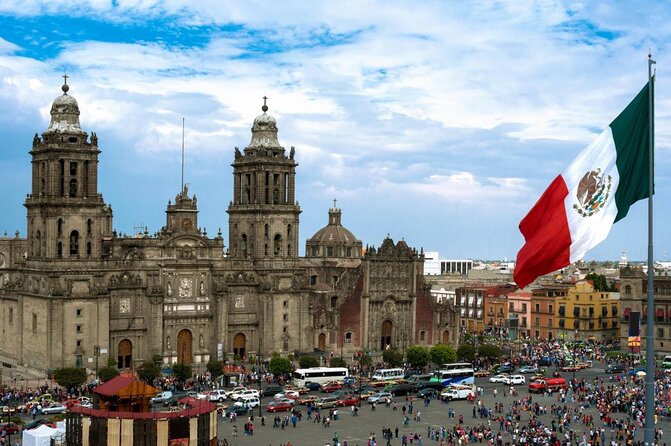
- Rooftop start at Librería Porrúa with views toward the Palace of the Royal Duty, the Hideaway Rooms of Frida Kahlo, and the Great Aztec Temple ruins
- Digital LGBT+ map plus PDF e-books (RAINBOW MEXICO) so you can keep the story going after you leave the plaza
- Carlos as your guide, a strong storyteller who answers questions and builds context before you move on
- Major power sites in sequence, from Mexica religious space to colonial and Catholic institutions
- Coffee/tea and bottled water included, a real help on a 3.5-hour walk
- Maximum 10 travelers, which keeps the pace human and questions possible
What makes this LGBT+ walk work in Mexico City’s Historic Center
Mexico City’s Historic Center can feel like one big swirl of stone, churches, posters, and tour groups. This tour gives you a way to slow it down and notice how power, religion, politics, and love stories all overlap in the same blocks.
You are not just “learning facts.” You are seeing how a place changes meaning over time. The Mexica (Aztec) capital, Spanish colonial rule, and later Mexico City politics all show up in the route, so you end up with a timeline you can walk through, not just read.
And because the guide is built for discussion, you can steer the conversation toward what you care about. In past tours with Carlos, the feedback is consistent: he asks about personal interests and adjusts explanations on the fly, so the tour feels personal instead of scripted.
If you are coming as an ally, this still works well. The point is not to focus only on one type of visitor. It is to show how LGBT life and persecution shaped Mexican history, then connect it to modern reality.
Backup plans for Mexico City
- Historic Downtown Walking Tour
★ 5.0 · 1,289 reviews - Historic Center Food Tour in Mexico City
★ 5.0 · 1,263 reviews - Mexico City: Historic Downtown Walking Tour
★ 4.8 · 1,039 reviews
Value for $99: tickets, PDFs, and a guide in small-group mode
At $99 per person for about 3 hours 30 minutes, this is not a bargain price. But you are paying for three things that matter in the Historic Center: a local guide, structured context, and useful materials you can keep.
Here is what you get, in plain terms:
- Guide-led walking tour with a maximum of 10 travelers
- Coffee and/or tea plus bottled water
- A digital LGBT+ map of the Historic Center with extra resources
- Downloadable PDFs of the RAINBOW MEXICO e-book
- Admission ticket included for the Librería Porrúa rooftop start
Some stops are free to enter (like the Zócalo and Centro Cultural de España, plus Santo Domingo plaza area), so the main paid “value” is really the guide and the curated route through specific sites tied to LGBT history. In my view, that is where the money goes: you are not paying to stand in a line. You are paying to understand why these exact buildings matter.
Also, the tour is offered in English, uses a mobile ticket, and you will have a confirmation at booking. That makes the whole thing simpler once you arrive.
From Librería Porrúa rooftop to the Templo Mayor ruins
Your tour starts at República de Argentina 15, in the Historic Center, with a strong sense of place before you even start walking. The first stop is Librería Porrúa, where you get a rooftop balcony view.
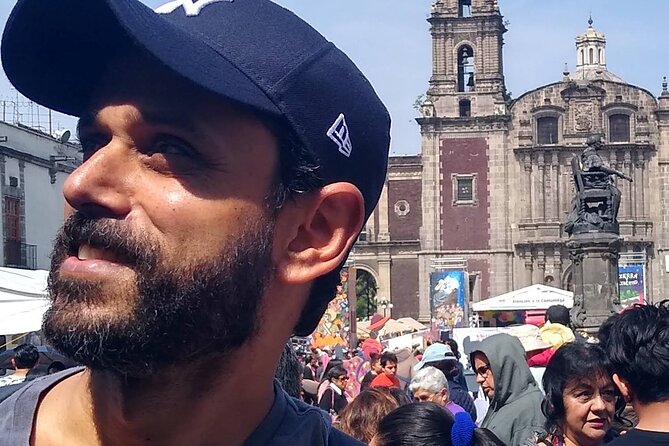
From up there, you can see several layers of Mexico City at once: the Palace of the Royal Duty, the Hideaway Rooms of Frida Kahlo, and the ruins connected to the Great Aztec Temple, the Templo Mayor. That combo matters because it sets up a key theme for the whole tour. This city does not replace history in a clean line. It stacks it.
Plan for the rooftop moment. Even if it is just an overlook, you are arriving right at “the big idea,” so it helps to pay attention. The guide typically uses this moment to frame the religious and political importance of what you are about to see. In other words, you are not just sightseeing. You are getting the map in your head.
From there, the walk moves toward the Templo Mayor area and then onward to major Catholic landmarks nearby. The transition is intentional. You are going from Mexica spiritual space into later colonial power and religious authority, which is a big part of why the LGBT history here is not a side topic. It is part of how rule and punishment were carried out.
Templo Mayor and the Metropolitan Cathedral: where eras collide
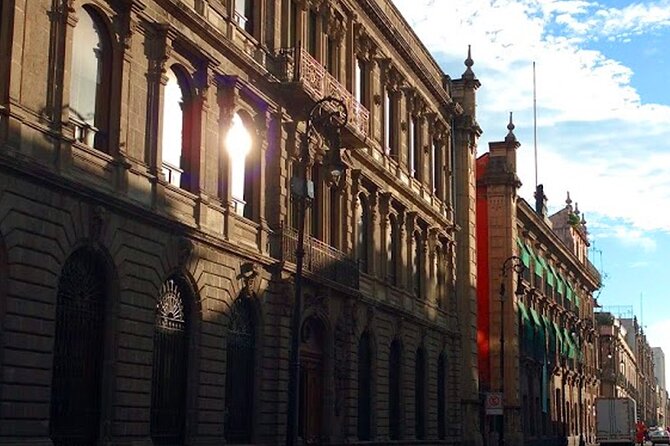
After that rooftop start, the route centers on two anchors that help you understand why the Historic Center has such strong emotional weight.
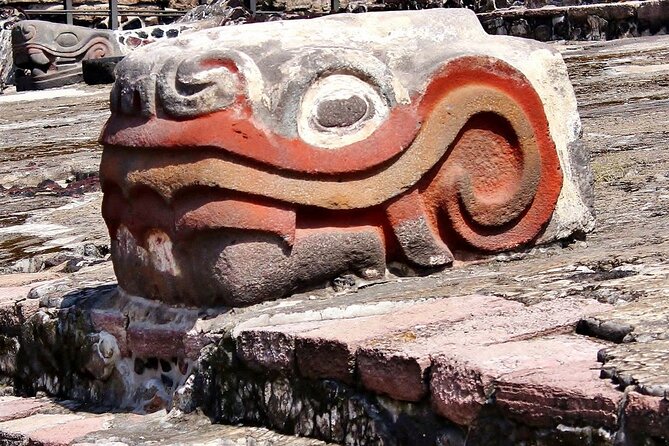
First, the Templo Mayor, the main temple of the Mexica in their capital. This is where the city’s pre-Hispanic core comes into focus. You will not need a degree to follow it, because the guide’s style is built around clear storytelling and context. You end up understanding what this space meant before Spanish conquest reshaped everything.
Next comes the Metropolitan Cathedral of the Assumption of the Most Blessed Virgin Mary into Heaven. This cathedral is not just a pretty stop. It represents Catholic authority at full scale, right beside older religious and political remains. That side-by-side feeling is what makes the tour powerful. You can literally watch how old meaning got reinterpreted by new institutions.
If you like history that connects to people, not just dates, this is a good point in the tour to lean into questions. The guide’s approach, especially with Carlos, has a reputation for being engaging and never dry. You can ask how the city’s power changed hands, then connect that to how LGBT people were treated as institutions gained stronger control.
One practical note: this section can be information-heavy. If you are the type who likes to absorb at your own pace, give yourself short breaks for water and to look back at the buildings. The tour moves efficiently, but you do not have to force it.
Close by, worth a second look:
- Teotihuacan, Guadalupe Shrine & Tlatelolco Day Tour with Lunch
★ 5.0 · 11,603 reviews - Xochimilco, Coyoacan and Frida Kahlo with Optional Lunch
★ 4.5 · 7,320 reviews - Balloon flight + Breakfast in cave + Pyramids + Pick up CDMX.
★ 5.0 · 6,335 reviews - Teotihuacan pyramids morning or afternoon without tourist traps
★ 5.0 · 6,186 reviews
Zócalo and the National Palace: the city’s political core
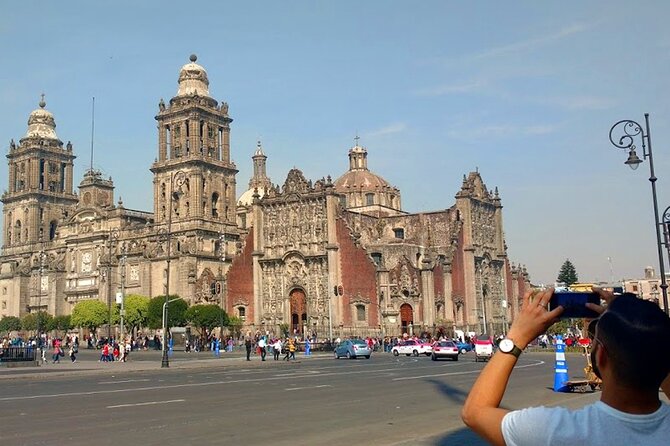
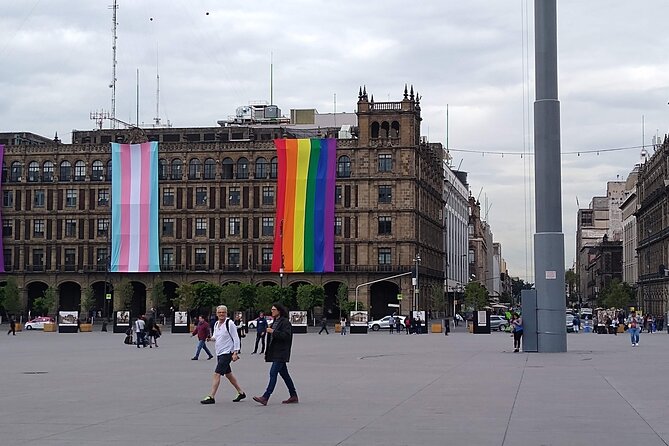
Then you reach the Zócalo, the central plaza and the heart of Mexico City. It has been a meeting place since the 16th century, so you feel like you are standing in a stage that has hosted generations of politics, protest, ceremony, and daily life.
You get about a focused window here, not a long wander. That is actually a plus. The Zócalo is huge, and without a guide it is easy to get lost in motion. With this tour, you use that space to understand the political center, then the conversation moves quickly to what the surrounding power structures mean.
From the Zócalo area, the tour connects to the National Palace (Palacio Nacional), the seat of Mexico’s federal executive. Since 2018, it has also served as the official residence for the president. That is the sort of fact that might sound dry, but the guide ties it to the broader theme: who holds power in this city, and how that power gets symbolized in the most visible spaces.
This part is where the tour feels most “alive” in a modern sense. The Historic Center is active, and even when you are standing still, you get a sense of how politics and public life collide in the open air.
If you want a photo moment, pick one spot, frame your shot, then return to listening. The guide’s goal is to help you connect the geography, not just capture a picture.
Centro Cultural de España, Santo Domingo plaza, and the Inquisition context
This is the section where the tour’s LGBT history focus becomes even more specific and serious.
First, you head to Centro Cultural de España at 18 Guatemala Street, just behind the Cathedral area. The building has a backstory that adds texture to the route. The old mansion was in ruins in the late 1990s, then the Mexico City government ceded it to Spain. After restoration, it reopened in 2002 with a ceremony involving the King of Spain and the President of Mexico.
This stop matters because it is a reminder that spaces do not stay fixed. Buildings shift roles. Meaning shifts too. That sets you up for the next “layer” of history around Santo Domingo Plaza.
Nearby, you pass the Old Customs Building, located on the east side of Santo Domingo Plaza between Republica de Venezuela and Luis Gonzalez Obregon streets, just north of the main plaza. Customs and trade routes may not sound like LGBT history on the surface, but the guide uses the location to talk about how movement, safety, and social networks worked in different eras.
Then you reach Plaza de Santo Domingo. You will notice the Portal de Evangelistas on the west side, a Tuscan colonnade with round arches. It is also a working space where scribes use typewriters and antique printing machines. It is a very specific kind of “living history” that makes the plaza feel human, not like a museum set.
The tour then brings you to the Church of Santo Domingo, facing the plaza. Here you get two key contextual points tied directly to LGBT history.
One is the Spanish Inquisition’s role as a civilian institution that executed convicted homosexuals between 1521 and 1821. This is not a vague mention. The guide treats it as a real historical fact tied to how punishment was carried out under colonial authority.
The other point is that the Church of Santo Domingo was a starting point of El Camino Real, a trading route and a safe haven for gay male couples. That idea can land differently depending on what you already know, but it gives you a fuller view than only persecution. You see both control and community patterns, side by side in the same street system.
As the tour wraps, your end point is near the Antiguo Palacio de la Santa Inquisición, the Old Palace of the Holy Inquisition, at República de Brasil 33. Ending here is fitting. It closes the loop from story to location, so you do not leave the topic floating in the abstract.
One more reason this final stretch feels strong: you get walking, listening, and a little aesthetic relief. Those plaza details, the arcade, the texture of the working printing area, help you process the heavier history without it feeling like a lecture that never stops.
Should you book this tour?
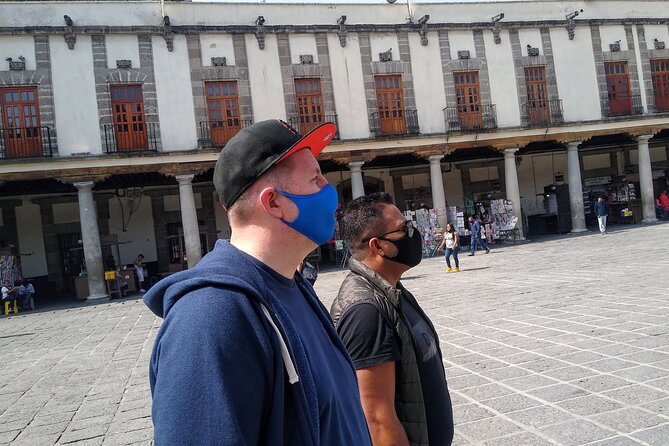
Book it if you want LGBT history that is tied to actual places, not just a generic lecture. This is one of those tours where the guide’s storytelling style matters. Carlos is repeatedly praised for making serious subject matter stay clear, engaging, and interactive, and that is exactly what you want in a city where everything can overwhelm you fast.
Skip it or consider a different option if you need a very slow pace or you strongly dislike walking in any weather. You are walking about a mile over roughly 3 hours, and the tour runs in all conditions. Bring water, wear solid shoes, and plan to take breaks when you need them.
Also, if you want extra value, do the simple thing: download the digital LGBT+ map and the RAINBOW MEXICO PDF PDFs right away. The story continues after you finish the last stop, and you will understand the streets better when you revisit them later.
If you like to end your sightseeing with a meal or a drink, this tour is a good lead-in to that. One practical approach is to set aside time right after for something easy near the center, so you can absorb the day without rushing.
My bottom line: for $99, you are buying context, pacing, and a guide who can connect the Historic Center’s most important layers to LGBT history. If that is your priority, this one is worth your time.
FAQ
How long is the Gay Side of History through Plazas & Temples tour?
It runs for about 3 hours 30 minutes.
What do I get for the price?
The tour includes a local guide, coffee and/or tea, bottled water, a digital LGBT+ map of the Historic Center with extra resources, and downloadable PDF copies of the RAINBOW MEXICO e-book. Admission ticket for the Librería Porrúa rooftop stop is included.
Is the tour in English?
Yes, it is offered in English.
How many people are on the tour?
The group size is limited to a maximum of 10 travelers.
How much walking is involved?
You will walk for about 1 mile during the tour, and the total walk time is about 3 hours.
Can I cancel and get a full refund?
Yes. You can cancel up to 24 hours in advance for a full refund. Cancellations made less than 24 hours before the start time are not refunded.
Just added around Mexico City
- Museum of Anthropology: a look at Mexico’s past★ 5.0 · 52 reviews
- Bike Tour in Mexico City★ 5.0 · 45 reviews
- Xochimilco BOAT LIGHT PARTY WITH 1 DRINK AND 4 TAQUITOES + 18★ 4.5 · 26 reviews
- Small Groups: Xochimilco and Coyoacan★ 4.0 · 37 reviews
- Riding Boats +Warm Mex Food+ Frida Kahlo’s neighborhood (private)★ 4.5 · 29 reviews
- Xochimilco Magic: Culture, Canals & Mezcal, 3hr boat adventure!★ 5.0 · 43 reviews
- Xochimilco, Coyoacan, Aztec Stadium & UNAM★ 4.0 · 232 reviews
- Xochimilco & Coyoacán Private Tour: Canals, Markets & Local Food★ 5.0 · 58 reviews
Historical Tours, compared.
Mexico City Historical Centre Food Tour with 7 Authentic Tastings
Read our review →
Historical and Cultural Walking Tour of San Miguel de Allende
Read our review →
Historical and Cultural Walking Tour of San José del Cabo
Read our review →
Walking Tour in Mexico City for Exploring their Cultural Heritage
Read our review →Browse the lists this tour appears in