
Reviewed · COOKING CLASSES
Authentic Mayan Cooking Class in Cozumel
Mayan cooking starts before the first bite. I love the hands-on prep and how the flavors come with context, from cochinita pibil to sikilp’aak. You will eat what you help make, not just sit and watch. One catch: the room can feel a bit loud, so you will want to position yourself where you can hear instructions.
This class is built for flexibility. You can pick from multiple class times, and you can even book a private class so the pace feels more personal. Guides like Paco and Juan are repeatedly praised for keeping things fun while still teaching you the why behind the spices, corn, and traditional techniques.
Expect about 2 hours 45 minutes of culture plus cooking, ending back at the meeting point. It is also smart to come hungry, because the meal portion is generous.
In This Review
- Quick hits before you go
- Getting to IX Kool in Cozumel, and not wasting time
- What the 2 hours 45 minutes actually feels like
- The cultural part: ceremony, history, and why spices matter
- Hands-on cooking: tortillas, guacamole, and working with seeds
- The featured Mayan menu: beans with pork, cochinita pibil, sikilp’aak, and corn cornbread
- Beans with pork
- Cochinita pibil
- Sikilp’aak
- Cornbread made without flour
- Drinks, salsa, and the small surprises that raise the fun factor
- How to recreate these flavors at home, without getting stuck
- Price and value: what $60.99 gets you in real terms
- Best for whom: foodies, cruise day planners, and families
- Practical tips so your class goes smoothly
- Should you book this Mayan cooking class in Cozumel?
- FAQ
- What is the price per person for the authentic Mayan cooking class in Cozumel?
- How long is the cooking class?
- Is this offered in English?
- Is it a private class or a shared group?
- Where do I meet for the tour?
- What dishes are included in the menu?
- Does the class end at the meeting point?
- Can I use a mobile ticket?
- Are service animals allowed?
- What is the cancellation policy?
Quick hits before you go
- Multiple class times so you can match it to your cruise or beach day rhythm
- Private option that typically means more attention and a more relaxed pace
- Mayan ceremony and performance that kicks things off before you start cooking
- Corn-focused cooking including tortillas, sikilp’aak, and a corn-based cornbread
- Big appetite experience with several courses, plus drinks that you may be offered
- Small group feel is common, which makes it easier to jump into hands-on steps
Getting to IX Kool in Cozumel, and not wasting time
The meeting point is listed at Av. Rafael E. Melgar 1, El Parque, 77675 Cozumel, Q.R., Mexico, and the experience ends back there. In plain terms, plan to arrive with a little buffer, because the venue is often described as IX Kool, inside a shopping area close to the cruise zone.
If you are coming from a cruise terminal, give yourself time for a quick orientation. The address can be confusing depending on which side of the island you start from, and several people say it was tricky to locate the place at first. I suggest you:
- Use the meeting point address as your anchor, not just a random pin
- Look for the IX Kool restaurant name when you arrive in the shopping area
- If it is your first time in Cozumel, arrive early enough that you are not rushing your way into the class
Once you are inside, the setup is modern and clean, and that helps. You will still want your senses ready, because you will be learning, smelling, and tasting quickly as the session moves from culture to kitchen.
Backup plans for Cozumel
- Cabo San Lucas Mexican Cooking Class Experience and Local Markets
★ 5.0 · 915 reviews - Puerto Vallarta Cooking Class Experience with Market Tour
★ 5.0 · 698 reviews - Mexican Cooking from Scratch in a Local Home in Tulum
★ 5.0 · 585 reviews
What the 2 hours 45 minutes actually feels like
Think of the class as a smooth sequence: introduction, then stations where you participate, then a full meal where everything comes together. A lot of the magic is that you get both the head and the hands.
Here is what the flow tends to look like:
- Welcome and Mayan ceremony: you may see a musical Mayan ceremony and performance elements before the food starts
- Short educational presentation: a video plays as part of the cultural framing, and it ties the cooking to Mayan traditions and later influences
- Hands-on cooking stations: you work through a few core tasks, including things like tortillas and sauces
- Tasting and eating the meal: what you create is followed by plated or served courses, including the featured mains and dessert
A key practical detail: some classes lean more toward guided prep with demonstration, while others involve more hands-on steps. The sweet spot for most people seems to be a mix of you doing key tasks, like grinding spices or assembling components, while staff handle the parts that require heat control and timing.
Also, because the class may happen in a lively space, audio can be a challenge. If you struggle with hearing, pick a seat where you can face the instructor and the screens, so you can follow along when they explain what each ingredient does.
The cultural part: ceremony, history, and why spices matter
This is not just a food show. The experience tries to connect Mayan cooking with how ingredients were used historically, and how local cuisine evolved over time. You will be talking about things like:
- How certain flavors fit Mayan culture and regional traditions
- Why particular ingredients show up again and again in the Mexican southeast
- How techniques and spice blends help create specific textures and flavor profiles
The ceremony and performance matter because they set an important tone. You are basically learning that meals in this region are not random. They are patterned, seasonal, and tied to identity.
Then the video and instructor explanations help you translate that into the kitchen. You are not memorizing a script, you are learning to recognize patterns: sour notes against smoky ones, toasted seeds against creamy bases, and corn as the foundation that links everything.
Hands-on cooking: tortillas, guacamole, and working with seeds
The most consistently praised parts are the tasks you get your hands into. People mention making elements like tortillas and guacamole, plus grinding ingredients for sauces and spreads.
From the dishes and hands-on comments you can expect a menu that highlights:
- Corn tortillas made by hand, often with staff coaching you through the process
- Guacamole with real focus on how it is built, not just scooped
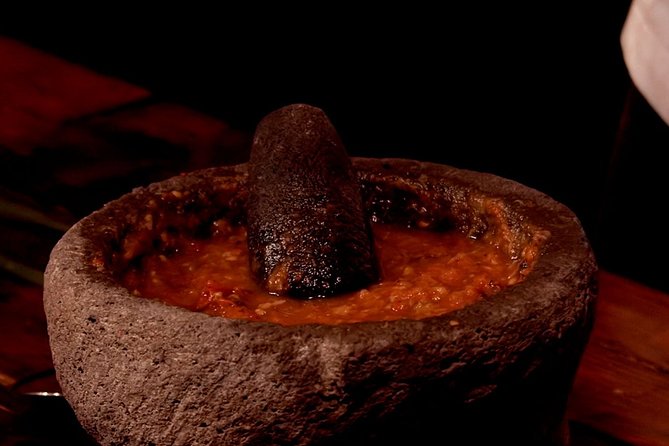
- Salsas and spreads that may include smoked elements and seed-based components
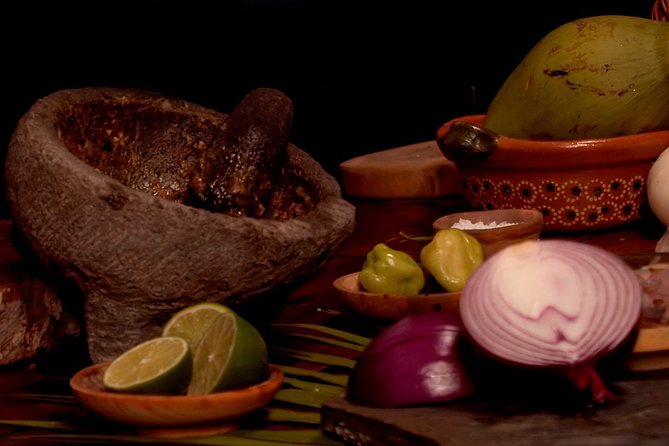
- Grinding spices and seeds, a step that explains why the final dish tastes deeper than store-bought shortcuts
If you have a strong preference for fully hands-on cooking, you should know one nuance. Some people felt it was more guided than fully DIY. You will still participate in key prep steps, but staff may handle certain heat-dependent parts so everything lands on time for the meal.
One more practical note that comes up in feedback: tortilla handling is often communal. If that worries you, you can eat the portions that are clearly served to you, not the one you touched during assembly. It is not a dealbreaker, but it is worth thinking about.
Close by, worth a second look:
- Mr. Sanchos Beach Club All-Inclusive Day Pass
★ 4.5 · 6,744 reviews - Cozumel: Paradise Beach Club All-Inclusive Day Pass
★ 4.5 · 3,311 reviews - ATV 4×4+Snorkeling+Beach Club+ Lunch+Sabores de Cozumel
★ 5.0 · 1,468 reviews - Cozumel Snorkeling Tour: Palancar, Columbia and El Cielo Reefs
★ 4.5 · 1,462 reviews
The featured Mayan menu: beans with pork, cochinita pibil, sikilp’aak, and corn cornbread
The class is built around a sample menu that is very regional and very Mayan in spirit. Here is what you should look for on the plate or in the tasting line.
Beans with pork
This is the grounding comfort course. The idea is simple: beans plus pork using ingredients typical of Mexico’s southeast. It is hearty, satisfying, and a good intro to how the region builds depth, not just heat.
If you love food that tastes like it has been simmered with intention, this is the kind of dish that makes the whole class feel worth it. You will also get a sense of how fats, spices, and timing create that slow-cooked flavor.
Cochinita pibil
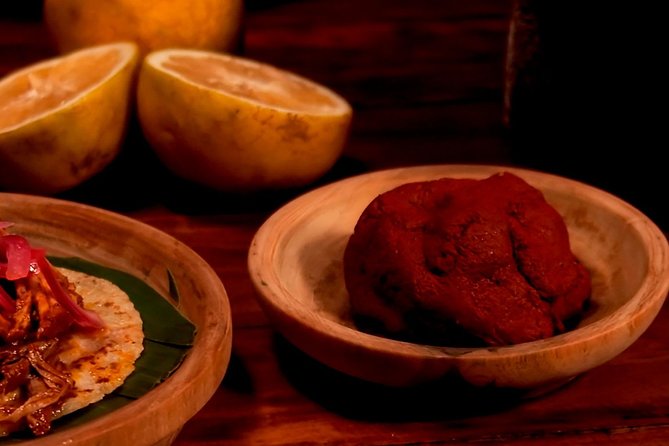
This is one of the stars of the menu. The cochinita is marinated with sour orange juice and a red spice blend made with axiote seeds (often known as annatto in other places). Then it is associated with a cooking style that helps make the pork tender and intensely flavored.
What you will learn here is how an acidic, aromatic marinade creates contrast. Sour orange brings brightness. Axiote adds color and a rounded spice character. Together, they create that classic tangy richness people crave in Yucatán-style pork.
Sikilp’aak
Sikilp’aak is a Mayan snack from this region. It is not just another dip. You will see it framed as something that is widely consumed locally and harder to find elsewhere in Mexico.
This matters for two reasons:
- It is a way of tasting Mayan ingredients in a straightforward, shareable format
- It teaches you how seed-based and corn-based flavors can be creamy and complex without being heavy
Expect a thick, satisfying texture that highlights roasted or toasted elements, then turns into something that you want more of even after the earlier courses.
Cornbread made without flour
Dessert is also tied to corn. This cornbread is made with corn without flour, so it has a different feel than typical cornbread. It is a nice wrap-up because it brings you back to the core ingredient that runs through the entire experience.
If you are the type who always saves room for dessert, you will probably be happy here. If you go in hungry, the corn dessert lands perfectly after everything salty and spicy.
Drinks, salsa, and the small surprises that raise the fun factor
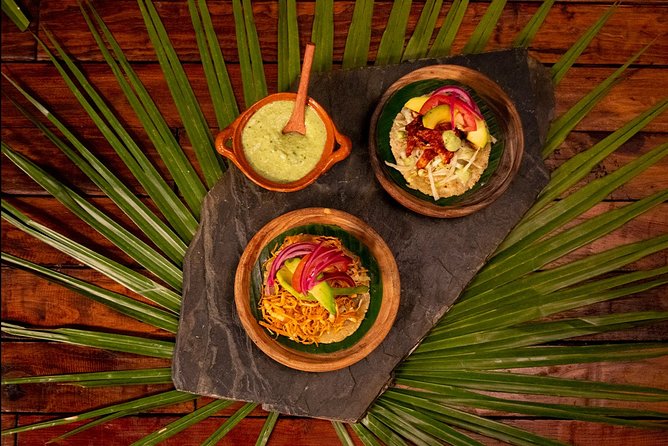
Food is the main event, but the experience often includes beverages. People mention margaritas being made and offered during the class. There are also mentions of multiple drinks, plus things like salsa, guacamole, soups, and tortillas being part of the tasting lineup.
Even when the exact drink list changes by day, the pattern is consistent: you are not just learning one dish. You are learning a range of flavors and how they relate.
A couple of extra items you might encounter depending on the session:
- Tomato and pumpkin seed based spreads
- Fire-roasted tomato components
- Smoked salsa or smoked-style flavor profiles
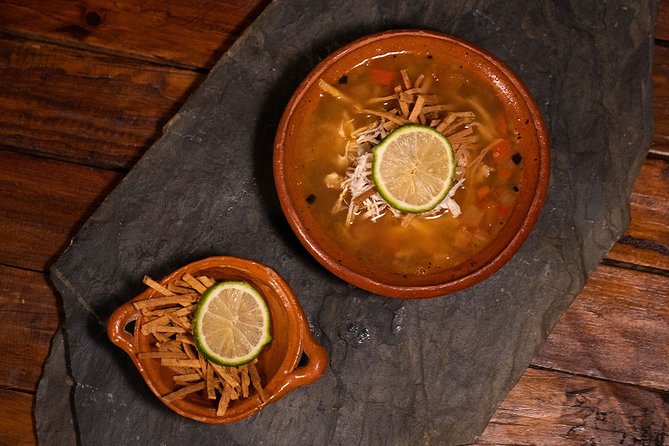
- More soups beyond the menu headline courses
The value here is practical. By the time you finish, you should understand which parts are the core building blocks and which parts are flexible. That makes it easier to recreate at home without copying a recipe blindly.
How to recreate these flavors at home, without getting stuck
The instructor approach aims for take-home usefulness. You are learning the steps and flavor logic, so when you shop later, you can identify what you need.
Here are the skills you are likely to walk away with:
- How to balance sour, spice, and fat in pork marinades
- What makes a seed-based dip feel nutty and round instead of flat
- How corn changes texture and flavor in tortillas and corn-based desserts
- How sauces and salsas work as contrast alongside mains
If you are a home cook, this is where the class pays off. A lot of cooking tours give you a story and a photo. This one leans toward letting you actually understand the ingredients. You can then adapt it based on what is available back home, while keeping the character.
Price and value: what $60.99 gets you in real terms
At $60.99 per person for about 2 hours 45 minutes, you are paying for a bundled experience: culture plus guided cooking plus multiple courses of food and drink.
Here is why it feels like value if you like food tours that do not nickel-and-dime:
- You get several courses, not a tiny tasting plate
- You participate in key steps, which makes it more memorable than a restaurant meal
- You get the cultural context that helps the dishes make sense
- You have the option of a private class, which typically reduces waiting and increases attention
Is it a bargain if you only want a quick salsa sample and nothing more? Probably not. But if you want a full meal with hands-on learning and you are okay with a lively environment, it is a reasonable price for what you receive.
Best for whom: foodies, cruise day planners, and families
This works especially well for:
- Foodies who want a regional menu and hands-on prep steps
- People visiting for a cruise day, because it ends near the starting point and people describe it as close to cruise ports
- Families, since hands-on stations and multiple courses often make it easier to keep kids and adults engaged
- Groups that want more personal attention through the private class option
If you have mobility challenges, you should know there are stairs involved in reaching restroom areas. Some feedback flags steep stairs as tough for certain guests. If that could be an issue for you, plan ahead and ask what the easiest route is.
If you are very sensitive to loud rooms or struggle to hear explanations, sit where you can see the instructor and screens clearly. That small choice can make a big difference.
Practical tips so your class goes smoothly
You will have the best time if you prepare for it like a real meal, not a snack stop.
Do these:
- Do not eat beforehand if you want to enjoy everything. Many people specifically recommend arriving hungry.
- Wear comfortable shoes. You will be moving around during stations.
- If you care about hearing, arrive early and choose a seat with better sightlines to the presenter.
And these are smart expectations:
- You will probably do several core tasks, but not every heat or timing step is always DIY.
- The exact mix of drinks and extra items can vary by session, but you should expect a full menu experience with pork, beans, sikilp’aak, and corn-based dessert elements.
Should you book this Mayan cooking class in Cozumel?
I think you should book it if you want a meal with real regional identity and hands-on learning. The combination of Mayan ceremony elements, guided teaching from instructors like Paco and Juan, and the featured menu makes it a strong choice for people who take their food seriously.
Skip it or think twice if you want a fully DIY cooking workshop where you control every step from start to finish. The structure can feel more guided than you might expect, and the noise level can make listening harder.
If you are going to Cozumel anyway, you love cooking, and you like the idea of learning why Mayan flavors taste the way they do, this is a great way to spend your afternoon. Come hungry, pick a good seat, and treat it like an actual culinary lesson that ends with a full plate.
FAQ
What is the price per person for the authentic Mayan cooking class in Cozumel?
It costs $60.99 per person.
How long is the cooking class?
The duration is about 2 hours 45 minutes.
Is this offered in English?
Yes, it is offered in English.
Is it a private class or a shared group?
It can be private. The experience is described as private, with only your group participating.
Where do I meet for the tour?
The meeting point is Av. Rafael E. Melgar 1, El Parque, 77675 Cozumel, Q.R., Mexico.
What dishes are included in the menu?
The sample menu includes beans with pork, cochinita pibil, sikilp’aak, and corn-based cornbread without flour.
Does the class end at the meeting point?
Yes, it ends back at the meeting point.
Can I use a mobile ticket?
Yes, it includes a mobile ticket.
Are service animals allowed?
Yes, service animals are allowed.
What is the cancellation policy?
You can cancel for a full refund up to 24 hours in advance. Free cancellation is available, and the experience requires good weather and a minimum number of travelers.
Just added around Cozumel
- The Cozumel Turtle Sanctuary Snorkel Tour★ 4.5 · 194 reviews
- From Cozumel: Official Chankanaab Park Day Pass and Snorkel★ 4.2 · 23 reviews
- From Cozumel: Chankanaab Cozumel Scuba Diving★ 4.9 · 20 reviews
- Cozumel Private Jeep Tour with Lunch and Snorkeling★ 4.5 · 70 reviews
- Cozumel: One Tank Scuba Dive and Full Chankanaab Park Access★ 4.9 · 149 reviews
- Cozumel: Best Day Pass at San Francisco Fun Beach Club★ 4.2 · 26 reviews
- Cozumel: VIP Glass Bottom Boat & Snorkeling 3 Reefs Tour★ 4.6 · 210 reviews
- Cozumel Private Beach Pass: All Inclusive Beach Day★ 3.9 · 39 reviews
Cooking Classes, compared.
Cabo San Lucas Mexican Cooking Class Experience and Local Markets
Read our review →
Puerto Vallarta Cooking Class Experience with Market Tour
Read our review →
Mexican Cooking from Scratch in a Local Home in Tulum
Read our review →
Mexican Cooking Class with Food Market Visit in Mexico City
Read our review →
Flavors of Oaxaca: Cooking Class with No Set Menu and Local Market Tour
Read our review →
Essence of Mexico: Authentic Mexican Cooking Class & Market Tour
Read our review →
Traditional Oaxaqueña Cooking with Grandma’s Recipes
Read our review →Browse the lists this tour appears in